







Many Utahns are familiar with the historic Kearns Mansion, located on east South Temple, as today's official residence of the state's governors.
But for more than two decades, from 1959 to 1980, Utah's governors occupied a large but nondescript ranch-style home in the Federal Heights neighborhood of Salt Lake City.
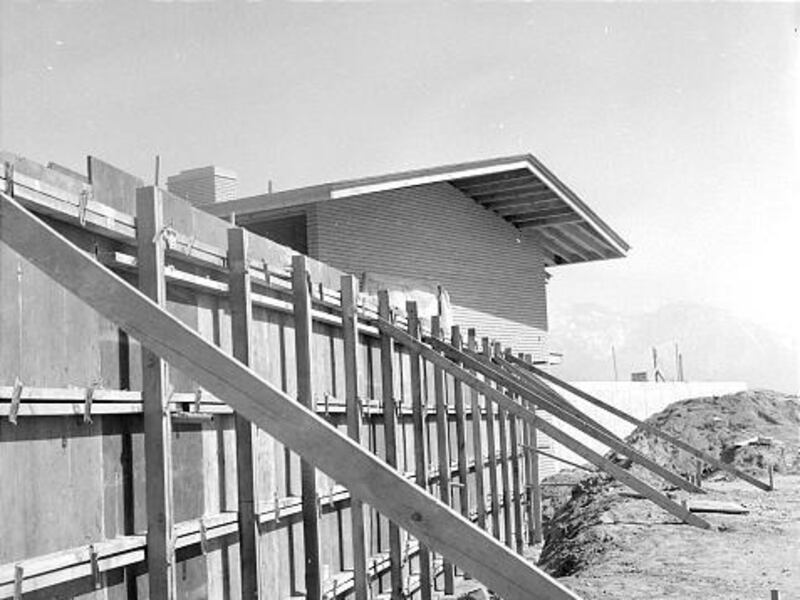
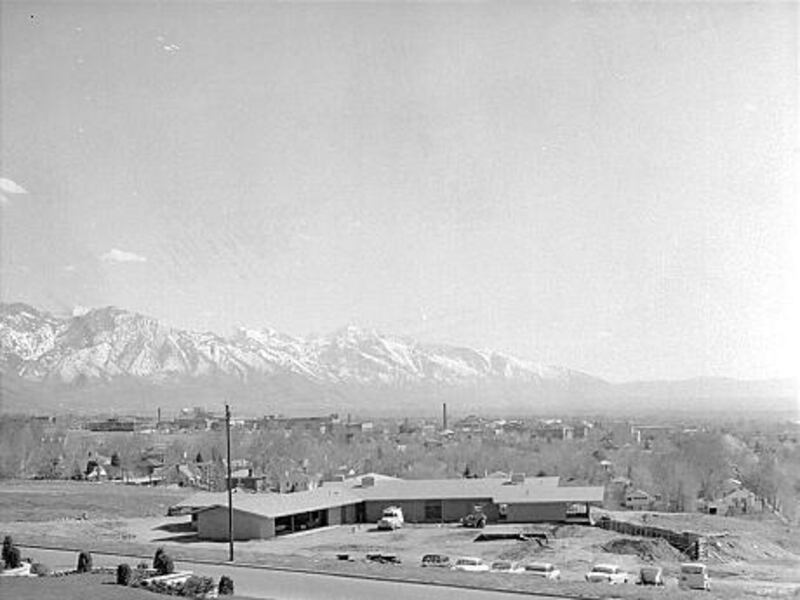
Known as the Governor's Residence, the 4,000-plus-square-foot, one-story home was built amid a bit of controversy.
The Kearns Mansion, which was built in 1902 by U.S. Senator Thomas Kearns, a prominent Utah mining magnate, had been donated to the state in 1937 by Kearns' widow, Jennie.
In 1957, Governor J. Bracken Lee thought a new governor's mansion in the Federal Heights area of Salt Lake City was in order. The Kearns Mansion was in poor repair and the state was paying from $25,000 to $40,000 a year to maintain the building.
(Photos that accompany this article were selected by North Salt Lake photo researcher Ron Fox from Deseret News archives.)
The suggested change in the governor's residence set off a beehive of controversy. Not everyone was happy with the proposed change.
The Ladies Literary Club of Salt Lake City, which circulated a petition to retain the Kearns Mansion as the governor's official residence, expressed concerns about plans to turn the building over to the State Historical Society
The petition read: "In 1937 the mansion was offered free by the Jennie J. Kearns family with the understanding that it would be used as a governor's mansion. In our opinion, any use contrary to the spirit of the gift and spirit of its acceptance is breaking faith with the donors and beneath the moral and ethical standards we expect in our government."
A letter accompanying the petition describes the mansion as "one of the finest if not THE finest governor's home in the United States."
Since the governor's residence is state property, all major decisions about the building must come in the form of a legislative bill. After lawmakers determined that a new residence was preferred, a legislative committee met in 1957 to select a site and build a governor's residence.
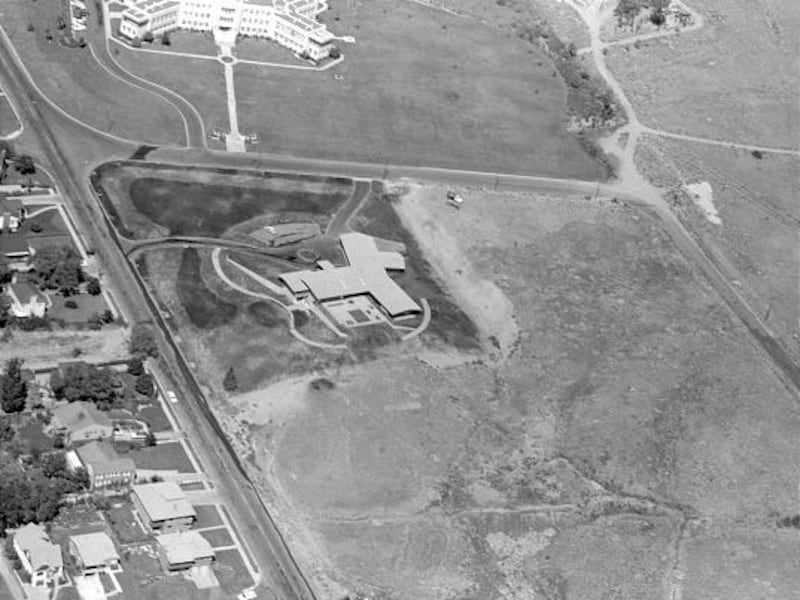
They chose a beautiful location at 1270 Fairfax Road, now just across the street from the Shriners Hospital.
Debate about the style of the new residence stirred some interest, as options included a traditional gabled roof construction and a more radical option with "a flat, modernistic roof, with a cast stone slab exterior," according to an uncredited story in the June 20, 1957, Deseret News.
"I think we should build for the future and not start with styles 25 years ago," said Gov. George Dewey Clyde, who would be the first of two governors to live in the residence.
Then-Senate President Orval Haven said he believed "the flat-roofed steel-beam style which was becoming popular in California, Arizona and points east 'will grow on you,'" the article read.
Secretary of State Lamont F. Toronto disagreed.
"I cannot in good conscience approve this flat roof style. I don't think the people would approve anything as extreme. I don't think it has the dignity befitting a governor's residence."
Toronto apparently voiced the majority opinion. The resulting home was built in the ranch style popular in the late 1950s and evidenced by many of the older homes in the same area, although the governor's residence, at a price tag of around $140,000, cost a lot more and was much larger.
One apocryphal story tells of an LDS Church general authority who one Sunday morning mistook the governor's residence for the LDS meetinghouse next door, where he had some business to conduct. He was greeted at the door of the home by a bathrobe-clad Calvin Rampton, who lived in the residence for all three of his terms as Utah governor.
An uncredited story in the Dec. 8, 1976 Deseret News described the interior of the residence like this:
"The mansion's family section has a master bedroom and bath, a second bedroom and another small bedroom used by the Ramptons as a nursery for grandchildren. It also has a family sitting room and library, a large kitchen and small dining room.
"The formal section of the mansion includes a dining room that seats 12, an enclosed patio, sunken living room, two bedrooms each with bathrooms and a powder room. There is a recreation room in the basement."
But in 1976, that wasn't enough room for Utah's new governor, Scott Matheson, and his large family.
Gov. Matheson's wife, Norma, is quoted as saying: "The place in general needs to be evaluated in terms of what furniture needs replacing and what can be done to make it reflect a little more warm, comfortable family residence. It was not designed for a family of five — and sometimes six, when our son visits us."
Matheson wanted to refurbish the Kearns Mansion and reestablish that building as the governor's residence.
Again, the proposal was the source of controversy. An editorial in the Jan. 18, 1977 Deseret News argued that the Kearns Mansion should remain a public building.
"To attempt to combine it with what should be a more private function as the Governor's Residence would be both a philosophical and financial mistake."
The editorial didn't sway the legislature, however. Sen. Haven J. Barlow, R-Layton, sponsored legislation to sell the residence on Fairfax Road for about $200,000.
A Deseret News story on Jan. 11, 1977, written by Dexter C. Ellis and Joe Costanzo, reads: "(Barlow) said it was a mistake to build the new mansion several years ago. He said it would save the state money to restore the old Kearns building now being used by the Utah Historical Society. He said it would provide more suitable quarters for Gov. Scott Matheson and his family, who have criticized the present mansion as being inadequate for their use."
The historical society was moved to new quarters, the Kearns Mansion was refurbished and the Mathesons took up residence in 1980. They never lived in the Fairfax Road residence, but remained in their private Salt Lake City home until the remodeling was completed.
The old residence was subsequently listed as surplus property and sold to the highest bidder in 1979. It is privately owned today and while the interior has been remodeled, the exterior retains the character of the home when it served as the official residence of Utah's governors.
E-mail: marchaddock@utwire.com