


In early 19th century, a "Second Great Awakening" swept across America, moving from New England to the South and on to the frontier. This great religious revival led not only to the rise of new religions (including The Church of Jesus Christ of Latter-day Saints), but also to new political and social reform movements.
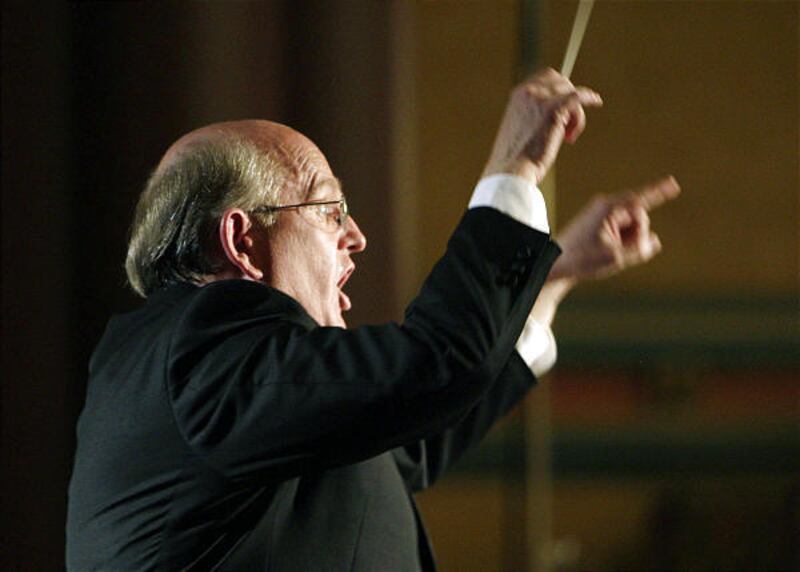
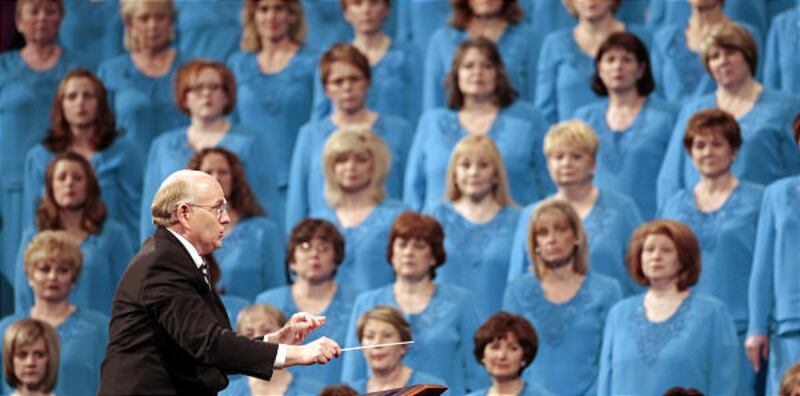
Another significant development of the era: the rise of the American folk hymn. "We don't have a lot of original musical tradition," says Mack Wilberg, conductor of the Mormon Tabernacle Choir, which has recently released a CD of American folk hymns and spirituals titled "Come, Thou Fount of Every Blessing."
"Most of our American musical heritage is based on European models, but the folk hymns and spirituals are one of the most fertile and unique of our American musical traditions."
These early folk hymns reflect the fervor and zeal of their time but they still resonate with people today, he says, as evidenced by the fact that the choir's CD recently reached No. 1 on both Billboard magazine's Classical Music and Crossover Classical Music charts.
As the liner notes remarks, "This recording honors the enduring vitality of these folk hymns and spirituals and their ability to anchor the soul in faith."
The CD features many of Wilberg's favorite folk hymns, including the title song, as well as others such as "Saints Bound For Heaven," "My Song In The Night," "His Voice As the Sound," "Bound For The Promised Land," "Softly and Tenderly" and what Wilberg calls "the most famous of all Christian hymns," "Amazing Grace."
Many of these hymns have been set to new arrangements by Wilberg, who is known as one of the premiere composers and arrangers of choral music in the country.
Also included are a number of African-American spirituals, some featuring choir member Alex Boye as soloist, including "Deep River, "I Want To Walk With Jesus," "Old Time Religion" and "The Battle of Jericho."
They are all songs that "show how often music transcends the spoken word," says Wilberg. They teach lessons of life, but they also offer hope and joy. They are balm to the soul."
Folk hymns, Wilberg says, are also very accessible. The messages are usually simple and heartfelt. "Softly and tenderly, Jesus is calling." Who can't understand that?
What also makes the genre unique is that the hymns were usually words set to music people already knew, and thus could sing with fervor.
The first hymnals, including the first one of the LDS Church, compiled by Emma Smith in 1835-36, included only the words. "People were expected to know the tunes," Wilberg says.
Some of the songs in that first hymnal were new words written by the likes of W.W. Phelps and Eliza R. Snow, set to the familiar melodies of other hymns, or popular songs of the day.
Although it came later, the beloved "Come, Come Ye Saints," written by William Clayton, is fully rooted in this tradition, notes Wilberg.
Some of the hymns in that first LDS hymnal were also drawn, as-is, from other denominations. That's one of the fascinating things about these folk hymns — they spoke to everyone, Wilberg says.
As hymnologist Ian Bradley notes in his "The Book of Hymns," "For me, one of the greatest glories of Christian hymnody is that it is a truly ecumenical enterprise. Hymn-singing really does cross denominational barriers and unite Christians of every persuasion. Roman Catholics happily sing the lyrics of Charles Wesley, while Baptists and Presbyterians equally happily sing the words of John Henry Newman."
In time, words and music were written down together, and compilations such as William Walker's "Southern Harmony" and "Christian Harmony" and White and King's "Sacred Harp" are still important resources.
Even after some melodies were written down, however, words and music were often used interchangeably, until something came along that really stuck. "The great folk hymns are a perfect marriage of text and tune," says Wilberg. "There are those that have nice messages and some with good music, but it is such a bonus when they are both wonderful."
Even the words to "Amazing Grace," which were written by Newman in 1779, have been sung to other tunes, he explains; but the most famous and familiar is the one that was almost certainly influenced by Scottish folksong traditions that first appeared in the early 19th century collections.
What is also interesting, Wilberg adds, is that the last verse of the version the choir sings on the CD was not written by Newman but first appeared anonymously in the 1829 publication "The Baptist Songster."
Many people are familiar with the story behind "Amazing Grace," which was written by a former slave trader who sought and found redemption in his religion. Stories behind many of the others are equally interesting. For example, the words to "How Bright Is The Day" were said to be written by a Baptist preacher in South Carolina on the same day that he died. The tune has been used as a campaign song, a Civil War song and in a comic opera, among other things.
"Bound For The Promised Land" was a popular Methodist camp song. The author of "Come, Thou Fount of Every Blessing" apparently fell into despair late in his life, a somewhat prophetic example of his lyrics.
Even though the African-American spirituals grew out of the slavery experience, Wilberg says, they also draw on many of the same musical sources and religious ideals as the folk hymns, which makes the pairing both historically and emotionally significant.
They are all songs of hope and strength and joy that have arisen out of a deep human yearning to express the feelings of the soul, Wilberg says. And they still have the power to touch, to enlighten, to uplift.
E-mail: carma@desnews.com