



Fort Douglas, perched on Salt Lake's east bench, has a colorful history.
The story has been told many times of how the first troops were sent to guard the mail route — but also to keep an eye on the Mormons; how Fort Douglas went on to play an important role in Utah's economic, military, political and social history.
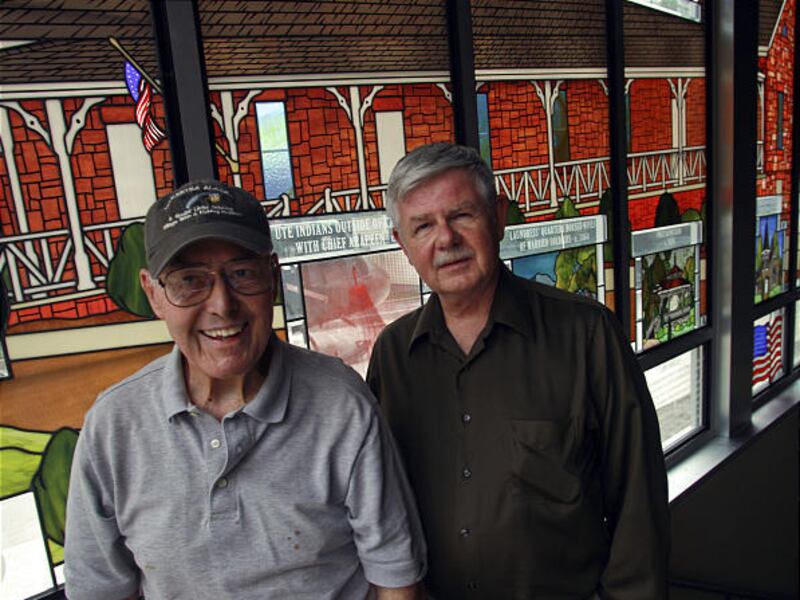
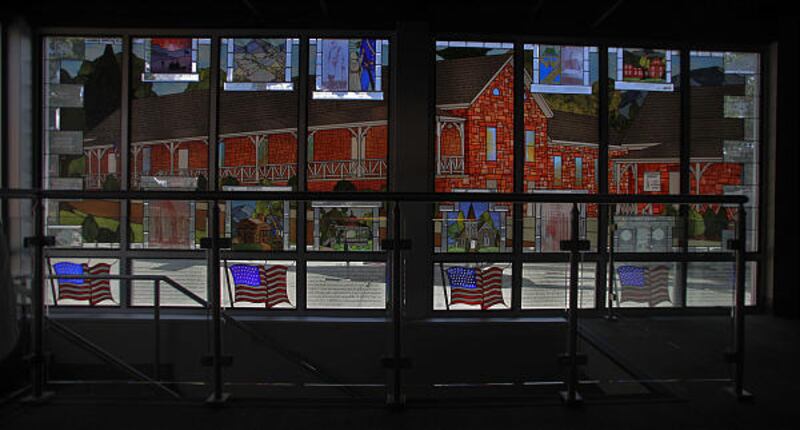
But perhaps the history of Fort Douglas has never been told more colorfully than in a new stained-glass window that will become a feature of a visitor's center that is part of the Fort Douglas Museum's exciting, new expansion project.
The project, which is expected to take about five years, "depending on the success of fundraising and contributions," says Fort Douglas Museum Director Robert S. Voyles, will add exhibit space, upgrade utilities and services and help create an "immersive and educational experience for visitors."
The stained-glass window, which is now on display, will eventually be part of the entrance to the visitor's center, says Voyles, and thus one of the first things visitors to the museum will see. "It's a wonderful explication of an army fort, done with a lot of respect for the history and the people who have served here."
The window is a gift of longtime museum supporters Gil and Thelma Iker, with additional support from Zeke Dumke Jr. and the Katherine and Ezekiel P. Dumke Foundation, and Spence Eccles and the George S. and Dolores Dore Eccles Foundation.
The window was made by the Ikers' daughters, Kristen Gerde, of Hood River, Ore., and Karen Mannix, of Talkeetna, Alaska. Both grew up in Salt Lake City and are now well-known stained-glass artists in the Northwest. Gerde has done commission work for both public and private buildings, including several pieces for the National Park Service. Mannix has also done several major projects for Alaska's public schools.
Iker came up with the idea for the window, says Voyles. "He's served on our association board and numerous committees. He has a long history of involvement here."
Iker first came to Utah when his "dad was stationed at Fort Douglas," he says. "I fell in love with the place." Originally from Michigan, Iker served in the military during the Korean conflict. "Then I came back here with the G.I. Bill to go to school. My mother never forgave me; she was all set for me to go to Michigan. But I graduated from the U. and married into a good Mormon family, and I've been here ever since."
The idea behind the stained-glass window, he says, "was, number one, to brag on my girls. I've been dazzled by them since they were munchkins. Now, I'm entranced by their talents.
"But I also wanted to make a unique contribution to the museum. I think this window will set the stage for the total experience here."
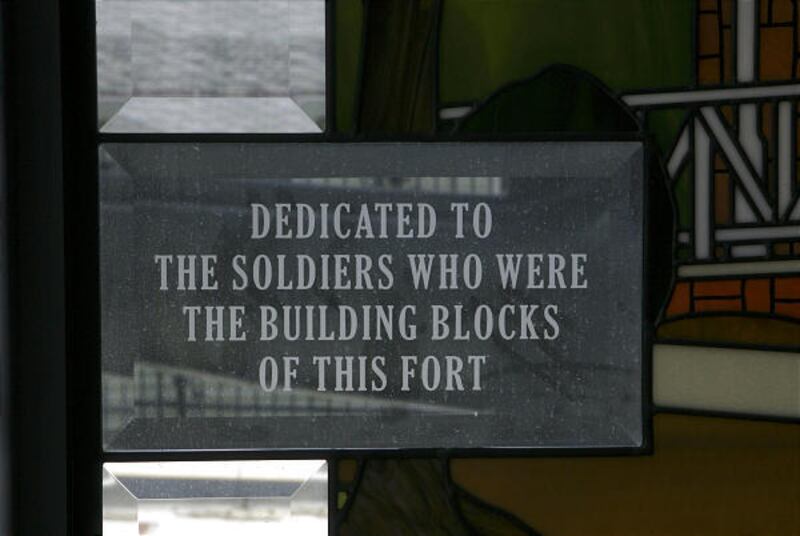
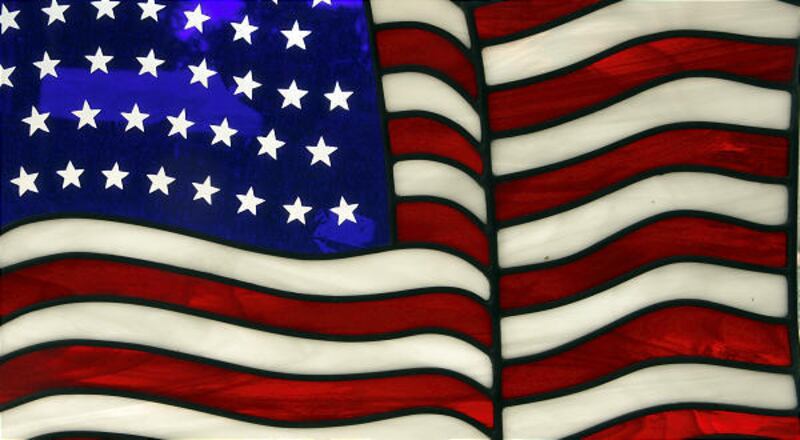
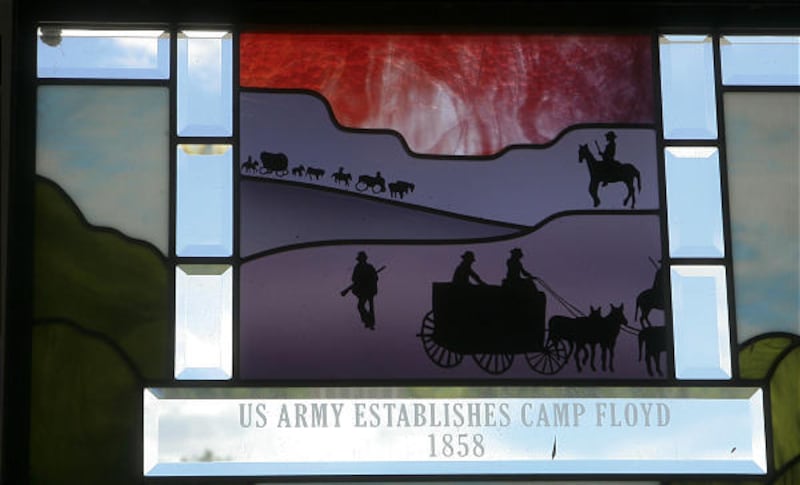
The design of the window highlights four epochs of military history: 1857-61 and the establishment of Camp Floyd; 1862-78, the rise of Camp Douglas; 1878-1991, the permanent Fort Douglas; and 1991-present. Each epoch is represented by two window panels. In the lower left portion of each section, there's an American flag showing the number of stars the flag had at that time; on the lower right side, there's a brief history etched in glass. Small insets highlight historic events of each epoch, some done in stained glass and some as etched reproductions of photographs. The unifying theme for all eight windows is an external view of both the east and west buildings of the museum.
"There are so many interesting little tidbits of history here," says Iker; "we don't want them forgotten." One of the small panels honors the Buffalo Soldiers, who were stationed at Fort Douglas during the Spanish-American War. "When they first came here, there were some who were opposed to it, who thought, as black men, they wouldn't be welcome here. But they turned out to be very popular. They would go to dances; they were good baseball players. And when they went off to Cuba, the whole city turned out to see them off. Then, when they came back two years later, the whole state turned out. Attitudes had changed."
Another panel honors Gen. George C. Marshall, Army chief of staff during World War II and postwar secretary of state. "He authored the Marshall Plan that saved Western Europe," says Iker. "Not many people know that in 1916, Captain Marshall was the adjutant of Fort Douglas and lived with his family on Officers Circle."
It is important to remember what happened at Fort Douglas, says Iker. "All history is important. If we don't learn it, we keep making the same mistakes over and over. I'd like to see more people interested in it. In Utah, the early military and the first pioneers were so connected."
The Fort Douglas Museum was established in 1977 to tell that and other stories of the military in Utah, says Voyles. "It was originally an Army museum, but it has expanded to include all military."
The museum is housed in buildings that were originally the barracks. What Iker particularly loves about the buildings is that they were built by the soldiers out of sandstone quarried in Red Butte Canyon. "The soldiers got an extra 3 cents a day if they excavated the rock, and an extra 13 cents a day if they helped build. That supplemented their regular pay of $13 a month." In those days, that was a lot of money, he says, and the buildings are a historic symbol of times long gone.
"The museum is truly an undiscovered treasure," says Linda Hunt, executive director of the Foothill Cultural District, a consortium designed to heighten awareness of cultural attractions in the Emigration area, including Red Butte Garden, This Is the Place Heritage Park, Utah Museum of Natural History, Utah Museum of Fine Arts, Hogle Zoo, Olympic Cauldron Park and Fort Douglas Military Museum. The museum sometimes get overlooked, she says, "but they have some wonderful things here. And this new stained-glass wall is just stunning. I don't know if there is another military museum in the country whose history is rendered in such a vivid and intense medium as stained glass."
The window "is a really great addition," adds Voyles. "It offers an unexpected, beautiful experience that you might not think to find in a museum on military history. It tells the history of the fort, but it is also an exquisite work of art."
If you go . . .
What: Fort Douglas Military Museum
Where: 32 Potter St., Fort Douglas
When: Tuesday-Saturday, noon-5 p.m.
How much: Free
Web: www.fortdouglas.org
E-mail: carma@desnews.com