

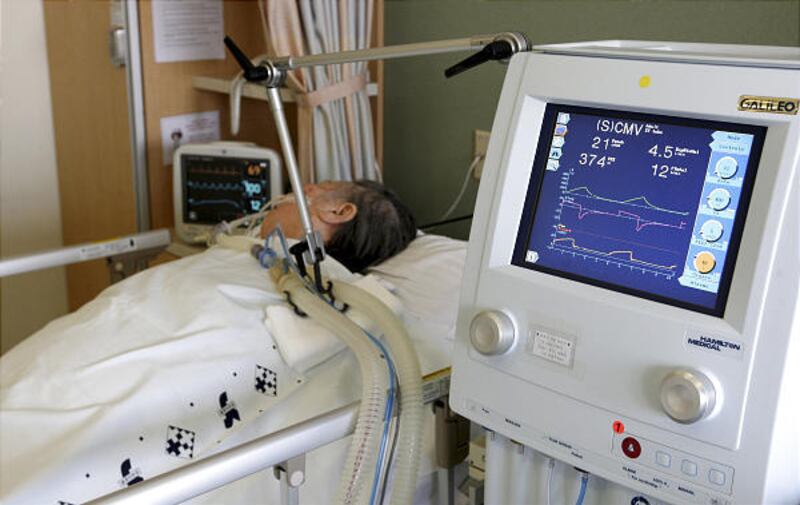
SEOUL, South Korea — Doctors removed a life-supporting respirator from a comatose woman at the center of a landmark right-to-die case on Tuesday as her family and two judges looked on.
The 76-year-old patient, identified only by her surname, Kim, was still breathing several hours later, hospital officials said. She will continue to be fed fluids and nutritional supplements since a court order only authorized the removal of the respirator, hospital chief Park Chang-il said.
Kim has been in a vegetative state since suffering brain damage in February 2008. Her family sued to force doctors to take her off the respirator, saying she opposed keeping people alive with machines when there was no chance of revival.
The Supreme Court, upholding lower court rulings, granted the request last month, saying that continued medical treatment on such patients can "tarnish people's dignity."
The verdict — the first of its kind in South Korea — heralded a profound shift in the country's attitudes toward death.
Doctors at Seoul's Severance Hospital took Kim off her respirator as her family and two judges watched Tuesday.
"I prayed with all my heart that the patient will rest comfortably," said Dr. Park Moo-seok. Park said her death could take longer than expected if she continues to breathe.
The hospital cautioned against using Kim's case as an example for stopping medical care to other suffering patients.
"Human lives are precious and are worth defending to the end," the hospital said in a statement. "Joy and pain are a part of life. There should be no such thing as making light of a dignified life under the name of a peaceful death."
Societal mores and laws in South Korea have largely been shaped by Confucian ideals that call for preserving and honoring the body. As recently as 2004, two doctors who took a severely brain-damaged patient off life support were convicted of "abetting murder" and received suspended prison terms.
But public sentiment has shifted in recent years; a 2008 survey indicated a majority of South Koreans favor stopping life support for the terminally ill.
Christian groups have voiced concern about the verdict.
"This verdict might bring about the wrong perception that human beings can choose the timing of their deaths, and we have concerns that it could lead to a trend belittling human lives for economic reasons and other burdens," said Chang Ik-sung, an official at the National Council of Churches in Korea.
According to a 2005 census, about 53 percent of South Koreans said they practiced a religion, with 55 percent of them Protestant or Catholic Christians and 43 percent Buddhists.