



Sixty years ago, Americans waited in anticipation for the peace they craved or worried about another long European conflict.
They watched Berlin as the Russians blockaded the city's western section of the city and the Allies pulled together an initially sloppy, makeshift airlift to provide residents with basic necessities.
There were politics, egos and human lives to consider, and it was a complex and conflicted time for those struggling to navigate the postwar world.
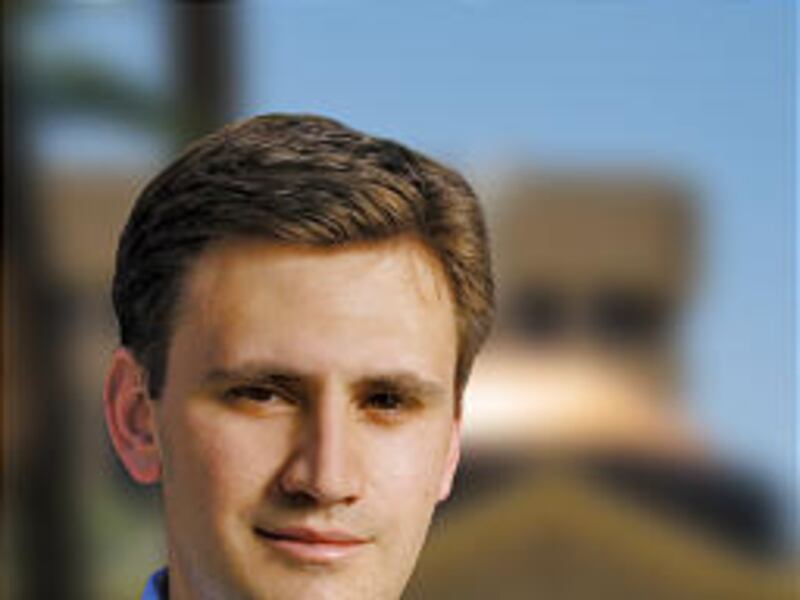
In his book, "The Candy Bombers: The Untold Story of the Berlin Airlift and America's Finest Hour," Andrei Cherny pulls together facts and individuals into a beautifully written, compelling story of hope, gratitude, loyalty and accomplishment.
Cherny said that writing such a detailed, layered account required four years of research in libraries and with individuals, but that he believes the story is appropriate for today.
"The issues we were dealing with then — how to occupy a country and have it turn out well, how to win friends around the world — were relevant to today," he said. "And the more I looked into it, I realized there were some fascinating characters with interesting twists and turns that would make an interesting story to tell."
These characters, including President Harry Truman, Gen. Lucius Clay and Secretary of Defense James Forrestal, are depicted realistically. Cherny documents their successes and failures, gifts and faults. He said that this should not take away from them but serve as a testament to their accomplishments.
"Truman and his generals were incredibly imperfect people," Cherny said. "I wanted to show them as they were, which doesn't make what they did less inspiring. It makes it more inspiring. Here were people in the midst of terrible circumstances who were able to avoid World War III and change the course of history."
Of all the dramatic, tense moments and bold leaders in the story, for Cherny, the most moving part was the experiences of Berlin's children.
"The parts that get me the most are the parts I didn't even write, were the letters of the children," he said. "Reading those was really a highlight for me."
Cherny said that the story of the Berlin Airlift and those involved teaches of the power of America's image as a source of inspiration and courage, but also the ability of individuals to make change.
"The book is about human kindness," he said. "Someone like (Utahn) Gail Halvorsen who, without thinking about it, did acts of kindness that sent ripples through history and changed the world we live in fundamentally. It's a good reminder to all of us that the small things we do can have huge ramifications."
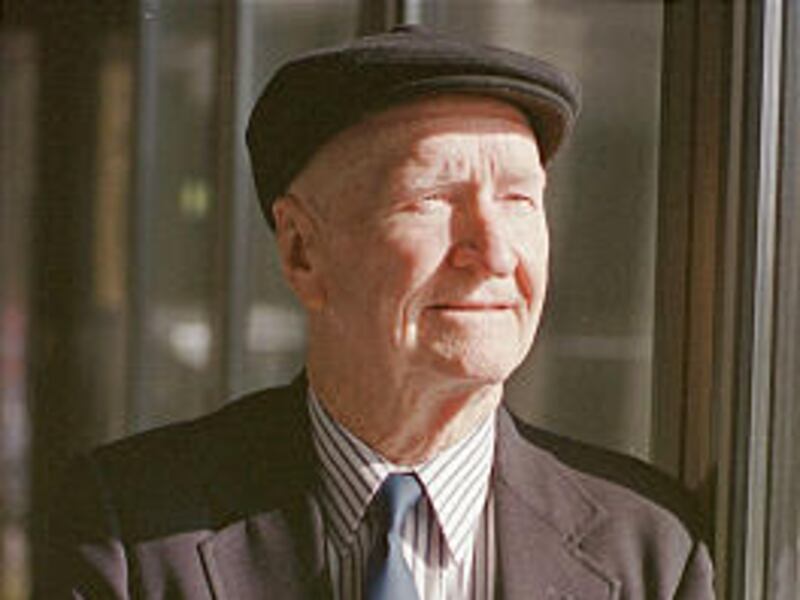
Gail Halvorsen, the source of the book's title, is a pilot born in Salt Lake City and reared on small farms in Utah and Idaho who found himself in Berlin after taking the spot of a friend. One day, he sacrificed sleep to explore Berlin and found himself with the city's children, watching the planes in fascination. He shared the two sticks of gum he had with them and, feeling that the gum was insufficient, Halvorsen promised to drop more candy to the children the next day. This led to thousands of parachutes dropping little candy "bombs" to children all over Berlin.
According to Cherny's book, this act changed the ideological stance of Americans and Berliners everywhere, as American candy companies donated their goods and Berliners wrote letters of deep gratitude — and both sides realized the other was human. Halvorsen said that one Berliner he met at a 50th anniversary event confirmed that it was about a lot more than just candy.
"While we were in Berlin, the Berliners came through en masse and those who were there in 1948 came to the airplane with tears … one man was 60 years old and he came up to me and said, 'Fifty years ago I was a boy of 10 and … out of the clouds came a parachute with a fresh candy bar that landed at my feet. It wasn't the chocolate that was important. What was important was that someone in America cared about me and knew I was in trouble,'" Halvorsen said.
Halvorsen said he had no idea of the impact those first two sticks of gum would make and that he made that promise only because he was so impressed by the children of Berlin.
"These children were living in ruins and there was not enough to eat and there'd been no chocolate for months, but not one of them, even by voice inflection or by body language, said: 'Hey, dummy, don't you know we want chocolate more than food?'"
The gratitude these children demonstrated for food and freedom was one of many lessons Halvorsen said could be taken from the airlift. Service before self, the impact of small decisions, the importance of attitude and the power of hope are the others he learned from the airlift and the Latter-day Saint faith with which he was raised. Service in the church is the closest he said he ever came to the importance of his candy bombings and service in the airlift.
"My wife and I served in England, the Joseph Smith Building and in Russia, and those were the only times that I had a feeling of being of some worth to the world besides the Berlin Airlift," he said.
Despite attempts by many to characterize Halvorsen as a hero, he insists it was the children of Berlin and some of his fellow servicemen who were the true heroes.
"In the Berlin Airlift, there were 31 American and 39 British heroes," he said. "Those are the one who gave their lives for a former enemy. I was just doing my duty and having fun dropping chocolate bars."
e-mail: emorgan@desnews.com