



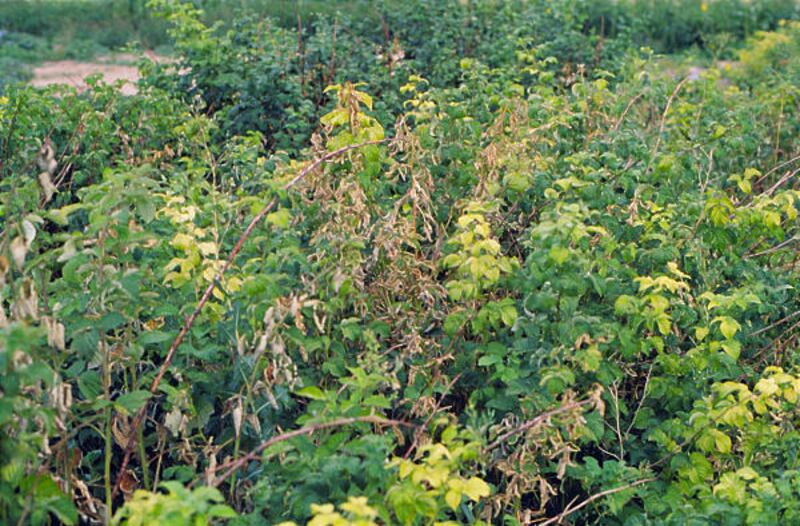
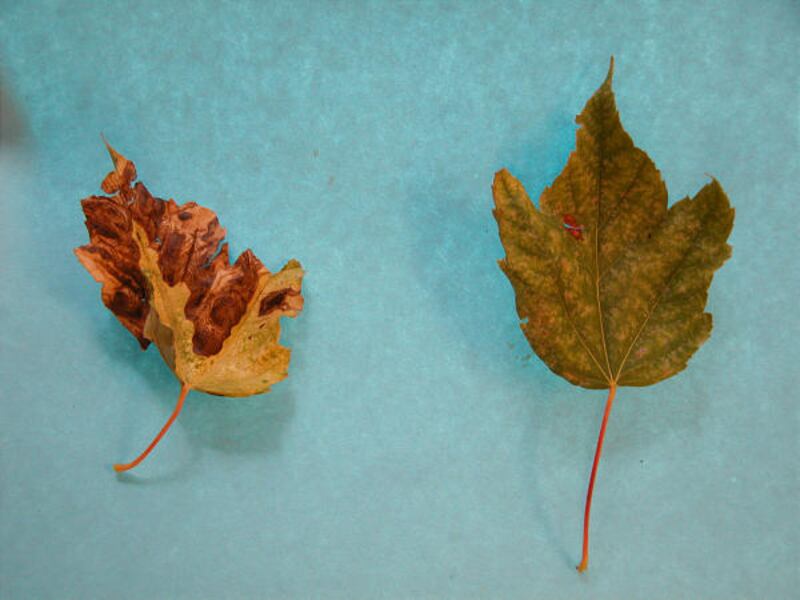
If you think you have the midsummer blues, look at your trees.
Many are plagued with a bad case of the midsummer yellows, more commonly referred to as iron chlorosis. With the abundant rain in June, there are even more chlorotic plants than usual.
Growing healthy plants requires 17 essential elements. Of all of these, the one that is the most troublesome in Utah is the micronutrient iron. It is a misunderstood and certainly frustrating element to deal with.
The chlorosis part also leaves some people confused. Chlorosis is a symptom of a lack of chlorophyll.
If you don't remember your high-school biology, chlorophyll is the green material that gives plants their color. This is the critical growth pigment that converts the sunlight into food for the plant and food for all of the animals in the world, including us.
That said, there are many kinds of chlorosis. Lack of nitrogen, zinc, manganese, sulfur or other elements prevent leaves from making chlorophyll so they have a chlorotic symptom.
The leaves of plants with iron chlorosis turn light green, yellow or even white if the problem is severe. In most cases, the leaf veins remain dark green. Silver maple, some oaks and willows, pears and some other plants develop distinctive black spots on the leaves when they are severely affected by chlorosis.
Severely chlorotic plants are unable to manufacture food, so they don't grow well and don't produce good crops of flowers or fruits.
The plants are less able to survive the winter, and if the condition lasts for several years, the plant will die.
Utah soils make correcting chlorosis problems very difficult. It is critical to understand that the problem is not lack of iron in the soil.
Desert soils – particularly those that are formed from weathered limestone — are high in lime or calcium carbonate. That means most of our soils are alkaline, with pH ranging between 7.2 and 8.3. That makes iron unavailable to the plants.
If you were to run a soil test on most any soil in Utah, it would show sufficient iron. (Ironically, iron chlorosis problems are even more severe in southern Utah, where the red sand and the red mountains are colored by the excess iron in the soil.)
Excessive soil moisture or soil salinity aggravates iron chlorosis. High phosphorous, copper, manganese and zinc levels in the soil increase problems, and soils that are too cold or too hot also are more likely to produce chlorotic plants.
Other perplexing aggravations that increase chlorosis include abundant organic matter or root problems from nematodes or root diseases. The latter helps explain why one side of a plant can look healthy and green while the other side is bright yellow.
Controlling chlorosis problems is difficult. I recommend you start with the easiest solutions and then progress to more difficult (and expensive) solutions.
Start by choosing iron-efficient plants. There are many plants that are highly susceptible to iron chlorosis. Azaleas, rhododendrons and blueberries grow well with acidic soils but struggle and die here.
Check the plants growing in your neighborhood. Silver maple, red maple, sugar maple, Amur maple and many birches, as well as pin oak, dawn redwood and sweetgum struggle badly and turn yellow.
Avoid these plants when possible, as there are usually acceptable substitutes for them.
Other trees that are somewhat susceptible to chlorosis in Utah include bald cypress, crabapple, white pine, cottonwood, aspen and Bradford pear. If the soil pH is high or the trees are improperly cared for, many of the common conifers, mountain ash, horse chestnut and many other species become chlorotic.
Many shrubs that also share a tendency to develop chlorosis include boxwood, cotoneaster, flowering dogwood, hydrangea, privet, pyracantha and spirea. Roses can show severe iron chlorosis. Specific cultivars or varieties vary in their susceptibility to the problem, so check local rose gardens to see what kinds are less susceptible.
While switching plants works on many ornamentals, other plants have no adequate substitutes. If you want to grow raspberries, strawberries, peaches or Concord grapes, it might be worth modifying the growing environment or adding iron to get those plant to produce in your garden.
Because controlling iron chlorosis requires more complex solutions than just adding products, we'll discuss those in a future columns.
Larry A. Sagers is a horticulture specialist for the Utah State University Extension Service at Thanksgiving Point.