


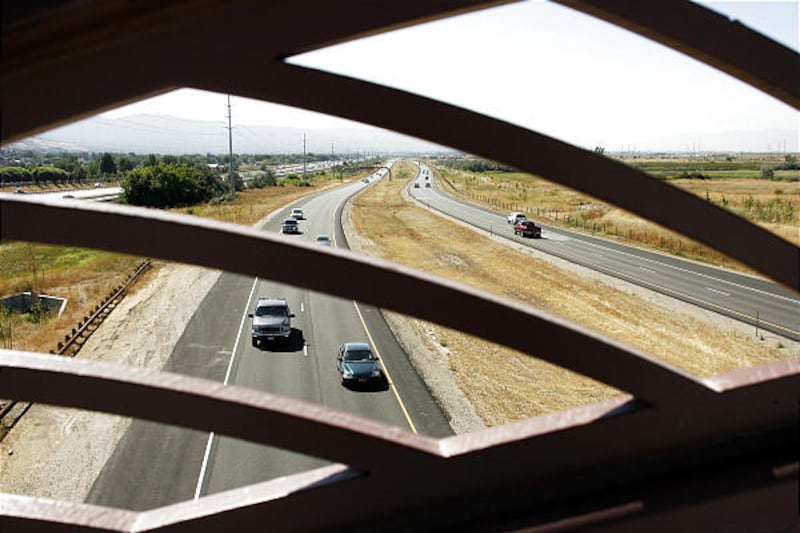
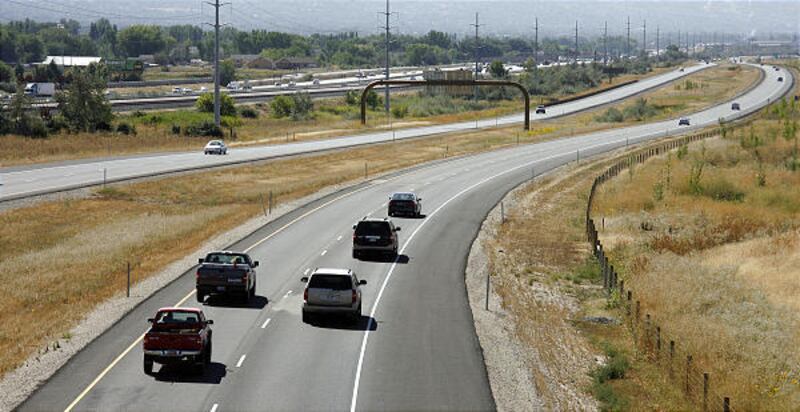


Happy birthday, Legacy Parkway! You're 1 today! When it comes to highways, you're just a little tyke: 14 miles long, two lanes each direction. But you have big dreams, and you've changed people's lives.
It seems like only yesterday when then-Gov. Jon Huntsman Jr. mounted a Harley and began driving south. Everyone cheered when you opened.
Most people groaned at how much you cost the state — $685 million. But the thousands of people who were stuck on I-15 in July 2008 when that 110-foot tanker blocked traffic would have shelled out that much to see you open early.
Though not as many people are driving on you today as did a year ago, you're still a beloved stretch of pavement.
If you try really hard, you might just be a national scenic byway some day. And you might grow up if an environmental study pans out.
The Utah Department of Transportation is glad you're around, and so are the thousands of people who commute to work on you instead of your big brother, I-15.
Happy birthday, little guy.
This is your life
Cheryl Ward remembers what she calls the ugly commute home from Salt Lake City to her home in Clinton. In the morning, getting to work was no problem because she left early. But when quitting time came around, she was on I-15, at a crawl, along with everyone else.
It would take up to 90 minutes to get home some days.
"I've often hated my commute," Ward said.
Ken Hodges, of Roy, was in the same boat, er, logjam. For the past 6 1/2 years, he has been commuting from Roy to Magna to his countertops business, Top Haus.
From I-15 to I-215 to state Route 201 to 3200 West, his commute was an hour and 10 minutes.
Hodges immediately began taking Legacy Parkway when it opened in 2008. Even with speeds limited to 55 mph, he saves time — up to five hours a week.
"I can make it during rush hour in 40-50 minutes, right in that range," he said.
Ward says the parkway is "like being in another world" and gets her home in 40 minutes.
"I think everyone would say it's successful," said Vic Saunders, a UDOT spokesman.
One way to measure that is by the average number of daily trips on the parkway.
When it opened, 30,365 trips were being made between 500 South in Woods Cross and Parrish Lane in Centerville. In 2009, though, that number has dropped to 29,263 — about 1,100 fewer trips.
But a tight economy has meant less commuting in general.
"The numbers are holding with what is expected," Saunders said. "Just having that safety valve there for when things do occur on I-15 and having an alternate northbound route is worth it all by itself."
And then there are the stories such as Ward's and Hodges' — stories Saunders said UDOT officials hear frequently.
Playing with others
The parkway was more than a decade in the making. Politicians first discussed a multilane highway connecting Weber County to 5600 West in Salt Lake County in 1996. The proposition was immediately controversial because of farmland and wetlands.
Construction started in 2001 with a $451 million budget, but a lawsuit in November 2001 by the Sierra Club, Utahns for Better Transportation and then-Salt Lake City Mayor Rocky Anderson led to an injunction that halted progress on the roadway until 2006.
In the meantime, UDOT returned to the drawing board and began incorporating ideas that the environmental groups suggested.
Speeds were reduced to 55 mph. Asphalt was sound-absorbing. Commuter rail was suggested. The highway became a parkway that meandered around wetlands and utilized the natural surroundings for signs and interchanges. It was more aesthetically pleasing.
Conservationists and the state worked on a mitigation plan for the birds. No such plan existed in the past. The state brought together 2,200 acres of contiguous private and public lands, skirting the Great Salt Lake.
"This is something we were betting the public would love," said Marc Heileson, Southwest representative of the Sierra Club. "And when we see races for cancer and thousands of people coming out, people calling and saying, 'We went on the Legacy Parkway. We stopped. We walked on the trail and saw birds,' we couldn't be more thrilled that the public has embraced this project."
A wetlands manager works in the area to monitor the habitat.
"There's a right way to do things, and it's with balance," Heileson said, suggesting that other communities throughout the United States can use the Legacy model to solve their problems when transportation and environment sensitivities butt heads.
Legacy also has played a part in diverting riders from the Utah Transit Authority's FrontRunner commuter-rail train.
In August 2008, ridership was 211,212, according to data provided by UTA. But by November 2008, ridership dropped to 123,175.
"We recognize Legacy's opening changed the traffic patterns in Weber and Davis County," said UTA spokesman Gerry Carpenter, adding that the economy has played a role in that as well.
Utah unemployment in July, the month with the most recent numbers calculated, was 6 percent.
"If people aren't employed, they aren't commuting," Carpenter said.
UTA built FrontRunner with Legacy in mind, he said.
"Congestion will always continue to build," Carpenter said. "The nice thing about FrontRunner is we can add capacity (by adding trains) easier than adding a lane (on Legacy)."
Growing up
But officials in Davis County hope the parkway is so aesthetically pleasing that it receives designation as a National Scenic Byway.
Such a status would be like adding a trophy to the Legacy Parkway's mantel. The parkway would land on more maps, gain eligibility for future funding and be Utah's ninth National Scenic Byway.
Earlier this year, the cities the parkway runs through submitted an application to the U.S. Federal Highway Administration seeking scenic byway status.
"We haven't heard anything back," said Woods Cross city manager Gary Uresk, chairman of the committee seeking the status.
The committee is also waiting to hear back on a scenic byway grant to help fund the installation of some restrooms along the Legacy Parkway trail, which runs the length of the parkway from Farmington to North Salt Lake.
Eventually, officials in Davis and Salt Lake counties expect to connect Legacy's trail to the Jordan River Parkway.
But the lack of national scenic status hasn't stopped someone from installing official signs along the parkway marking Legacy as a National Scenic Byway, Uresk said.
Maturity
When the economy picks up some day, officials in West Bountiful and Woods Cross expect to reap some economic benefits from the parkway's passage through their cities. Both cities have created special zones to attract certain businesses, such as corporate headquarters, offices, light manufacturing and a certain amount of retail, in the area of 500 South, said Woods Cross Mayor Kent Parry.
Some of the local landowners have talked to national developers, Parry said.
"But the time is not right where development is concerned," he said.
Currently, state Route 67, Legacy's official highway designation, is about half of its potential size in Davis County, where community leaders have begun buying land for the highway's future expansion.
So far, they have purchased 66.9 acres, really just a grain of asphalt in terms of what is needed to build a road from Farmington along western Davis County to the Weber County border.
Every year, Davis County collects about $2 million in vehicle registration fees, funds designated for buying land for future roads.
Scott Hess, a planner with Davis County who administers the funds, said he plans to recommend that county leaders let the fund regenerate over the next few months so there will be sufficient money to pay for six parcels whose owners are ready to sell.
"We're barely starting," Hess acknowledged.
But all of the parcels that have been purchased are located only in the proposed corridor, which was identified in a 2001 study, Hess said.
Saunders said UDOT plans to get a more extensive study under way in early 2010. The environmental impact study, which is expected to cost $7 million to $8 million and take three years to complete, will identify the potential impacts to homes, land, the environment, cultural and other resources. It will also identify if there is a purpose to building such a road and estimate the costs for a variety of alternatives.
"We will conduct this study with the finest-toothed comb possible," Saunders said.
As for Ward, who makes the drive from western Clinton to Salt Lake City every day, the need has already been identified.
"I just wish Legacy went farther north," she said. "Anything to bypass Kaysville and Layton."
e-mail: jdougherty@desnews.com, lhancock@desnews.com
TWITTER: desnewsdavis, laurahancock
Legacy Parkway
14 miles long
$685 million cost to build
Second-largest construction project in UDOT history
55 mph speed limit
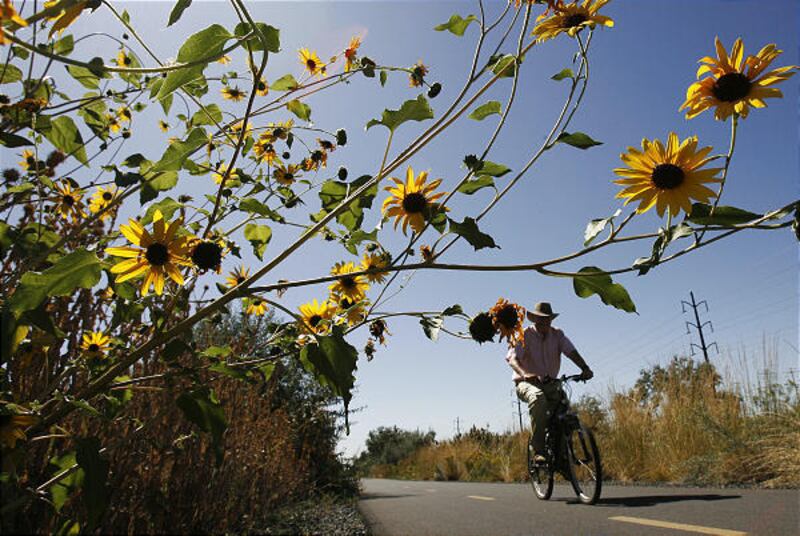
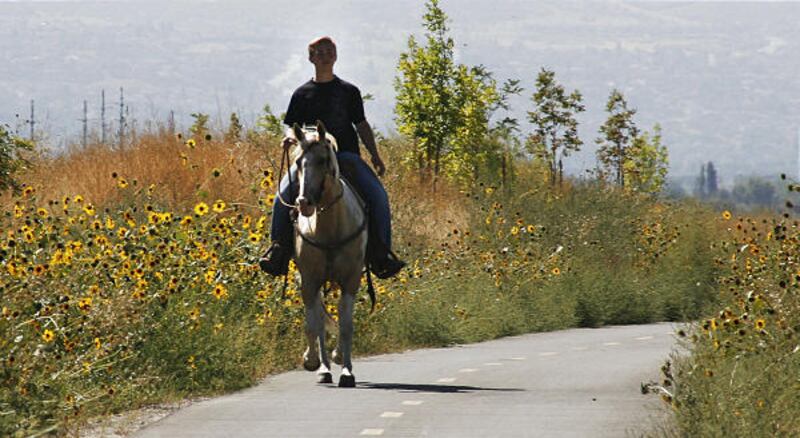
Multi-use trail runs full length of parkway
Skirts a 2,225-acre nature preserve
Built using 182,845 cubic yards of concrete