
Most of the approximately one million visitors a year go to Hogle Zoo come to see the animals. After all, that's the facility's focus. However, there's a colorful and lengthy history behind many of the features at the state's largest zoo, going back almost eight decades to 1931.
It's a history visible before zoo guests even get inside the gates.
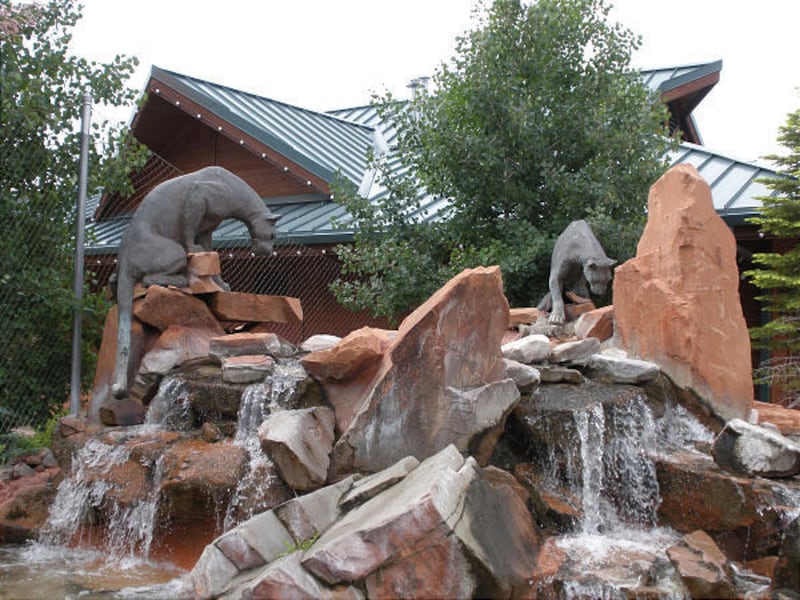
Look closely at the two bronze sculptures of cougars by the waterfalls at the east side of the zoo's front gate. These same mountain lion models used to be perched atop the historic granite pillars entrance gate to Hogle Zoo, along Sunnyside Avenue, from 1947-2000. The felines, created by Avard Fairbanks, were refurbished and then incorporated into the zoo's new entryway, which opened in 2001.
Lund said old-timers will also recall that Sunnyside Avenue was relocated in the 1960s and moved northward. It used to travel where the south side of today's parking lot is. That realignment allowed zoo parking to be contiguous to its entryway.
Hogle Zoo also has a Works Project Administration legacy. The main rock wall behind the zoo's new amphitheater is a product of the federal works project, which was built in the 1930s soon after the zoo relocated to 2600 E. Sunnyside Ave. from Liberty Park.
The wall is 12-15 feet thick, according to Hogle Zoo assistant director Doug Lund. He said the wall was reinforced with a lot of metal, which was likely salvaged during the Great Depression. Some old wagon wheels were even found in the wall's composition.
What's the oldest building at Hogle Zoo? The zoo's first structure still stands as the current Zoo Auditorium. It houses an auditorium space, offices and the golden lion tamarin and capuchin monkey exhibits. It is located down from the Hogle Monument just after the main entry plaza, near the camels.
This structure was built in 1931 to house the zoo's elephant, Princess Alice.
"It has been remodeled about four times," Lund said.
It has also housed lions and tigers over the years and was even part of a greenhouse at one time. Its east half roof had to be replaced in 1984 after it collapsed from a heavy snowfall.
The zoo's oldest structures, still being used for the original purpose today, are the bear and cougar grottoes. They were built in 1957 and still house those animals. However, they will be replaced when the zoo's next big project, "Arctic Edge," which will house the polar bears, becomes a reality.
How about the Hogle Zoo miniature train?
It has been running around since 1969 and Lund estimates it has given joy to some 8 million riders during those four decades. Designed after an 1860 steam engine, the "C.P. Huntington," owned by the governor of California, its 24-inch tracks have been relocated three times over the years. The train can carry 76 passengers and now hauls a total of 400,000 riders each year.
Remember the lion head drinking fountains? The original lion fountain arrived at Hogle Zoo in the 1950s, has been refurbished a few times and is now found by the penguin pool. There are also two new versions of the fountain in use at the zoo.
Lund said he even has some old photos of himself as a youth with his head inside that lion's mouth.
Lund also said observant guests may spot some almost hidden features at the zoo. For example, there are six small dinosaurs hidden within the seven continents mural, above the zoo's carousel ride.
"It's kind of fun to spot them," he said, even though they are only a few inches tall.
There's also an elephant sculpture, only about 5 inches tall, carved into the main roof truss in the center of the Elephant Encounter Lodge.
e-mail: lynn@desnews.com