

It's time to get in "the zone."
No, this is not a sports column, but getting in the zone is an important horticultural need. The dramatic change in the weather brings to mind a common question that I often get from gardeners throughout the state.
Frequently these conversations start with, "Will this plant grow in my garden or in my area?" "How do I know what plants will survive here?" "What are plant hardiness zones and what ones apply in my area?"
There are many reasons why a plant will not grow in certain areas. It could be the soil, the amount of sun the area gets, the water requirements of the plant or many other factors.
One of the most common factors that has become evident now is the temperature.
Plant temperature requirements vary greatly. In Utah, temperature fluctuations are primarily a function of elevation above sea level.
Plants grow in the very coldest areas near the top of King's Peak, Utah's highest mountain at 13,528 feet. Cacti and other plants grow in the Beaver Dam Wash at only 2,000 feet.
The temperature extremes in Utah are phenomenal. The record high temperature was 118 degrees F, recorded near St. George on July 4, 2007, and the record low was -69 degrees F recorded at Peter Sink in Logan Canyon on Feb. 1, 1985.
That is a fluctuation of 187 degrees F!
Few areas on Earth have that great swing in the thermometer readings. While these fluctuation extremes do not occur in every area, my own garden has unofficial recorded temperature extremes of 130 degrees F.
The U.S. Department of Agriculture used temperature extremes with the frost-free growing season and average annual minimum temperatures to divide North America into climatic zones.
The map shows 10 zones, each of which represents winter hardiness areas for agriculture and landscape plants. These are based on the lowest temperatures recorded for each of the years 1974-86 in the United States. It also includes zone 11 which never freezes.
To increase the usefulness of the map, Zones 2-10 are subdivided into light- and dark-colored sections (a and b) that represent 5 degrees F differences within each zone. The map-contains as much detail as possible, considering the vast land area it covers and is accepted nationwide.
This is the zone map used in most garden catalogs and at local nurseries. It shows Wasatch Front areas as Zone 6b, with an average low temperature of -5 degrees to 0 degrees F, or 7a at 0 degrees to 5 degrees F. The map is available at www.usna.usda.gov/Hardzone/ushzmap.html
If you have gardened in Utah for many years, you know temperatures in those areas often drop below those levels. Many nursery people would advise selecting trees that survive Zone 5a, which would include plants that could survive temperatures of -20 degrees to -15 degrees F.
Sunset Publishing also has a set of climatic zones that it uses in the Sunset Western Garden Book. These are not the same designations as the USDA hardiness zones.
It lists the mountainous areas of Utah as Zone 1A, the west desert as 2A, the Wasatch Front as 3A and the warmest areas of southern Utah as Zone 10. The map can be found in the book and online at www.sunset.com/garden/climate-zones.
For some more localized information, consult the Utah Climate Center at Utah State University. Here you can find specific information from a weather station near you. While this does not include specific zones, it does give some very specific frost-free growing season information.
This chart includes a few of the more than 300 stations in Utah. Some have collected data for more than 100 years. It is available at climate.usurf.usu.edu/reports/freezeDates.php.
In the chart printed here, I included the Triad Center, where the Deseret News now has its offices, the Salt Lake City International Airport as well as St. George.
This information can be deceptive. For example, it shows the Triad Center with a longer average growing season than St. George. But looking at the data, the Triad weather station has nine years of data compared to 93 years in St. George.
Just to make you grateful for where you live, I also included Woodruff. While I do not want to offend anyone who lives there, one year Woodruff had a one-day frost-free growing season. That makes it pretty tough to grow tomatoes there.
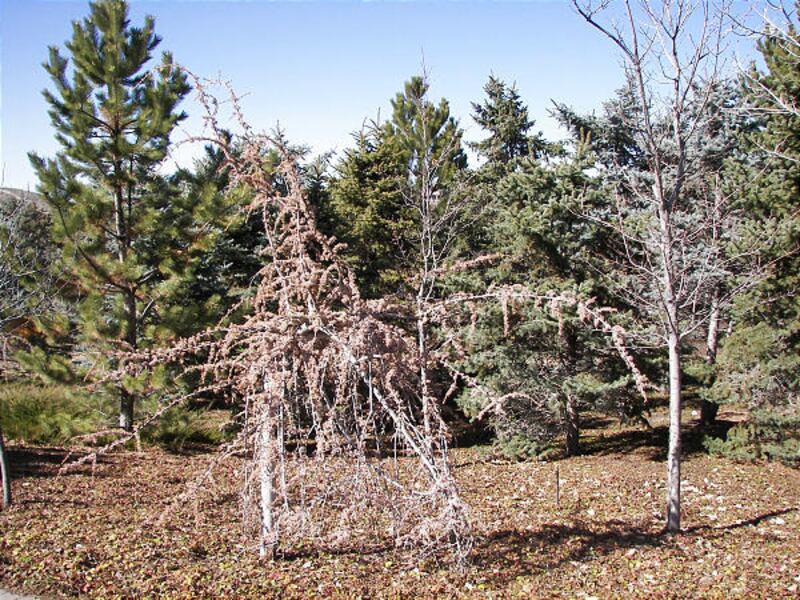
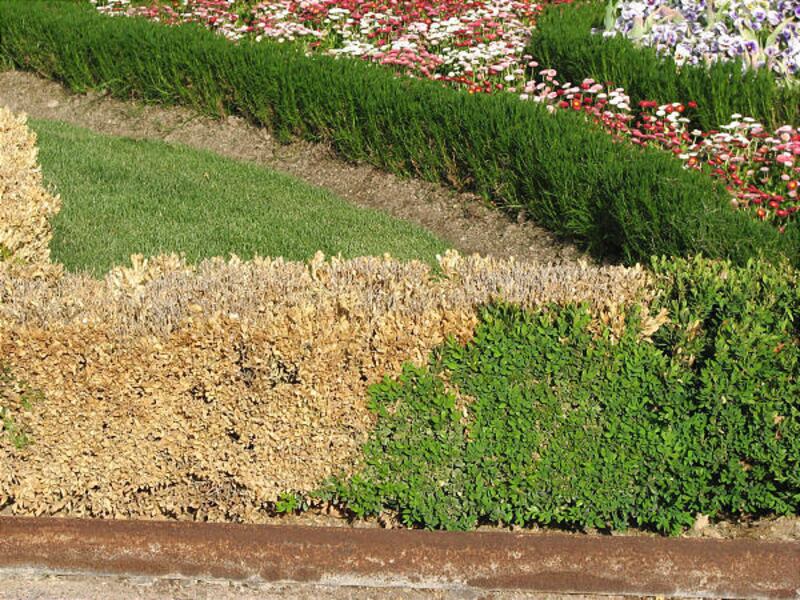
Make certain your plants are in "the zone." While we often grow many plants that are outside their hardiness zone, every few years, Mother Nature reminds us that she controls the weather. You don't want your plants to be the victims.
Larry A. Sagers is a horticulture specialist for the Utah State University Extension Service at Thanksgiving Point.