

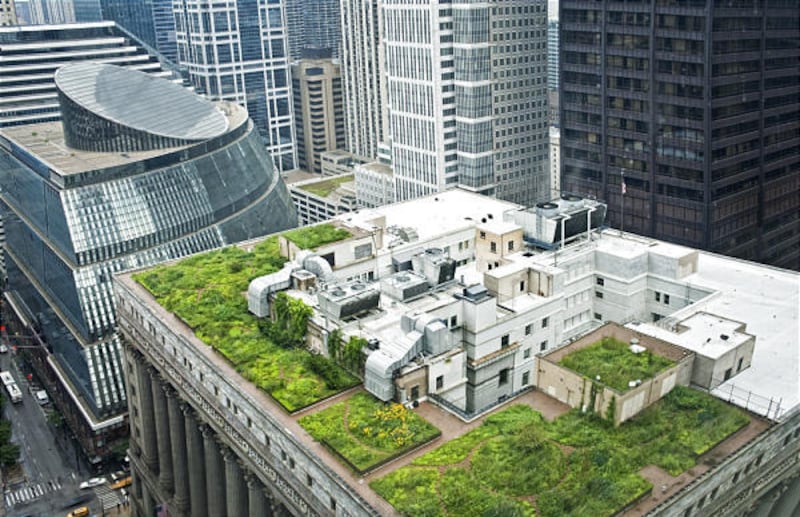
Considering that urban sprawl is wiping out much of the available green space in our cities, we only have to look up for solutions. Rooftop gardens offer numerous opportunities to replenish much of what has been destroyed. Green roofs are gaining popularity in both commercial and residential design as a way to reduce our carbon footprint.
A green roof is a special type of rooftop garden that is partially or completely covered with plants, as well as a carefully calculated infrastructure and growing medium. These living roofs offer many environmental benefits such as helping to absorb rainwater and reduce runoff, providing insulation, creating a wildlife habitat and helping combat the heat-island effect by lowering urban air temperatures.
In my travels this year, I had the great fortune to visit Chicago's famous city-hall rooftop garden. This garden was the vision of Mayor Richard M. Daley as a result of his concern for the environment. Since completion of the city-hall garden in 2001, Daley's influence has been felt in cities across the country; the mayors of Atlanta and Portland, Ore., have followed suit.
Today this 20,000-square-foot garden on top of the 11-story city hall is not only beautiful but is also a showcase for the possibilities and benefits of rooftop gardening.
Most of the special lightweight soil mix is about 3 to 6 inches deep, and only 18 inches deep where trees are planted. Both native and non-native plants were used in the design. Most of the plants are prairie plants, intended to create an inviting habitat for birds and insects.
Some of the plants include: bee balm (Monarda), black-eyed Susan (Rudbeckia), blazing star (Liatris), asters, tickseed (Coreopsis), switch grass (Panicum) and goldenrod (Solidago). More than a dozen different sedum species are under-planted throughout the garden. These plants act like a blanket to hold the root systems together. Sedum, a succulent also known as stonecrop, is a commonly used rooftop plant that thrives in drought and tough conditions.
One of the main considerations in designing a rooftop garden is the weight load on the building. A structural engineer must determine if the site can support the weight of the infrastructure and planting mix, and consider other factors such as waterproofing and drainage.
I learned some amazing facts during my tour from Suzanne Malec-McKenna, Chicago's commissioner for the Department of the Environment. "Studies have shown that on an overcast day at 74 degrees, the temperature on the roof is 74 degrees, reducing the pressure on indoor heat and air demands," she says. A black-tar roof would be 156 degrees, and even a highly reflective white roof would be in the range of 105 to 110 degrees.
Managing storm water is a huge environmental benefit of green rooftops. "Seventy percent of a 1-inch rain gets captured on this city roof," says Malec-McKenna. That means most of the storm water is captured on-site and fewer pollutants flow into the surrounding waterways.
Rooftops can be very productive in terms of growing produce. We visited Uncommon Ground, a Chicago restaurant having the first certified organic rooftop farm in the country. The 650-square-foot plantable area of the 2,500-square-foot roof deck provides fresh organic produce for the diners. Plants include sweet and hot peppers, eggplant, lettuces, radishes, beets, okra, spinach, fennel, mustard, bush beans, shallots and one of my very favorites — heirloom tomatoes. Beehives are kept on this rooftop garden as well, to aid in pollination. The restaurant also grows a large variety of herbs and colorful flowers.
With proper attention to detail, a green roof can be installed on a typical sloped suburban roof or on a flat roof. Although the initial costs of installing a green roof are more than putting in a conventional roof, there are a number of benefits. Your roof will last longer and you'll also reap the energy savings with fewer fossil fuels wasted, while also doing something good for the environment.
Joe Lamp'l, host of "Growing a Greener World" on PBS, is a Master Gardener and author. For more information, visit www.joegardener.com.