



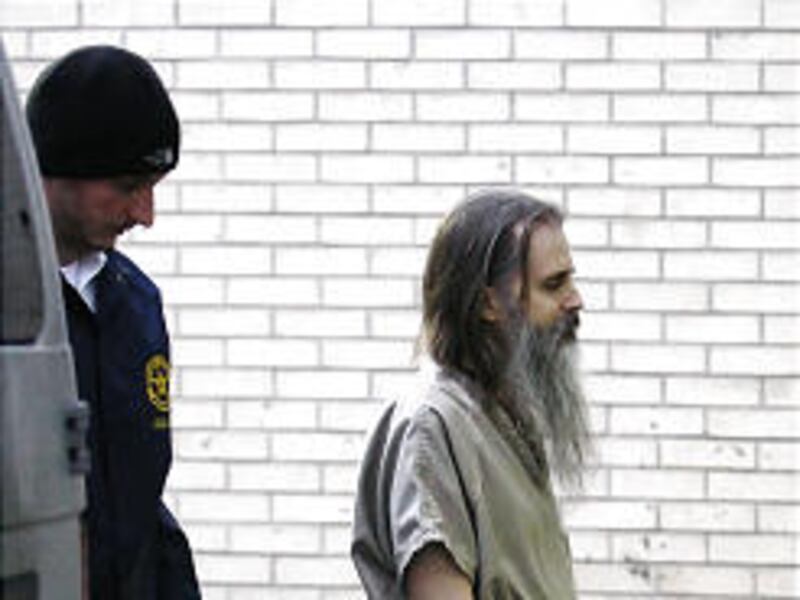

SALT LAKE CITY — Brian David Mitchell's behavior — from the time he was at the Utah State Hospital to his current trial for the alleged kidnapping of Elizabeth Smart — were analyzed in federal court Monday.
Every morning of Mitchell's trial since it began Nov. 1, the former street preacher has been removed from the courtroom for refusing to stop singing and is placed in a holding cell where he can watch and listen to the trial through a video monitor.
But a common question many observers have had is how does Mitchell behave once he is outside the courtroom?
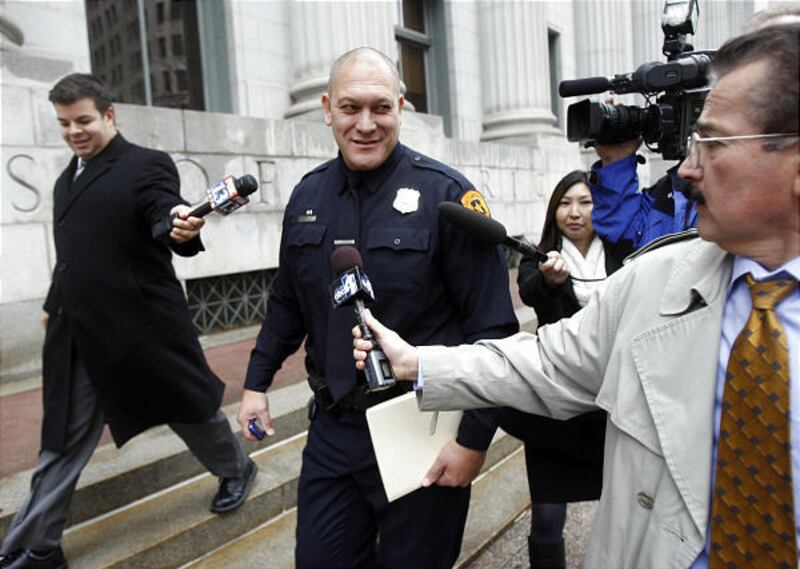
"He'll watch the proceedings. He will exercise. He will take naps. Sometimes he'll sing," Deputy U.S. Marshal Dennis Duranto said on Monday.
For the past year, since Mitchell's federal competency hearing, Duranto has escorted Mitchell into U.S. District Judge Dale Kimball's courtroom and escorted him out when he refuses to stop singing.
The singing, he said, will "generally start when he walks through (the courtroom) door." Once he's removed and put into his holding cell, the singing stops.
On one occasion, Duranto observed Mitchell roll up pieces of toilet paper, stick them in his ears, lie down on a bench and take a nap.
Mitchell does not sing while being transported to or from the courthouse, he said.
When his estranged wife and convicted codefendant Wanda Barzee testified recently, Duranto said Mitchell was very attentive to the video monitor.
"He stood as close to the monitor as he possibly could. He didn't move. He was very still," he said.
Duranto also noted that just before Thanksgiving, Mitchell started singing Christmas songs instead of his traditional hymns. On the first or second day of the trial, he said he watched Mitchell as he sat down at his defense team's table and stopped singing long enough to open both eyes and clearly look over both shoulders as if he were surveying the room to see who was there. As soon as he heard the courtroom door open, he started singing again, Duranto said.
Also commenting on Mitchell's singing Monday were current and former workers of the Utah State Hospital where Mitchell was first evaluated for 30 days following his arrest in 2003, and again sent for treatment between 2005 and 2008,
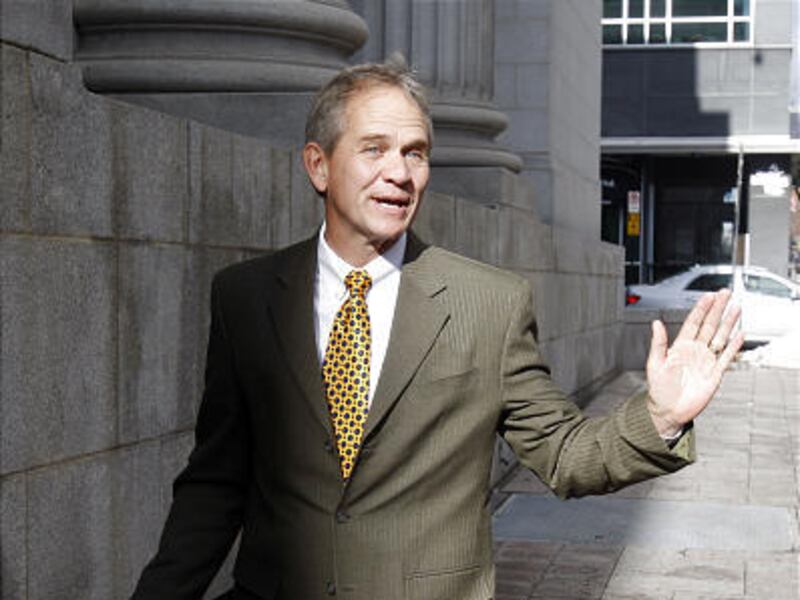
David Talley was a psych tech at the hospital for two years. He said he confronted Mitchell one time about his singing in court and told him he did it on purpose to get kicked out.
"He said, 'Yes, absolutely,' " Talley said. "He believed that the system was corrupt, that judges were all evil men, asserting power over the people and he wasn't going to take part in the process."
Talley said he believed Mitchell was a religious extremist as opposed to delusional.
"His actions didn't show me that he was a firm believer. He used it when he felt like he could gain something from it," he said.
Judith Fuchs also did not believe Mitchell was sincere with his religious persona.
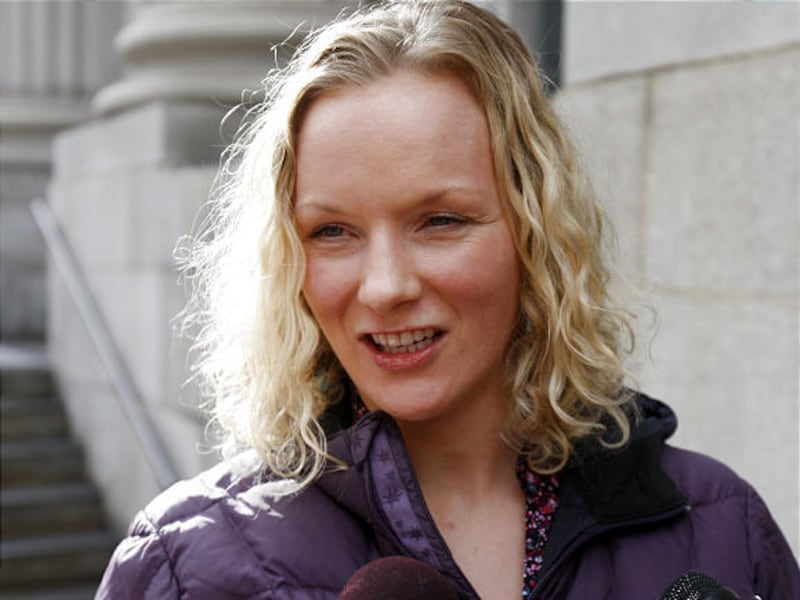
"I was thinking I was getting a show better than I'd ever seen in Cedar City," she testified Monday.
Fuchs worked at the Utah State Hospital during the entire time Mitchell was there. From the start, she said Mitchell was insincere about many things. "He was very sneaky, and he was a liar too," she said.
For example, Mitchell claimed to be a vegan, but he was fond of the hospital's pork roast and would do all he could to get extra desserts out of other patients, she said. And during movie nights at the hospital, "He had buttered popcorn, Mr. Vegan, and he had lots of Kool-Aid with sugar in it."
Fuchs also found it interesting that one day after he had been kicked out of court for singing, he went back to making requests as normal as soon as he got back to the hospital.
"Well, how ridiculous, He's supposed to be a ranting raving lunatic, and the minute I see him on the unit he said, 'Hi Judy. Think you'll be going to the library this week?' " she said, noting that Mitchell wanted her to pick up a book for him.
Leslie Miles, who worked at the Utah State Hospital from 1995 to 2009 and was in charge of all the nurses, said Mitchell was a high functioning patient who overall, was very easy to manage.
"Mr. Mitchell functioned very well. He could get his needs met. He was not psychotic," she said.
Most higher functioning patients are concerned about the needs of other patients, Miles said. That was not the case with Mitchell.
"He was very self-centered. He got his needs met the way he wanted to get them met. He was kind of self-serving," she said.
Mitchell had the staff schedules memorized and knew where all the surveillance cameras in the building were. He would go through stages of singing and not talking, but all it took was someone telling him to stop and he would, Miles said.
As for his religious views, Miles said she has seen other patients who were more passionate about their convictions than Mitchell. There was something about Utah that attracted more people with religious delusions than other areas, she said.
"I've been told, 'I met Jesus' many times. Allah, Satan … " Miles said.
More than once fights have needed to be broken up in the unit between patients fighting over who was the real Jesus, she said.
But Mitchell's behavior wasn't fitting what some were professing him to be.
"He didn't fit because he seemed to give it up," Miles said on the topic of religious beliefs.
Most patients with religious delusions have to be separated from people with other religious delusions, she said.
"That's their whole life. They're not going to give it up just because someone said you can't do that behavior. They'll find another way," Miles said. "My own observations and my own conclusion, he did not have a mental illness."
Initially, Miles said she would have put Mitchell into the category of being of religious zealot. But even that quickly disappeared soon after his arrival to the hospital, she said. "He seemed to turn it on more when administrators weren't around."
During cross examination, defense attorney Robert Steele asked Miles if that meant she thought that Dr. Paul Whitehead, the clinical director of the forensic unit at the Utah State Hospital who earlier testified that he believed Mitchell had a delusional disorder, was fooled by Mitchell.
"We all have different opinions. My experience was based on what I witnessed and what I saw. Dr. Whitehead has his own opinion," she said.
Earlier in the day, one of the officers who found Smart in Sandy testified Mitchell became agitated and his character changed once they separated Smart from him.
Officer Troy Rasmussen said on March 12, 2003, he was called to investigate three people who had been seen near 10000 South and State Street. At that time, Mitchell had been featured on "America's Most Wanted" as a person of interest in the Smart abduction.
Rasmussen said Mitchell tried to answer all of his questions, even when they weren't directed at him.
"I couldn't get an answer from the two female parties because the male party kept interjecting," he said.
The officer then separated the trio and moved Smart away from Mitchell.
"I observed him become agitated," Rasmussen said of Mitchell. "He started talking to me. He became nervous about what the other two girls were doing."
Mitchell had been previously speaking using archaic, Biblical language. But once the three were separated, the officer said the use of religious terminology stopped.
"It was like he was going in and out of character. He would go in and out depending on whether he was being cornered in my questioning or not," Rasmussen testified.
"I believe he was being deceitful and either trying to hide a crime or his identity."
After discovering Smart's true identity, Rasmussen said he mentioned Smart's name and told Mitchell the game was over.
"He tried to intimidate me with his body language."
Rasmussen said he told Mitchell as they prepared to take him to jail, "The gig is up. We're not going to believe this. We know who she is. You don't have to preach any more. We're not going to buy this."
During cross examination, the defense questioned why none of Rasmussen's testimony from Monday was included in his police reports. Only one paragraph of Rasmussen's report talked about Mitchell and the rest talked about Smart.
Also Monday, a former member of the Kingston polygamous group testified about Mitchell's attempts to convince her to become one of his wives.
Julia Adkison, who left the Kingston group in 1999, testified that she was working at the Fashion Place mall in 2000 when she met Mitchell and his wife, Wanda Barzee. The couple was buying shoes when they learned about her polygamy background. Adkison said she met with them a couple of times, including a four-hour meeting Mitchell planned near the Salt Lake Temple.
"He felt it was time to live it," she said of Mitchell's polygamous ideas. "He felt that I would be a good, I guess, option. That I was supposed to join their family, that it was the right time to start."
Adkison declined his offers. Prosecutors asked her if she had trouble understanding Mitchell and his religious views. She said nothing stood out to her as being too unusual or anything that she hadn't already heard growing up in a polygamist group.
"I just looked at him as any other Mormon fundamentalist," she said.
Salt Lake police officer Robert Randell testified about meeting Mitchell on Sept. 27, 2002. Mitchell had been detained and handcuffed for shoplifting at Albertsons, 370 E. 200 South. Mitchell had taken 52 items, including batteries, flashlights and beer.
When Randell asked Mitchell his name, he said Mitchell replied, "Go with God." When asked for his date of birth, Mitchell said, "Sometime after Christ."
The officer said as he was preparing to take Mitchell to jail, he told Mitchell, "Look, dude, there are two ways we can go with this." He told Mitchell he could be released with a citation if he was truthful about his name, or he could sit in jail for several days until his identity was confirmed. That's when Mitchell gave him his true identify and date of birth.
Randell said he's trained to recognize people with mental illness and officers have a protocols in place. He said he never felt there was a need to invoke such a protocol for Mitchell.
Jeremy Clarke was serving a mission for The Church of Jesus Christ of Latter-day Saints in the San Diego area when he met Mitchell on Dec. 8, 2002. He testified that he met Mitchell at a Lakeside, Calif., meetinghouse. Mitchell, who had a long beard and a ponytail, told the missionary he was interested in investigating the Mormon church.
The missionaries took him to the home of church member Virl Kemp to teach him a missionary lesson.
"He was very well behaved. He was very polite," Clarke said of Mitchell.
He told the missionaries during their 45-minute meeting that he was interested in the church and had never read the Book of Mormon.
While she was not present during the discussion, Kemp had a 12-year-old daughter at the time and there were photos of the daughter in the living room. Investigators say Mitchell returned later to the Kemp home in the middle of the night in an apparent plot to kidnap the 12-year-old daughter, but ultimately could not break in and aborted his attempt.
Rebecca Braaten testified that in March of 2003, she was in the parking lot of a wildernesses recreation area when she saw Mitchell with a woman and a teenager. She offered them a ride but her suspicions were raised about the young girl, who was wearing a wig and sunglasses.
"It was raining and overcast. There was clearly no reason to wear sunglasses," Braaten testified.
She said Mitchell did all of the talking. He told Braaten the teen was his daughter from a previous marriage, but she said just from looking at the teen's physical features, she knew it wasn't true.
She said she thought, "Clearly this person is hiding something because he's covering up where he's from, his relationship with the girl."
Braaten said she went to police the next day hoping to look through a database of missing children, but they did not have one.
Police officer Kurt Adair testified that on March 11, 2003, he was asked to investigate three suspicious people at a north Las Vegas Burger King. He found them nearby and described Mitchell as "very polite and cooperative" while being questioned.
Mitchell identified himself as Peter Marshall, but had no identification. Adair said he inquired about a kidnapping that had occurred just prior to that date in Michigan. He held up a photo of a missing girl next to Smart, but it obviously was not the kidnapping victim he was looking for and they were allowed to leave.
Expert rebuttal witnesses are expected to begin testifying Tuesday to dispute the defense's claim that Mitchell is not guilty by reason of insanity. Kimball has said from the beginning of the trial that his expectation is to have the trial completed by Friday.
The jury is expected to get the case by Friday.
e-mail: preavy@desnews.com Twitter: DNewsCrimeTeam