

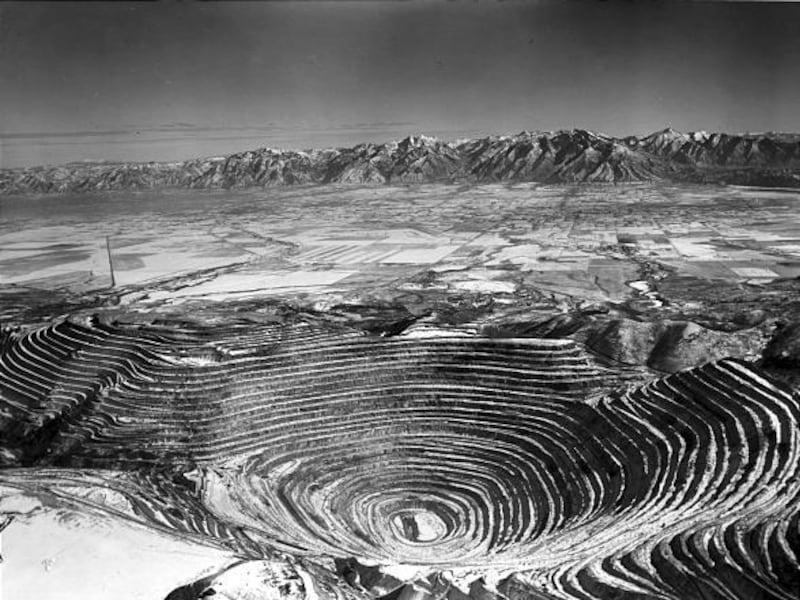
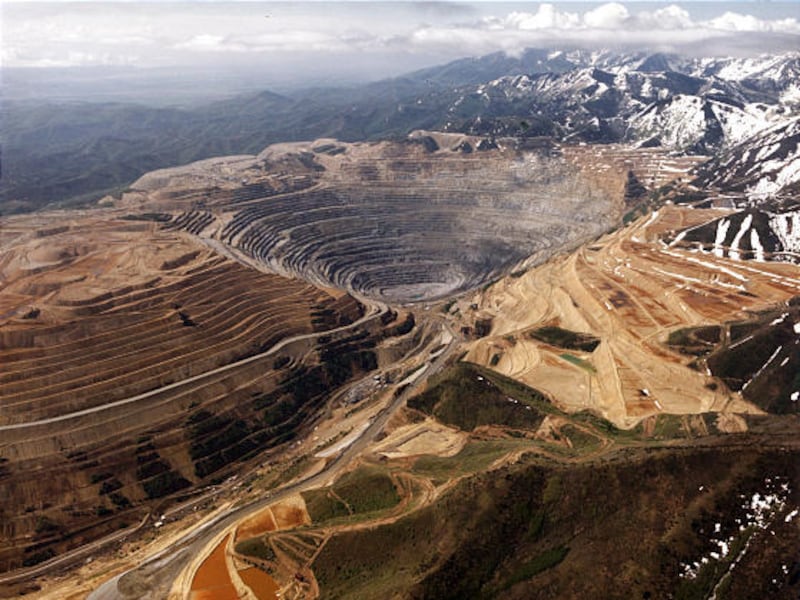
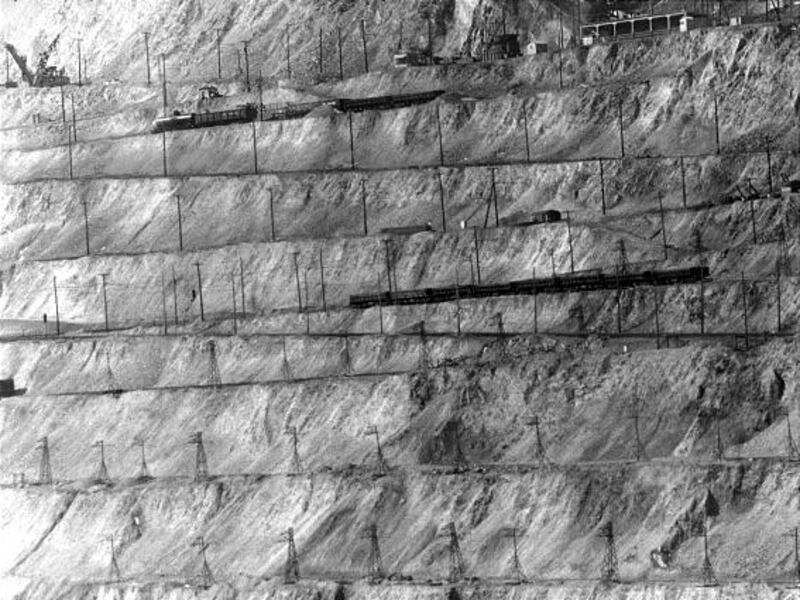
At 2 1/2 miles wide and three-quarters of a mile deep, the Bingham Canyon Mine is the biggest man-made hole on the planet. It is one of the few artificial structures that can be seen from space shuttle.
And when Daniel Jackling and Robert C. Gemmell first conceived of moving a mountain to mine the copper ore inside in 1890, critics said the poor quality of the ore would doom the experiment.
Instead, the Bingham Canyon Mine is one of the greatest mining success stories in history. Year in and year out, the "Old Faithful" of Utah mines continues to be one of the world's top producers of copper. As an added bonus, gold and silver are extracted as impurities in the refining process.
A Jan. 31, 1955, Deseret News story reported that at the time the mine accounted for 11 percent of the total employment in Utah, and when and if the copper in Bingham Canyon finally plays out in 2019, as experts predict, the national economy will feel the impact.
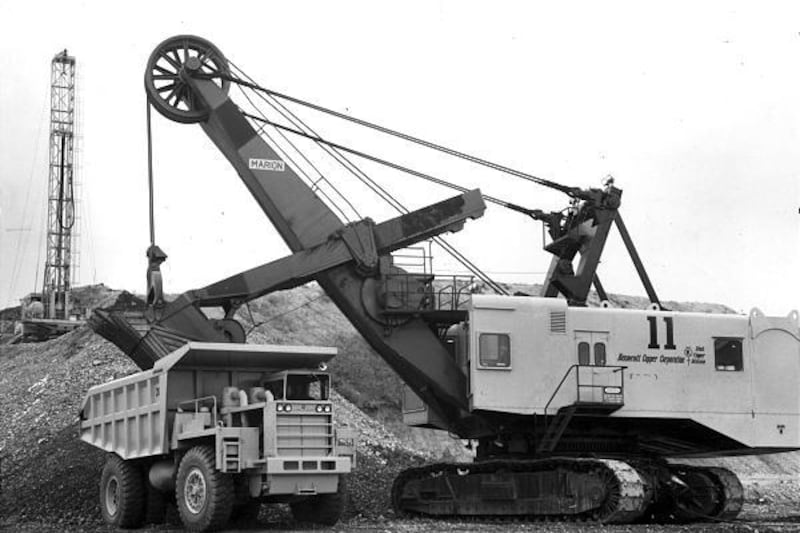
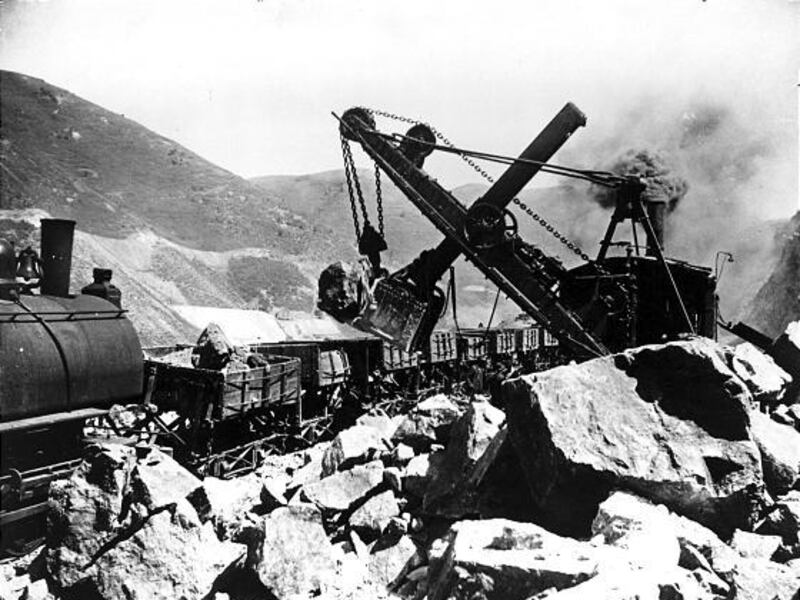
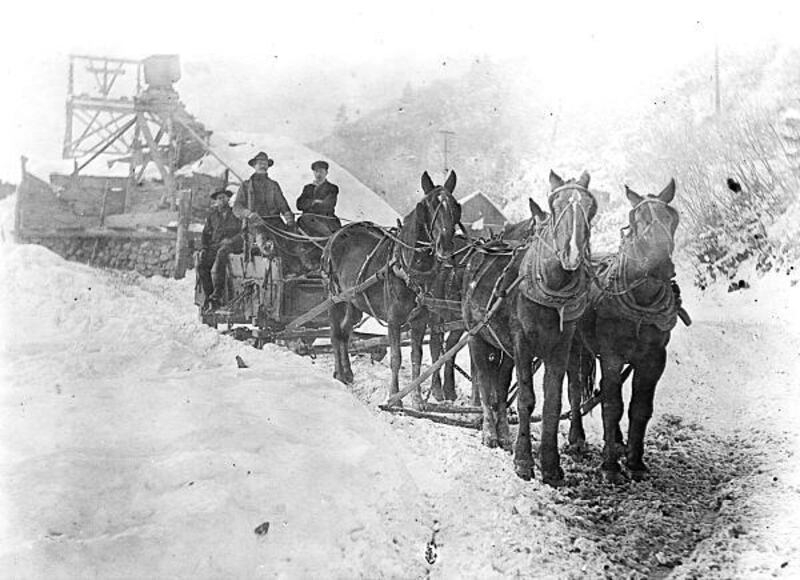
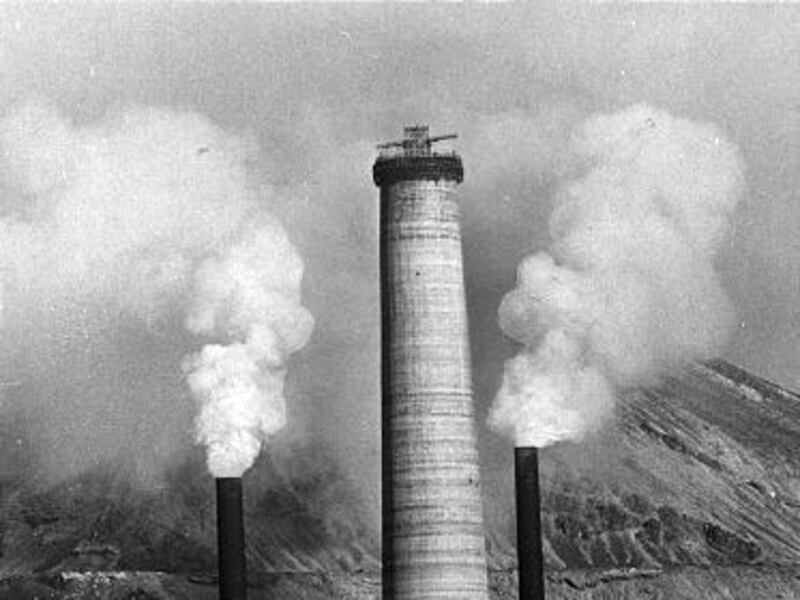
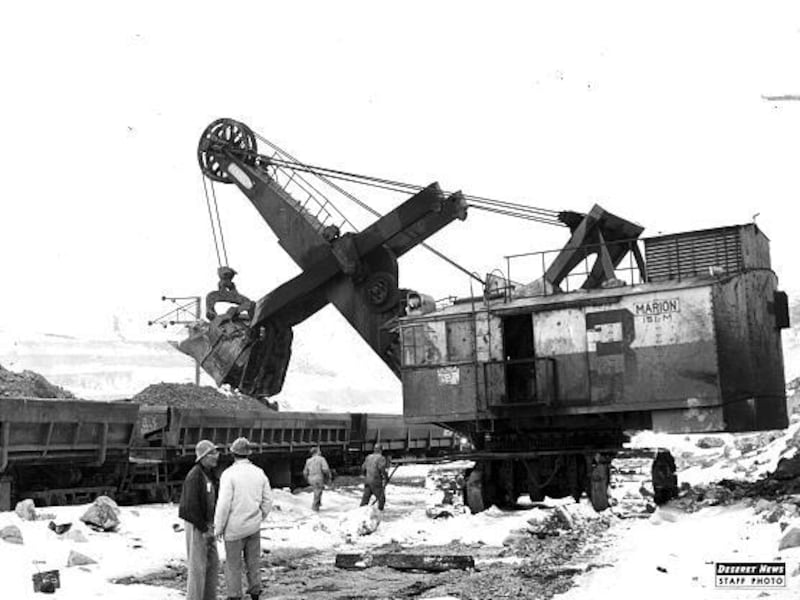
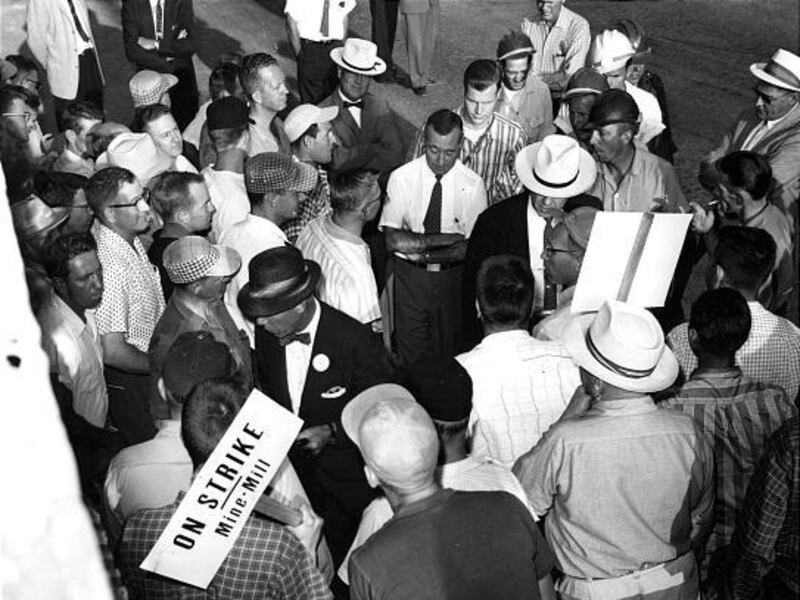
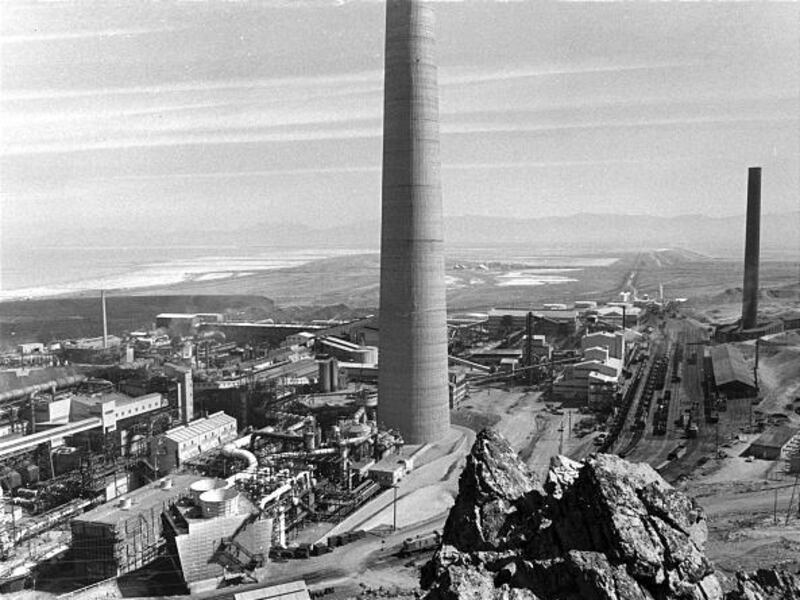
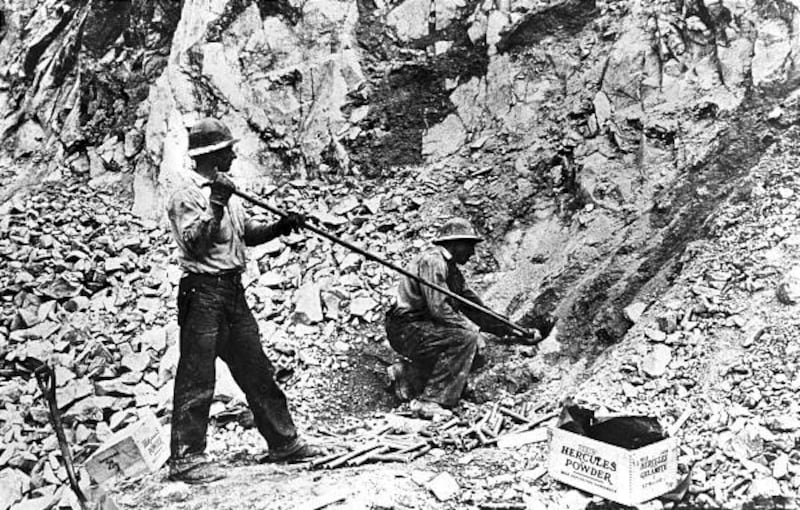
Deseret News photographers were among those to witness the birth of open-pit mining at the Bingham Canyon Mine, recording advances in mining technology over the years, and photo researcher Ron Fox has mined the newspaper archives for many of these photos, which can now be found on our Web site.
The canyon is named for Thomas and Sanford Bingham, who were instructed by Brigham Young to settle there shortly after the Mormon pioneers arrived in Utah. The brothers prospected a little, but Young urged the early pioneers to spend their time farming, not mining.
Ore was discovered in 1863, but the Bingham Canyon gold and silver ore played out quickly, and the low-grade copper ore cost more to mine that it produced.
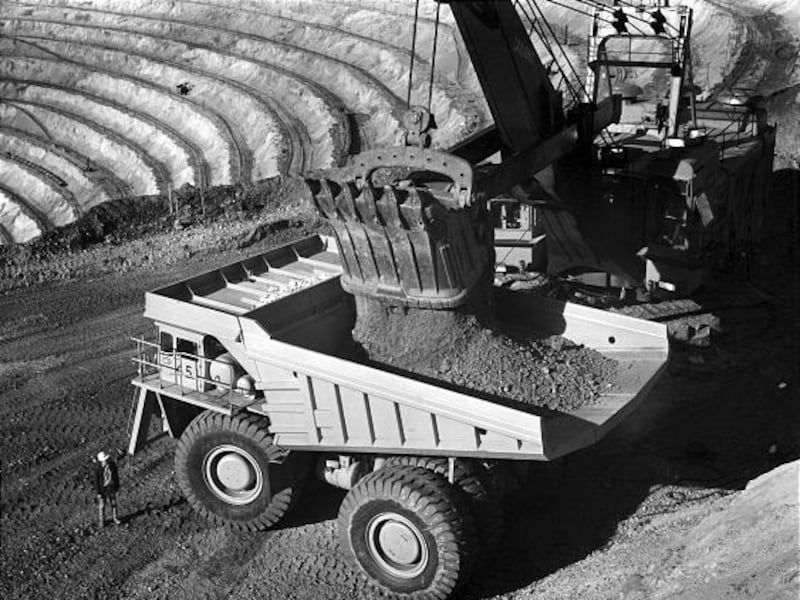
Jackling and Gemmell are crediting with applying mass production techniques to mining ?— using massive steam shovels to load oar into rail cars and transport the ore to a large mill where modern refining processes could extract the copper.
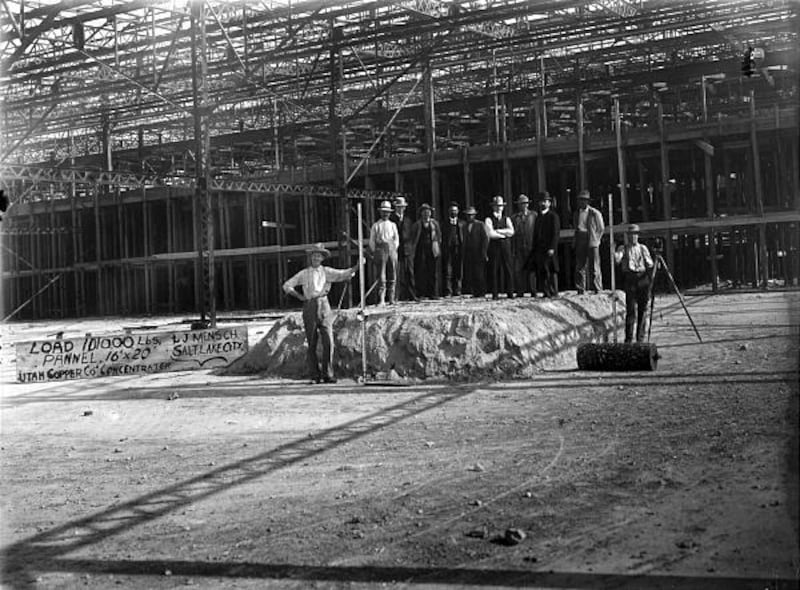
But it was years before the ideas could be put into practice, and the first digging began in 1906. The mill started processing ore the next year, and the Bingham and Garfield Railway opened in 1911.
By 1917, the mountain was coming down. A Dec. 21, 1917, Deseret News article reported with exuberance: "Today the most remarkable feature of Bingham is the use of steam shovels in handling the low-grade copper ore by the Utah Copper Co.
"When the final reports on Bingham for 1917 are made, it will show the greatest tonnage in the history of the camp. During the year, Bingham has fairly bristled with mining activities. Old mines, new mines and almost every kind of a hole in the ground have been worked at a profit. … As a result, copper and other metals, which once formed a part of the mountain of the West Mountain Mining district are now 'somewhere in France,' Italy, Russia and in almost every part of the globe."
The mine has had various owners over the years. The Utah Copper Co., formed in 1903 by Jackling and Enos Wall, merged with the adjacent Boston Consolidated mine in 1910. Kennecott acquired 25 percent interest in the mine in 1915 and bought the rest of the assets in 1936. Rio Tinto purchased Kennecott Utah Copper in 1989.
During World War II, the mine produced 30 percent of the copper used by the allies.
A Sept. 18, 1963, Deseret News story reported: "From this property, the men and machines of the Utah Copper Division of Kennecott produce about 20 percent of the nation's newly mined copper each year. In so doing, the Kennecott Copper Pit affords Salt Lake City one of its major tourist attractions, while representing the major mining industry in the state."
The mine still produces 300,000 tons of copper a year, as well as 500,000 ounces of gold, 4 million ounces of silver and 30 million pounds of molybdenum. Steam no longer powers the shovels that dig the ore, and rail cars have been replaced by immense dump trucks that maneuver the distinctive terraced side of the mine.
e-mail: mhaddock@desnews.com