

PASADENA, Calif. — Animal Planet wants us to believe that it is performing a public service of sorts with "Fatal Attractions."
And yet there's an undeniable element of exploitation of people who are less than mentally competent in this three-part series about people who keep dangerous animals as pets. People who are attacked and sometimes killed by those animals.
"We are not trying to present outrageous things," insisted Marjorie Kaplan, president and general manager of Animal Planet. "We are telling stories that happen in the world. ... This is intended to explore what it is that causes people to do this, not to glorify it."
(The three episodes air Sundays at 8 and 11 p.m. on March 14, 21 and 28.)
There's no question of glorifying the people who take insane risks in these three hour-long shows. It's made clear that owning dangerous reptiles, big cats and chimpanzees is a horrible idea. And there's a lot of talk about how these people suffer some sort of mental illness.
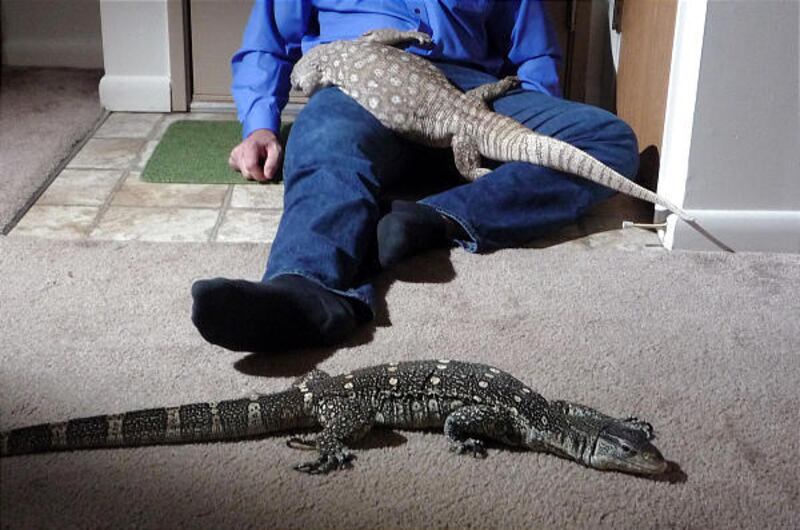
At the same time, these programs include re-creations of some horrific events. The man who is killed and eaten by his lizards. The woman who dies after she's bitten by her own poisonous snake.
The 14-year-old boy who comes home to discover his mother has been killed and partially eaten by her tiger.
Still worse are things like the actual photos of the wounds that Julie Burros suffered when her pet panther bit her head, pretty much scalped her and nearly killed her.
(At the beginning and at every commercial break, Animal Planet includes this warning: This program contains dramatizations and graphic material which may be disturbing to some viewers. Viewer discretion is advised.)
What is, perhaps, even more disturbing is the people like Burros whose behavior remains absolutely inexplicable.
"My ultimate dream was to own a black leopard," Burros said. "And I purchased one and I grew to love him just like I would a mother to a child."
She expressed undying love for the animal that nearly killed her.
"I still love him and I miss him, and I would love to do it again. I really would," Burros said.
And she rejected the suggestion that perhaps she might want to seek some sort of psychiatric help
"He may have ripped half of my scalp off, but I loved him so well that I put a tattoo on my lower back as a remembrance of him," she said.
This is the panther who had to be shot several times before it would release her head from its jaws.
"Yes, I know. I'm devastated that he was killed," Burros said. "I loved him so much. And it's just that some people make mistakes and they want to go back and correct them. Just like if you get bucked off a horse, you go get back on the horse."
And she's not alone. Despite what Jeanne Rizzotto now knows about chimpanzees — despite the fact that her animals are half brothers to the chimp that horribly disfigured, blinded and nearly killed a woman in Connecticut a year ago — she insists she has no regrets.
"There really isn't a lesson to be learned. There's different strokes for different folks," Rizzotto said. "I'm happy I got the chimpanzees. I would do it all over again."
It is, quite frankly, uncomfortable to hear these people. And it's hard not to feel as if the producers of "Fatal Attractions" and Animal Planet programmers are using them.
Maybe their experiences will discourage others from dangerous behavior.
But if it's a form of mental illness — as the shows clearly suggests — can a TV show change that behavior?
On the Web: www.animal.discovery.com
e-mail: pierce@desnews.com