

As the weather starts to warm up, many people are thinking about how they will battle those inevitable weeds. Before you go to the store and buy a few bags of pre-emergence weed control, consider applying corn gluten meal, an organic alternative that is much safer for children, pets and the environment.
Corn gluten meal was patented in the early '90s as a natural pre-emergence herbicide. Corn gluten contains 10 percent nitrogen content by weight, so it makes an excellent natural fertilizer for established plants that have a mature root system. This nitrogen will release slowly over a three- to four-month period. And if you "grasscycle" (leave grass clippings on your lawn), then you have all the nitrogen you need for the season.
Corn gluten meal won't hurt established weeds or grass. As a pre-emergent, it's a very effective herbicide for crabgrass. It also inhibits the seedlings of many other weeds, including barnyard grass, creeping bentgrass, dandelion, foxtail, pigweed, clover, lambsquarter, purslane, Bermuda grass and smartweed.
Timing is everything when it comes to applying corn gluten meal on your lawn. Because it stops roots from forming, you must apply it just as the seeds are germinating. It should be applied four to six weeks before seed germination. Expect 50 percent to 60 percent weed reduction in your first year of use. After applying it for a couple of years, you'll be reducing future generations of seed-producing weeds.
Lawn weeds can be either annual or perennial. Annual weeds are further classified as cool or warm season. Because of this, pre-emergence weed control should be applied in late summer or early fall for cool-season annual weeds and again in mid- to late winter for warm-season weeds.
But don't apply them right before or at the same time as lawn seed. For late-fall applications, wait until you have mowed a newly seeded lawn three or four times before applying a pre-emergence herbicide.
Many people apply corn gluten meal when they see forsythias bloom. But soil temperature is the key to successfully using a pre-emergence herbicide for weed prevention. Weed seeds begin to germinate when soil temperatures reach 55 to 60 degrees for a few consecutive days. Because soil temperatures will warm up more quickly at the surface, the weed seeds at surface level will germinate sooner.
You'll want to apply the pre-emergent two to four weeks before soil temperatures warm. You could even split your applications several weeks apart to ensure adequate control. After soil temperatures are at 55 to 60 degrees, it's too late for weed control but the nitrogen component will work any time.
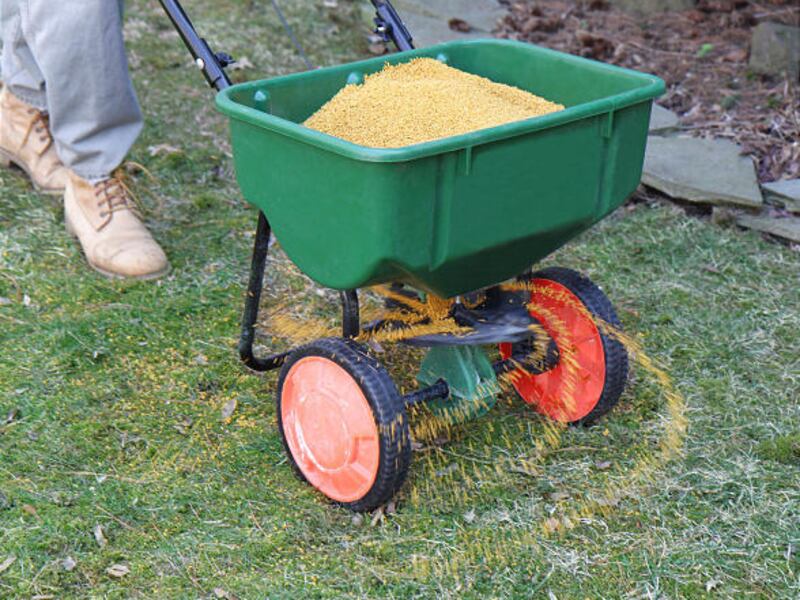
The rate of application is important. It takes 20 pounds of corn gluten meal per 1,000 square feet of lawn to do the job. You can buy corn gluten meal in two forms -- powder or granulated. The latter works better in conventional spreaders for excellent coverage.
For the best results, water in the corn gluten well and then let the area dry out for a couple of days. The corn gluten will kill many weed seeds that try to germinate. After that, it will slowly release its lawn-feeding nitrogen to build up a healthy lawn. If you still have crabgrass by summer, apply corn gluten a second time in early to mid-August, after crabgrass has set seed.
If you've been using the same weed and feed system for years, now may be the time to give this more eco- and family-friendly option a try. You can have a greener and less weedy lawn and feel good about the product you are using to help make it that way.
To purchase corn gluten meal, check your local garden center or shop online. Check under organic "weed 'n' feed" products and make sure it has 8 percent to 10 percent nitrogen by weight. Some trade names include Concern, Bradfield Organics and Espoma Organic Traditions.
Joe Lamp'l, host of "GardenSMART" on PBS, is a Master Gardener and author. For more information visit www.joegardener.com. For more stories, visit scrippsnews.com