


SALT LAKE CITY — Ellis Island was either an "island of hope" or an "island of tears" depending of whether an immigrant received a chalk mark on his or her clothing.
The chalk mark meant officials suspected a medical problem that required further study, a problem that could lead to deportation or perhaps a lengthy stay in the Ellis Island Hospital.
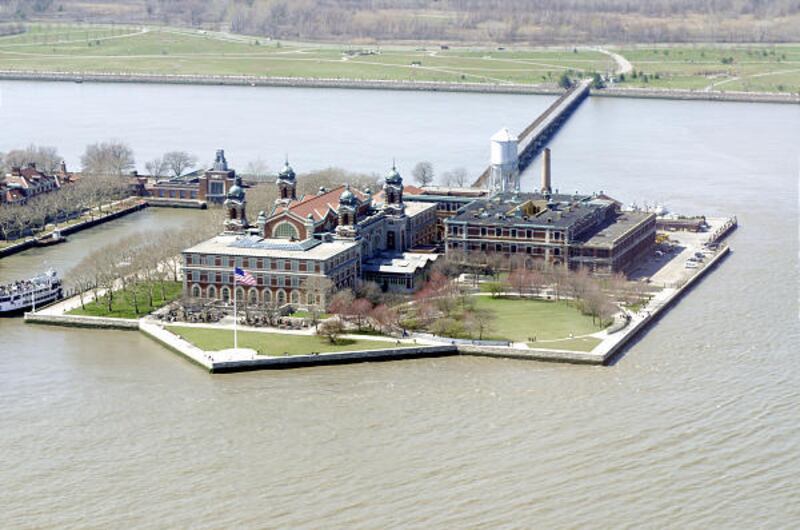
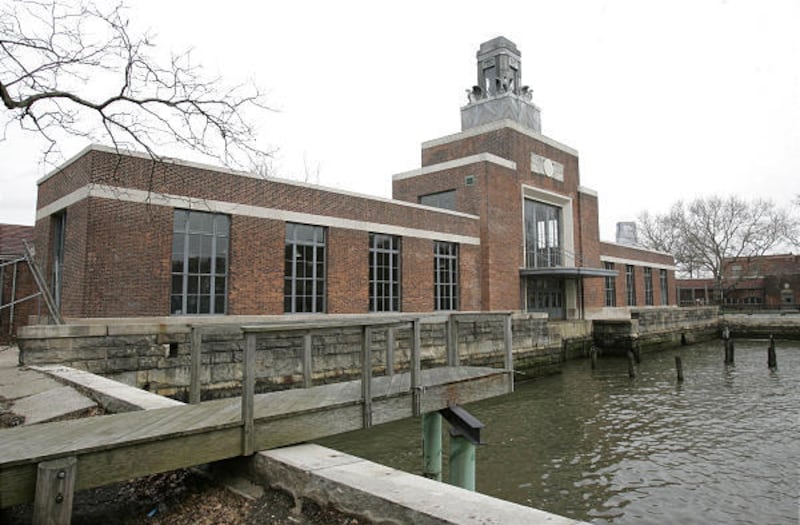
Perhaps many a Mormon ancestor spent time in that facility, which is actually a set of 22 buildings on two small islands.
Filmmaker Lorie Conway has documented the hospital's history (www.forgottenellisisland.com) and shared it with the audience gathered at the Immigration Family History Expo 2010 Thursday.
She described the state-of-the-art facility that housed 10,000 immigrants from 75 nations over three decades, immigrants who were sick, mentally troubled, pregnant or simply weak.
The massive, modern hospital that included a psychiatric ward, an autopsy room, four operating rooms, a maternity ward and kitchens was filled with people who were desperate, said Leah Shain, a former patient quoted in the film, as 12 million people landed in New York looking for a better life.
It was at once welcoming and threatening.
John CaQuer was 5 years old when he was taken away from his mother. He didn't know if he would ever see her again.
Doctors watched as immigrants climbed a long flight of stairs to the main floor, noting those who became lightheaded or who had trouble navigating the stairs. They got a chalk mark.
One in five got a chalk mark as 6,000 people a day filed through Ellis Island. Families were separated and the doctors became gatekeepers as the American government tried to prevent the germs of the world — typhoid, malaria, cholera, diphtheria — from invading the country.
To its credit, no major epidemic can be traced to a patient of Ellis Island Hospital, but the system was nevertheless brutal — especially on people who could not speak English and who did not understand what was happening to them.
Some had never seen an X-ray machine before. Many had never used a bathtub.
Immigrants were asked to strip naked before strangers for examination and were often detained by mistake. Some refused to give up their clothes because they had money sewn into the seams.
Second- and third-class passengers were stopped more often than the wealthy.
The examinations took several hours. Tens of thousands failed the inspection, and though many were cured in "the hospital of all nations" 3,500 died within its walls, most of them children.
Treatments, especially for the mentally ill and for those with trachoma, were barbaric.
Congress eventually passed a bill restricting immigration and the hospital was closed. Immigrants were required to prove their good health in consulate offices before they left their native lands.
Shain said for her family the hospital was absolutely an island of tears as her family was pulled apart and members deported.
For others, like CaQuer, the hospital proved to be a blessing as it cured him and restored him to his family.
e-mail: haddoc@desnews.com
More online
To read more from the Immigration Family History Expo 2010, go to MormonTimes.com. The coverage includes:
Immigration is important to America's future
Many pioneers' treks began on the ocean waters