



Finding the right plant for the right place is not always easy.
As I teach classes and answer questions, there is one group of plants that comes into question as people landscape their homes: groundcovers.
Looking for a precise definition of what makes a plant a groundcover is useless. Botanically, there are no groups of plants that are groundcovers. Horticulturally, they are low-growing plants — often less than 12 inches in height — that spread across the soil. Turfgrass is usually placed in its own category.
Additionally, groundcovers often have horizontal stems that root down to form additional plants. Many have stolons — or runners — such as those you would find on strawberry plants, or rhizomes that go under the soil, like bishop's weed. Some plants have both types of stems.
Groundcovers must grow vigorously to cover the soil. If they don't, weeds and other plants soon take over and destroy the plantings. That leaves you with a bigger problem and more weeds instead of a plant that keeps the weeds out.
With that in mind, it is critical to select groundcovers that fit the growing area.
Start with the sunlight exposure. The term "full sun" means at least six hours of direct sunlight each day. Less than that means partial shade, and full shade means no direct sunlight each day.
The next environmental consideration is soil moisture. Group similar plants together so you can provide the right amount of water to help the plants grow well.
Other considerations include soil drainage; soil pH, or the acidity or alkalinity; and what insects or diseases might attack the plants.
Also, consider the landscape design considerations of seasonal color, flowers, texture and shape.
The following are some of my favorite groundcovers. Many are blooming right now, so this is a good time to visit your favorite nursery and pick up some of these great, problem-solving plants.
For hot, dry, sunny areas, look for some of the succulent plants with their fleshy leaves. Consider the sedums. These very diverse groups of plants are excellent performers in most gardens, providing they have good, well-drained soil.
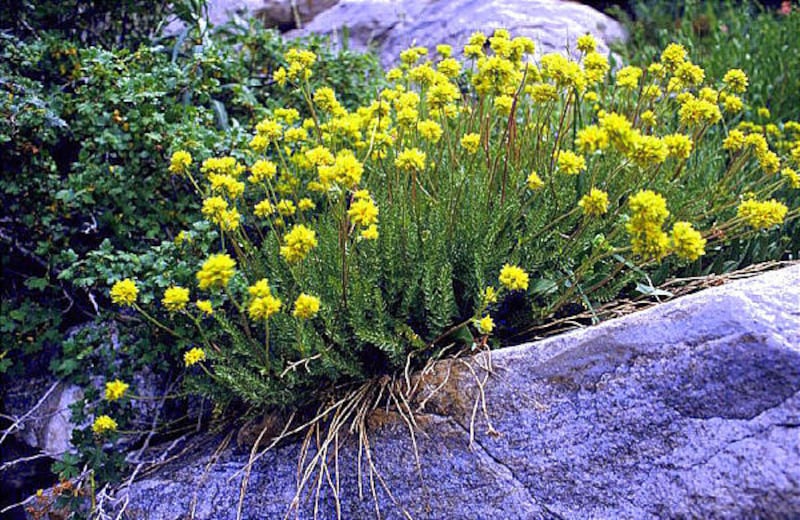
There is a native Utah sedum and many other popular, low-growing types. Many have attractive, bright yellow, red, blue or variegated foliage, and as an added bonus, they are deer resistant.
Other succulent plants are the delospermas, also known as hardy ice plants. These have brightly colored flowers in the late spring and early summer and are great as border or rock garden plants.
The common ones are Delosperma cooperi, with bright purple flowers, and Delosperma nubigenum, with bright yellow flowers. Another good one for our area is Delosperma "Kelaidis," or Mesa Verde ice plant.
Woolly thyme, thyme and mother of thyme are all low-growing, sun-loving groundcovers. They are usually green or gray in color and often have small flowers. Use these in rock crevices, between stones in walks or where you want an attractive but not extensive ground cover.
Snow in summer is another plant that is very tolerant of heat and drought. It is aggressive, so plant it where you can keep it under control. It has gray foliage and is covered with white flowers in the early summer.
If you are looking for more color, consider planting sun rose. Several cultivars are available. Although the foliage is a nondescript gray-green, the bright-colored flowers come in pink, yellow, white and red.
Periwinkle — or Vinca minor — is one of the best groundcovers for Utah for shade and/or partial sun. It is easy to grow, does not spread excessively and has attractive blue or white flowers.
Vinca major is much more robust and spreads by longer runners. It is much harder to contain, so select your growing area carefully.
Leadwort — or plumbago — is one I like because it changes through the seasons. It has bright-blue flowers in the summer, and as fall comes, the foliage turns red. It grows well in sun or shade.
Creeping Oregon grape — or Mahonia repens — is a Utah native that has a holly-like leaf. It gets yellow flowers in the spring and blue berries in the fall. It is both shade and drought tolerant.
Select Scotch and Irish moss for soft green, low-growing groundcovers. These need adequate moisture and protection from excessive sun but offer an attractive choice for planting in protected areas.
Pink Panda strawberry also grows well here. It has delightful pink flowers in the spring. Other strawberry-like groundcovers with white, yellow or red flowers grow well here.
There are many other great groundcovers for Utah. Look for them at local nurseries and use them to solve landscape problems in your landscape.
You might find these are among the most rewarding plants in your landscape.
Larry A. Sagers is a horticulture specialist for the Utah State University Extension Service at Thanksgiving Point.