

TAYLORSVILLE — For Janet Brooks, it was just an ordinary shopping trip to Costco — until she witnessed what she calls a horrific fall as a toddler tumbled headfirst out of a shopping cart and onto the concrete floor.
Brooks, the child advocacy manager at Primary Children's Medical Center, saw the young boy standing inside the basket of a cart while his parents were preoccupied looking at jewelry and electronics. Just as she decided to say something to the parents about shopping cart safety, the boy toppled over the edge of the cart.
"I can still see and hear the deafening crack of the child's head against the cement floor," Brooks said. "The parents didn't even see it happen. … The little guy was screaming his lungs out, and everyone in that area of the store wondered what in the world had happened. That image has not left my mind, and every time I see a child standing in a cart, my heart stops."
It seems some parents are more worried about their eggs than their children. Many parents allow their child to dangerously perch in a shopping cart, even though more than 24,000 children are treated for shopping cart-related injuries in U.S. hospital emergency rooms every year, according to the American Academy of Pediatrics.
Cashiers often don't feel comfortable reaching out and helping someone else's kids, and in some cases, store policies prevent them from getting involved. Some store employees have resorted to bribery to remedy the situation, offering a sticker or a balloon to a child who will sit down and buckle up. Others simply ignore the problem, while some intercede and help the child — despite possible ramifications.
In a 2006 study, the American Academy of Pediatrics concluded that shopping cart-related injuries are common and can result in severe injury or even death, mostly in children under age 5. Head and neck injuries account for three-fourths of the cases.
"I don't know what we can do to make it safer other than to just educate parents to have their kids down in the carts (and) make sure they wear the safety belts," said Lois Douglass, who has worked for Harmons for 28 years.
Kyle Holdaway, director of risk management for Harmons, said all store associates are trained in shopping cart safety during the "Working Safe at Harmons" training course. Holdaway said trainers explain how to politely approach and ask a parent to have their child sit down.
"Unfortunately, we have had two incidents out of approximately 357,000 customers since February 2010," Holdaway said. "This, of course, is two too many. We feel the key is in education — educating our associates as well as the customer."
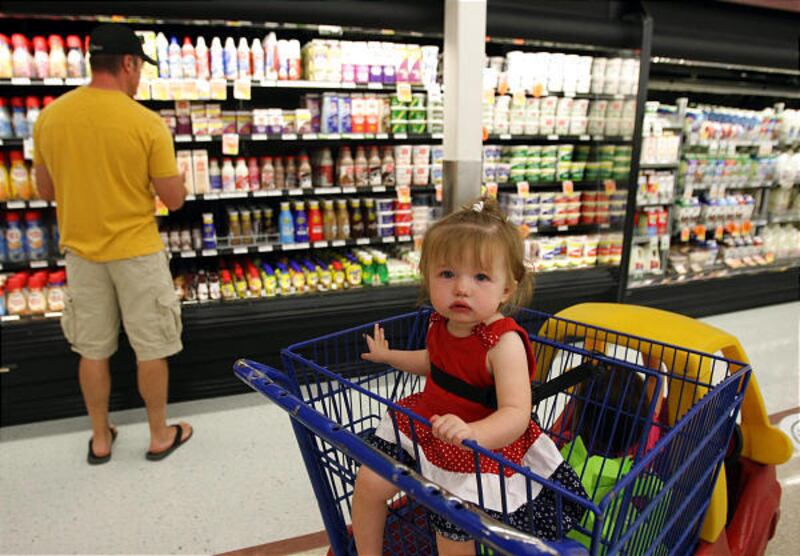
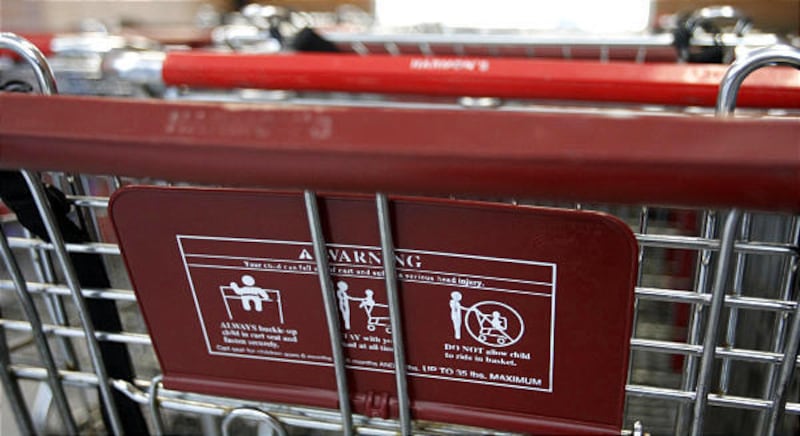
All of the carts at the Harmons on 5400 S. Redwood Road are equipped with safety straps. To prevent fingers from being run over, the store's newer carts don't have enough room for kids to sit on the bottom rack of the cart.
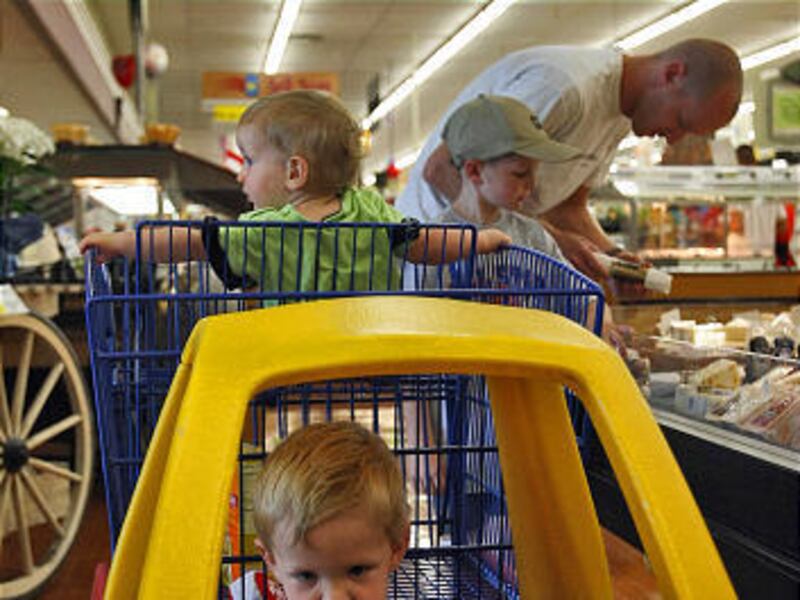
When a new Harmons store is opened, they have 305 shopping carts. Of these 305 shopping carts, there are five kid carts that look like vehicles, with seats lower to the ground.
Ryan Christensen, a father of two young children, said he always straps his kids in and uses a kid cart.
"It's convenient because she wants to drive her own cart," Christensen said. "They're not so much convenient because they're bigger, they're longer, (and) they're harder to drive. But it makes the kids happy, so you do whatever. If you have kids, you know how it is."
Christensen said he's seen two kids fall out of a cart in the past year.
"You see kids falling out all the time," he said, "or standing up in shopping carts."
Ryan Watson, a Harmons employee of 12 years, said more than 50 percent of children are not properly seated in their carts. Although Watson hasn't seen a child fall yet, he said he believes it's inevitable.
"I've seen them stand up in the carts, and it has kind of scared me," Watson said.
Watson said he often tells kids to be careful so they won't fall. He said he hopes parents will realize the store is just trying to protect itself when he tries to keep their kids safe. When accidents occur, the store could be held liable, depending on the situation.
"I see nothing wrong with store employees asking parents to be more careful in the supervision of their children," Brooks said.
So why don't more parents buckle in their kids?
"I think a lot of them don't think about it," Watson said.
He said stores should post signs asking parents to please buckle their child in.
According to the American Academy of Pediatrics, there was no industry standard for shopping carts until 2004. The new standard is voluntary, and there is no specific design. Even with a safety strap added to shopping carts, the center of gravity is not addressed, which is one of the reasons carts tip over.
The academy recommends using alternatives to shopping carts, such as a stroller or a wagon. Parents also should consider using a cart with a safer design that allows their child to ride closer to the ground, such as the kid-friendly carts resembling vehicles.
"It scares me to death to see the way some infant seats are placed on the top of the cart, too," Brooks said. "If there is a sudden bump, stop or overload, the car seat can fall off the cart."
Injuries associated with shopping carts occur from falling, carts tipping over, children getting trapped in a cart, falling from a cart while riding on the outside, striking against a cart and being run over by a cart. Falls from carts are among the leading causes of head injuries in young children, according to the U.S. Consumer Product Safety Commission.
If a child does fall, Brooks said head injuries are serious and often not apparent right away. It's best to be safe and speak to a medical professional, she said.
e-mail: apierce@desnews.com