

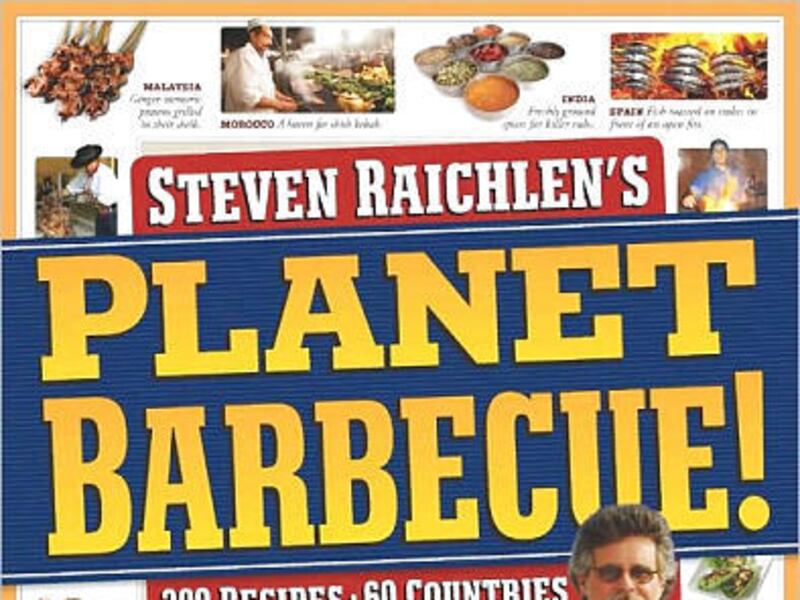

Steven Raichlen spent 3 1/2 years traveling to 53 countries, documenting nearly every culture's grilled foods.
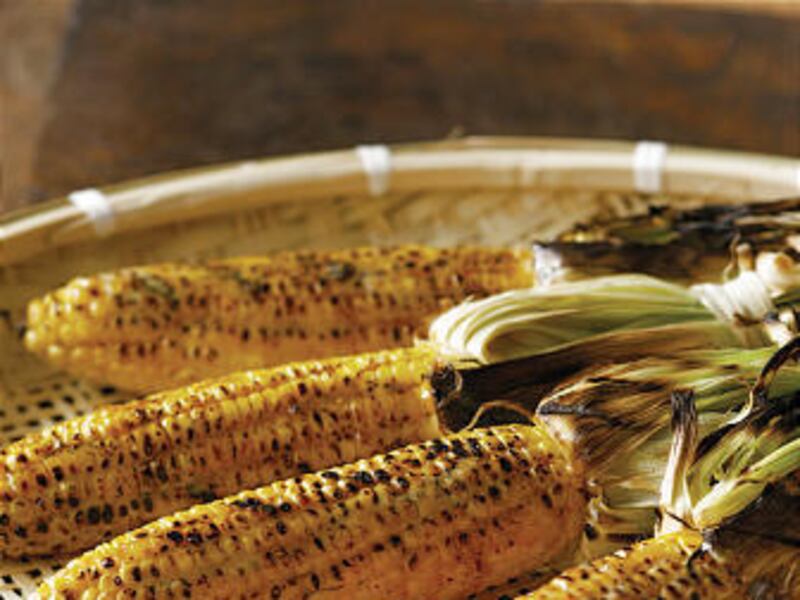
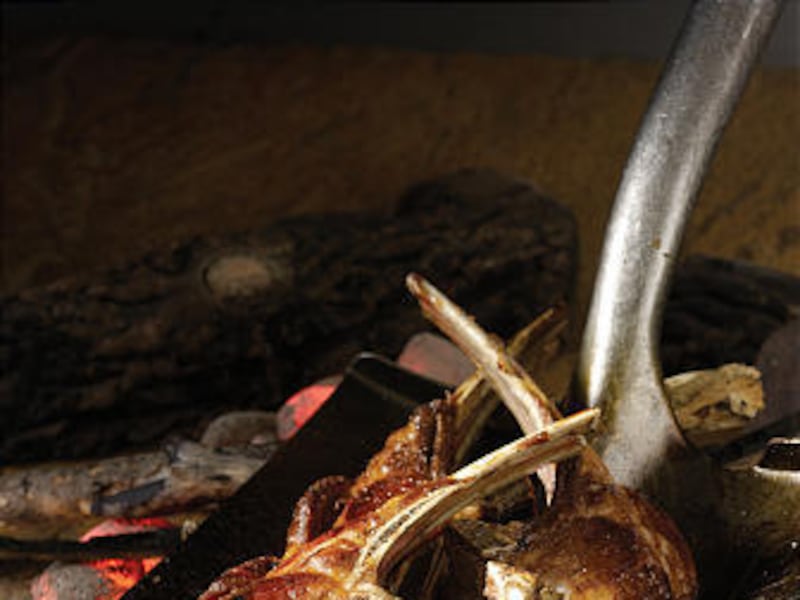
He found Australian lamb chop grilled on a shovel; cloth-wrapped, salt-encrusted beef tenderloin in Colombia; Jamaican jerk pork; smoked ice cream in Spain; grilled corn brushed with coconut milk in Cambodia; French mussels smoked over pine needles; and Thailand's halibut grilled in banana leaves, to name just a few.
"The message is there's no limit to human ingenuity," he said.
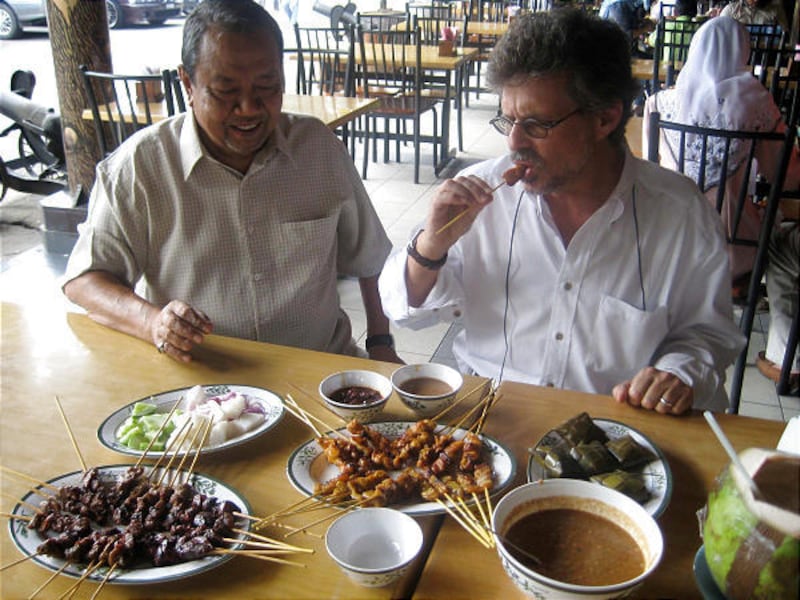
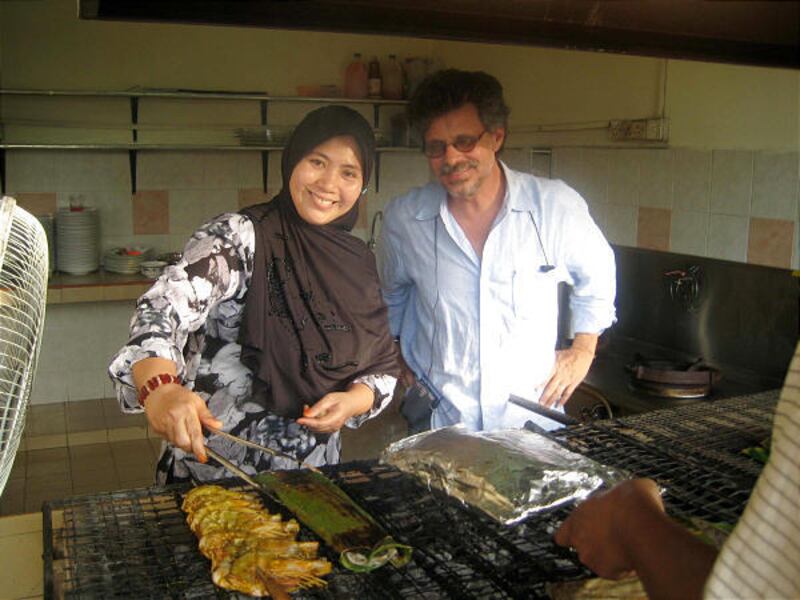
His samplings ran the gamut from fancy restaurants to home cooking to street vendors. And yes, he did get a few bouts of food poisoning, but nothing that put him out of commission for too long.
"I'm lucky I'm writing about foods that come straight off the grill; it's a self-sterilizing process," he said. "If I were writing about salads, I wouldn't be here to tell the tale."
Now, he's criss-crossing America on a three-month 29-city book tour to share his research from "Planet Barbecue!" (Workman, $22.95) . It's no wonder he looked a bit travel-weary when he arrived at the Deseret News offices two weeks ago. He nevertheless fit in a newspaper interview and two TV appearances during his five-hour stop in Salt Lake City.
It's a grueling schedule, he said, but an opportunity most cookbook authors would envy. And it's probably part of the reason "Planet Barbecue!" was already No. 11 on last week's New York Times Bestseller List in the advice book category.
Barbecue is nearly a universal language, he said, because it embraces three things that people love: being around a fire, eating outdoors and eating with their fingers.
But the approach varies.
"In North America, they like a big hunk of meat, smoking it a long time, and the serving is large enough to bury the plate," Raichlen said. "But in Asia, good things come in small packages, such as little yakitori from Japan. It's more about a little bit of meat and a lot of vegetables."
Grilling does great things for vegetables, he added. "The high, dry heat caramelizes the plant sugars, accentuating the vegetable's natural sweetness," he said. "The outside of the vegetable acquires a crackling skin and crisp crust."
He found a few countries without a national grilling repertoire, such as the British Isles and China.
"You find grilled street food in Macau and Hong Kong, but it's not really part of what makes their cuisine tick," he said of China. "But Belgium has one of the top grill masters in the world, and Germany has an elaborate tradition of grilling. And in Moscow, they are complete barbecue maniacs!"
The term "barbecue" can be a source of contention among American barbecue enthusiasts. They contend that real barbecue is the low-heat, smoke-roasting of meats prevalent in the southern United States, and grilling is the quick, high-heat method of cooking steaks and burgers.
But Raichlen's definition includes both under one umbrella. For him, barbecue embraces "the ancient art of cooking with live fire, a specific cooking technique involving wood smoke, a series of iconic dishes, a meal prepared and eaten outdoors and a communal food experience."
There were a few countries he missed.
"I couldn't go to Iraq and Afghanistan due to security reasons, and Iran just didn't work out," he said. But he spent some time in Azerbaijan, next to Iran, and learned a lot from the large group of Iranian expatriates there.
He found that not all barbecue is cooked outdoors. In Italy and Korea, much of the grilling takes place indoors in the fall and winter.
Raichlen has the look of an academic; it's fitting that he's called "the professor of barbecue," and his first PBS series was called "Barbecue University."
He graduated from college with a degree in French literature. His interest in barbecue was kindled with a fellowship to study medieval cooking in France, which was done over live fire. Since then, he's garnered five James Beard Awards for past cookbooks, which include "The Barbecue Bible," "How to Grill" and "Miami Spice."
He currently hosts "Primal Grill" on PBS, and he battled and defeated Iron Chef Rokusaburo Michiba in a "Battle of the Barbecue Gods" on Japanese television.
His earlier French studies have come in handy with his French-language show, "Le Maitre du Grill," which airs in Quebec.
His book delves into the history and anthropology behind barbecue. He calls it the original energy food for the brain, noting when prehistoric man learned how to cook food over a fire, it made the food easier to digest and metabolize.
"It's a long way from that first primitive fire used by Homo erectus to the stainless steel super-grills we grill on today," he writes. "And yet, we still share a common bond: our fascination with and dependence on fire."
AUSTRALIAN LAMB ON A SHOVEL
1 1/2 pounds thick-cut rib or loin lamb chops (1 to 1½ inches thick)
1-2 tablespoons extra-virgin olive oil, plus olive oil for serving (optional)
Coarse kosher or sea salt
Cracked black pepper
3 cloves garlic, finely chopped
1-2 tablespoons finely chopped fresh rosemary (optional)
Lemon wedges for serving (optional)
Lightly brush the lamb chops on both sides with olive oil. Season very generously on both sides with salt and pepper, and the garlic and rosemary if desired.
Shovel method: You need a clean metal shovel. Build a wood campfire with a good base of glowing embers.
Heat the shovel blade in the fire to help sterilize the cooking surface and preheat the metal so it will sear the meat.
Arrange the chops on the hot shovel blade, leaving an inch between each. Don't overcrowd. It's OK to work in several batches. Thrust the shovel over the fire or lay it on the embers. Cook chops until done to taste, 4-6 minutes per side for medium-rare, turning with tongs.
After removing lamb, serve with lemon wedges. Then place the shovel back over the fire to burn the fat and juices off the shovel.
Grill method: If you are using a charcoal grill and wood chips or chunks, toss them on the coals. If you are using a gas grill, add wood chips or chunks to the smoker box or place them in a smoker pouch under the grate.
Brush and oil the grill grate. Arrange lamb chops on the hot grate and grill them until done to taste, 4-6 minutes per side for medium-rare. Transfer the grilled chops to a platter or plates. If desired, drizzle a little more olive oil over the chops and serve with lemon wedges.
— "Planet Barbecue!" by Steven Raichlen
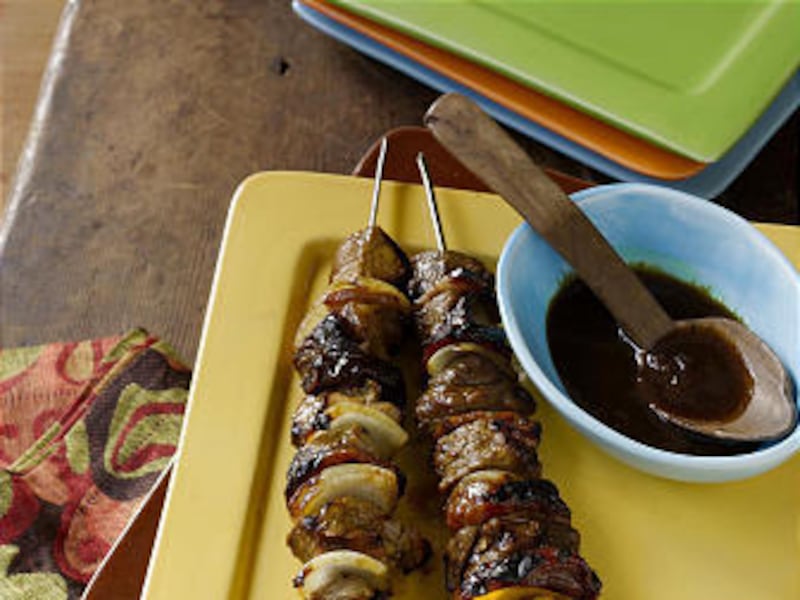
SOUTH AFRICAN SHISH KEBABS (SOSATIES)
1 pound pork tenderloin, cut into 1-inch cubes
1/2 pound lamb shoulder or leg, cut into 1-inch cubes, or ½ pound more pork
3-4 tablespoons dark brown sugar
1 tablespoon plus ½ teaspoon curry powder
2 teaspoons coriander seeds
2 teaspoons black peppercorns
Coarse salt (kosher or sea)
2 cups dried apricots
1 medium-size onion, thinly sliced, plus 1 onion, peeled
4 strips orange zest (each ½ by 2 inches) removed with a vegetable peeler
1 1/2 cups dry red wine (substitution: beef broth, or 1 cup plus 2 tablespoons red grape juice and 1/3 cup red wine vinegar)
1/2 cup red wine vinegar
1/4 cup extra-virgin olive oil
1/2 cup plus 2 tablespoons heavy whipping cream (optional)
3 slices bacon, cut into 1-inch pieces
2 tablespoons (1/4 stick) butter
2 tablespoons apricot jam, or more to taste
Flat metal or bamboo skewers; an aluminum foil grill shield
Place the pork and lamb in a large nonreactive bowl or baking dish. Sprinkle 2 tablespoons of the brown sugar, the 1 tablespoon of curry powder, and the coriander seeds, peppercorns and 1½ teaspoons of salt over the meat, and stir to coat.
Add the apricots, sliced onion, orange zest, red wine (or equivalent substitutions), wine vinegar and olive oil, and stir to mix. Stir in the ½ cup of cream, if using. Let the meat marinate in the refrigerator, covered, for at least 2-4 hours, turning it several times to marinate evenly.
Cut the peeled onion in half cross-wise, then cut each half in quarters. Break the quarters into layers.
Drain the marinated meat in a large, fine-meshed strainer over a large saucepan. Remove meat and apricots from strainer and discard remaining solids. Set marinade aside.
Thread the meat, apricots, onion layers and pieces of bacon onto the skewers, alternating the ingredients and beginning and ending with a cube of meat. Refrigerate the kebabs, covered, until ready to cook.
Place the saucepan of marinade on high heat and boil 5-8 minutes, until thick and reduced by about 1?3.
Whisk in the butter, apricot jam, 1 tablespoon of brown sugar and remaining ½ teaspoon curry powder. If you used heavy cream in the marinade, add the remaining 2 tablespoons of cream to the sauce. Let sauce continue to boil, whisking it until thick and richly flavored, 2-4 minutes longer.
Taste for seasoning, adding up to 1 tablespoon more brown sugar and more apricot jam and/or salt as necessary; the sauce should be a little sweet.
Pour 1/4 of the sauce into a small bowl for basting.
Preheat grill to high. Brush and oil the grill grate. Place kebabs on the hot grate and grill until browned on the outside and meat is cooked through, about 2 minutes per side, about 8 minutes in all. If using bamboo skewers you may want to slide an aluminum foil shield under the exposed ends to keep them from burning.
After 4 minutes, start basting the Sosaties with the basting sauce. To serve, unskewer the kebabs onto plates. Spoon some remaining sauce on top, and serve the rest in a bowl on the side.
Note: In the old days, Afrikaners added sour milk or heavy cream to the marinade for extra richness. It has a disconcerting way of clotting until it's cooked. Most young grill masters omit it.
— "Planet Barbecue!" by Steven Raichlen
COCONUT-GRILLED CORN (Pod Oeng Cambodia)
3/4 cup unsweetened coconut milk
2 tablespoons palm sugar or light brown sugar, or more to taste
1 2-inch piece pandanus leaf, or 1 or 2 bay leaves
1/4 teaspoon salt
4 ears sweet corn, husked or husk stripped back and with leaves tied together
Combine the coconut milk, palm sugar, pandanus leaf or bay leaf, and salt in a small saucepan over medium heat and let simmer gently until the sugar dissolves, 3-5 minutes.
Taste for sweetness, adding more sugar if necessary. Remove pan from the heat and let the basting mixture cool to room temperature.
Set up the grill for direct grilling and preheat it to high.
Brush and oil the grill grate. Place corn on the hot grate and grill it until nicely browned on all sides, 2-3 minutes per side, 8-12 minutes in all, turning with tongs. Start basting corn with some of the coconut milk mixture after a few minutes, and baste it again several times as it grills.
Baste the corn one final time; transfer it to a platter or plates, and serve.
— "Planet Barbecue!" by Steven Raichlen
e-mail: vphillips@desnews.com