

SALT LAKE CITY — Even while the look and feel of downtown undergoes a sprawling transformation, as dozens of new buildings take shape and optimistic entrepreneurs breathe new life into vacant spaces, some scenes on the sidewalks of the city's core remain unchanged.
One of them is the inevitable encounter with those who hope you can spare a little change.
Complaints to the city, by both residents and business owners, indicate these encounters are increasingly less civil and, in some cases, downright hostile. An ordinance making its way toward the Salt Lake City Council in the coming weeks aims, according to city officials, to keep city streets hospitable while also protecting free-speech rights.
Merchant groups say panhandling hurts business and stigmatizes the "downtown experience."
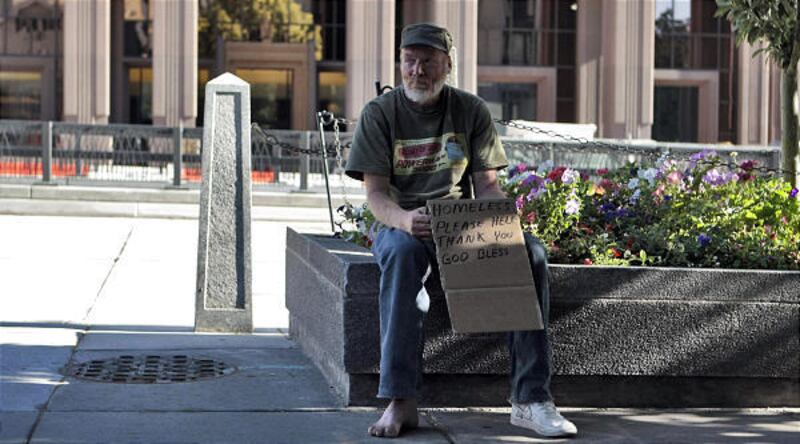
But for Terry Wilkinson, who finds himself living on the streets, the generosity of strangers can be the difference between a meal or a hungry night.
Salt Lake City officials, along with a long list of stakeholders on the issue, have spent a year retooling a proposal put forward last summer that is characterized by advocates for the homeless as "draconian" and "unenforceable."
Now, a version that has found some level of favor with groups on both sides of the issue is headed for the City Council.
Jason Mathis, executive director of the Downtown Alliance, said his business association is pleased with the revised proposal.
"It's been a long process, but I think our general sense is that the city has done a great job trying to balance safety concerns, commerce concerns, with First Amendment concerns," Mathis said.
The new ordinance would prohibit panhandling within 10 feet of places like outdoor cafes, theater lines, ATMs, street vendors, churches or public transit stops. Less distinct language in the proposal forbids aggressive actions like following a person after a solicitation, making threatening gestures or causing a person to "take evasive action to avoid personal contact."
Mathis said the new rules will contribute to a "dynamic, diverse downtown that attracts people."
The American Civil Liberties Union of Utah, however, sees a converse issue in the mandates of the ordinance.
"Our position is that this revised version is still problematic with regards to First Amendment rights," said Marina Lowe, public policy specialist for ACLU of Utah. "While it may be uncomfortable to be solicited for money, not only is it a protected right, but a part of any vibrant, urban area."
Lowe said criminalizing panhandling, especially at a time when so many are experiencing severe economic hardship, not only puts an added burden on law enforcement and the jail system, but fails to address the underlying issues that lead some to life on the streets.
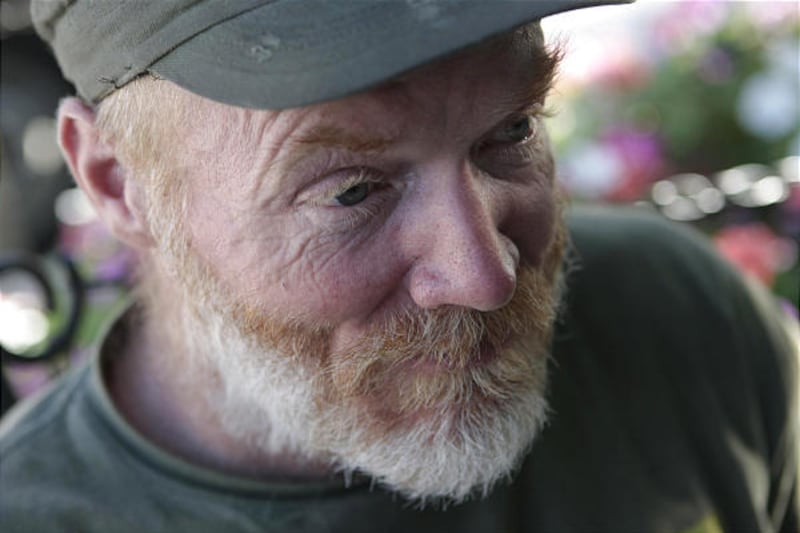
It's that kind of life that led Wilkinson to where he finds himself now — homeless and in the middle of a court battle with the state of Utah and Salt Lake City.
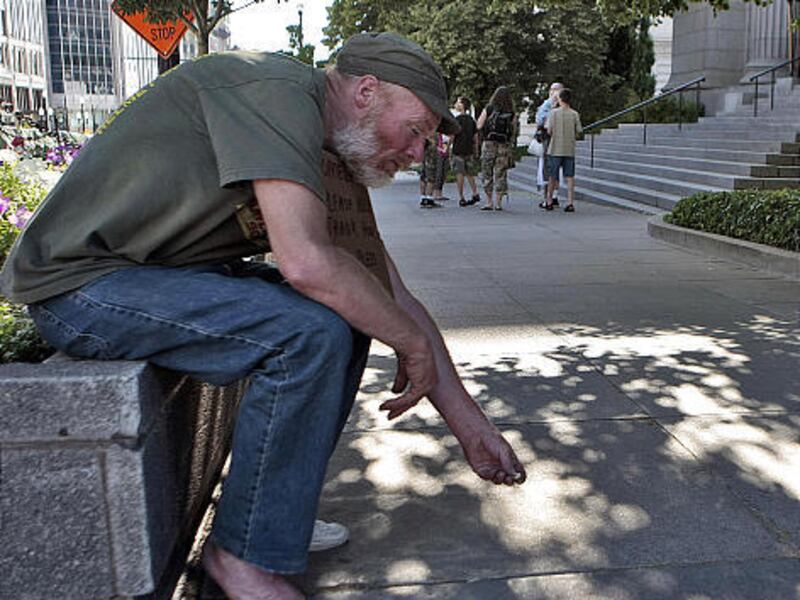
Wilkinson has been living on the streets since being released from jail about eight years ago. At night, he camps in the mountains on the outskirts of the city near the state Capitol in a tent he shares with a friend. During the day, he panhandles on street corners downtown. With a cardboard sign in hand, he sits on curbs, benches or the sidewalk and asks pedestrians for spare change.
Wilkinson's use of a sign when soliciting money from strangers is the crux of the legal battle. In February, he was ticketed for holding a sign that read, "Please help. God Bless."
At the time, Wilkinson was huddled between two buildings on South Temple, not far from Temple Square, seeking shelter from the winter weather.
"It was cold out, and there was snow, sleet and rain blowing," he recalled. "I was flying my sign, and (the police) come by. They looked over, seen me, seen my sign and come back.
" 'Oh, you might as well just hang out right there,' " he said, quoting the officers. " 'You're getting a ticket. Not a warning, a ticket.' "
Bill Tibbitts, director of the Anti-Hunger Project for Crossroads Urban Center, helped the case get its roots after hearing complaints from homeless Utahns about the citations — or, in some cases, threats of them — they'd received.
"People were being told they couldn't panhandle in Salt Lake City or that they couldn't say certain things," Tibbitts said.
The law that police used to ticket Wilkinson has been in place for decades. Its implementation by Salt Lake City police has stirred up controversy and Wilkinson's legal battle even as the City Council studies the proposed city ordinance on panhandling. The law applies to any sign used on the side of a street, whether it's a high school student waving an advertisement for an open house in a new neighborhood or a business having a going-out-of-business sale.
Tibbitts contends those aren't the people being ticketed. The focus, he said, is on the homeless.
"Panhandling has a political element because there's that social critique that society's not taking care of the less fortunate as well as it should," he said, defending the free speech involved whenever a person holds up a sign asking for help.
Wilkinson's distinctive walk is proof of his hardened lifestyle. Missing three toes on one foot and half of his big toe on the other, he walks with a hobble in his step. He hasn't seen a doctor since the day his toes were removed, and he can't remember the last time he's been to a dentist.
Wilkinson's life may sound typical of someone living on the streets: He never finished high school, didn't have a good home life and calls his father a deadbeat. He eats whatever junk food he can scrounge up after asking for spare cash on the streets.
Despite years of run-ins with police and battles with drug addiction, Wilkinson says he's been clean for nearly 15 years and lives a good lifestyle. Recollections of the past, however, remain dark reminders of the rough road he's trod.
"I was a troubled child," Wilkinson said. "I was troubled in any way I could be. I stole stuff. I didn't go to school. I fought a lot. My mom took care of seven kids, including my father. He was the eighth kid. That was my childhood."
Salt Lake City Mayor Ralph Becker believes the revisions made to the panhandling ordinance will protect the rights of those seeking a little monetary help, while also ensuring a downtown experience that is free from hostile begging.
"The proposed commercial solicitation ordinance strikes a good balance for the needs of our community on the difficult issue of aggressive panhandling," said Becker spokeswoman Lisa Harrison-Smith. "We stand behind the proposed ordinance as a publicly vetted and thoughtful measure tailored to our capital-city needs."
e-mail: araymond@desnews.com; gbarker@desnews.com