

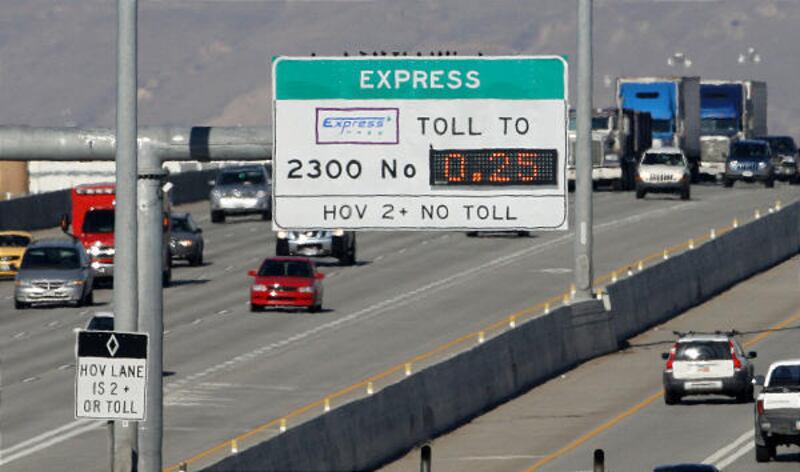
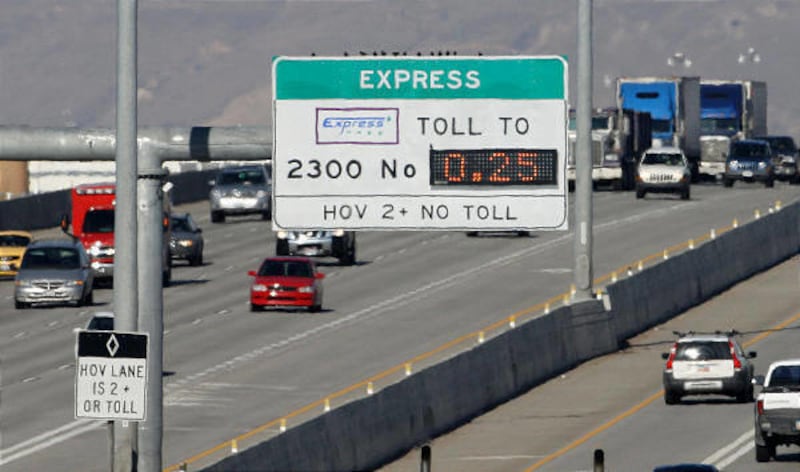

SALT LAKE CITY — Cheaters in the carpool lanes are making it hard for the Utah Department of Transportation to collect the money they need to maintain those lanes.
Since they became available at the end of August, electronic transponders installed in approximately 8,300 vehicles along the Wasatch Front — allowing drivers to duck in and out of the carpool lane whenever other traffic might not be moving as smoothly — are collecting about $38,000 each month. It is estimated that sometime this year, UDOT will begin paying contractors about $40,000 per month for 24-hour maintenance on the equipment.
"The electronic payment system was set up to help manage the traffic flow, not necessarily to raise revenue," said Dave Kinnecom, UDOT's traffic management engineer. He said the system is working as it was intended to and that the completion of express lane expansions in Utah County will only add to the current revenues, allowing UDOT to break even on operation costs.
The trouble is that as the number of cars traveling in the express lane increases, so does the toll, up to $1 in any specific zone along the more than 40 miles of express lane, stretching from Layton to Lehi. New construction will extend the lane to 62 miles, longer than any in the country, according to UDOT.
Cars without the transponders and containing only one occupant are in violation of the law whenever they enter the express lane. The signs are set up with different colored lights on the back of the signs to help the Utah Highway Patrol locate such offenders.
"It is definitely something we watch for," UHP trooper Todd Johnson said. "It is not entirely difficult. … Sometimes drivers will give themselves away."
Troopers use the lights as well as a series of visual confirmations to identify illicit vehicles in the express lanes. While two troopers are dedicated to those lanes during the morning and evening commutes, Johnson said all troopers pay attention when they are traveling to and from various calls, as well as during their own commute times.
The lights and fluctuating prices in varying zones also help to keep traffic moving and maintain at least a 55 mph speed limit in the lane at all times, Kinnecom said. The system adjusts automatically according to the volume of cars passing beneath the electronic signs and the speed at which they are traveling.
Until the state assumes full ownership of the equipment, following a period of time when it runs "trouble-free," and until the next two legs of the lane become available to drivers in Utah County sometime in 2012, Kinnecom said UDOT has a reserve fund built up from previous sales of stickers that used to be required to drive in the lanes.
"Revenues will increase when the new lanes open," he said. "But the purpose of the express lane is to move more people. And it is already doing that."
More than 3,200 people are using the express lanes every hour, whereas the other lanes move 1,600 per hour. And at its busiest spots and times (5400 South and 8000 South at about 5 p.m.) the freeway is running at capacity, Kinnecom said.
Traffic has been down in the last few years, due to the recession, but Kinnecom said UDOT expects that with economic recovery, normal traffic patterns will resume.
So while UDOT is not in the express lane business to make money off drivers, it is in the business of smoothing out the wrinkles that appear in traffic and getting people wherever they want to go.
e-mail: wleonard@desnews.com