

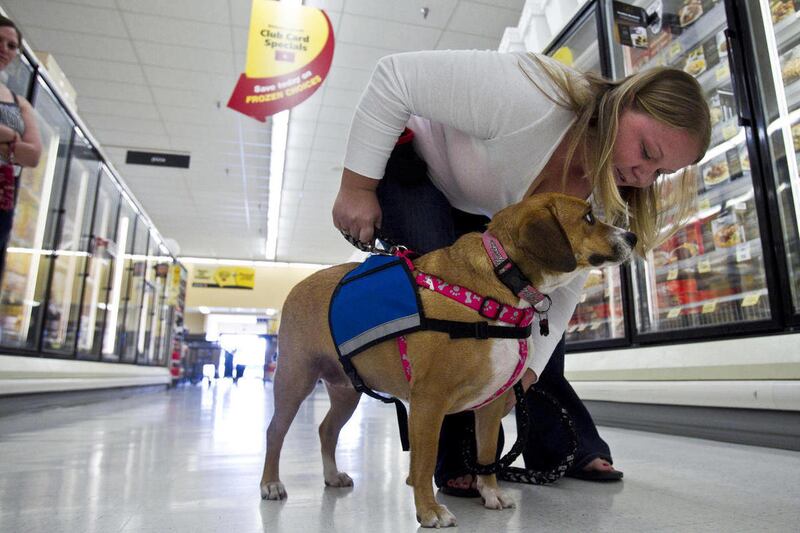
PHOENIX — Gerad Claseman recognizes the benefit of pairing service dogs with disabled veterans but thought there had to be a better way of doing it.
The specially trained dogs can cost as much as $25,000 and, in many cases, when they're paired with a veteran in need they just don't form a suitable bond. Or in other cases the veteran is given a crash course in working with the dog — and if that connection isn't made in a few weeks, the dog is given to someone else.
"We thought there had to be a better way," said Claseman, a Vietnam War-era Navy vet.
Claseman and his wife, Debbie, formed the American Service Animal Society, an organization dedicated to helping match armed services veterans who could benefit from a service dog with such an animal. What separates ASAS from many other charitable organizations that perform a similar service is in most cases the Claseman's group helps veterans train dogs they already own.
Having the veterans train their own dogs (or dogs they select) is beneficial in two main ways, Claseman said. The cost is significantly less (about 80 percent) than having someone else train the dog and the bond between the veteran and dog is already established.
Debbie Claseman had been working with therapy dogs that visit hospital patients for close to 10 years before they got the idea to work with veterans four years ago.
"As we traveled around and saw the problems veterans were having, my wife asked if we couldn't do something," Gerad Claseman said. "I thought, 'Yeah, we really could do something.' So we volunteered to help some people."
Their volunteer efforts evolved into a nonprofit organization that has helped veterans throughout the country, though most are located in Arizona due to ASAS being staffed by volunteers. Currently, the only trainer other than the Clasemans is Myra Markley, a certified dog trainer who is disabled.
ASAS will help veterans select a suitable dog, monitor the progress of the vet and his/her dog and help the veterans in caring for the animal after training as much as possible. In some cases, if the relationship doesn't work out, it tries to re-partner the dog with a different veteran or find it a suitable non-service home.
Training takes between 12-24 months, depending on the needs and how motivated the veteran is to work with the dog.
ASAS trains dogs to perform tasks ranging from opening doors or retrieving items for the physically disabled to providing a calming influence for veterans suffering from post traumatic stress disorder.
"Sometimes, vets might have flashbacks or nightmares," Claseman said. "When that happens and they can reach over and there the dog is, sound asleep, they can realize that everything is fine."
ASAS works with the animals and their owners in private homes or public places.
"A lot of our veterans are homebound and refuse to go out in the public," Claseman said. "One of the things they have to do is take the dog out, which gets them out, too. It's amazing to see that change in people."
Information from: The Arizona Republic, http://www.azcentral.com