

CESANA PARIOL, Italy — A year after a Georgian luger's fatal crash at the Vancouver Olympics, new safety measures have been implemented for this weekend's world championships.
Still, athletes realize that luge is a dangerous sport and say accidents can always happen.
"There are always risks," said Armin Zoeggeler of Italy, the two-time Olympic champion who took bronze in Vancouver. "Everything has been prepared in terms of security, but even in Vancouver we didn't think something like that could happen. These are things that you don't see coming beforehand."
The track in Cesana was built for the 2006 Turin Olympics and is more technical than the one in Vancouver. The top speed here is about 84 mph, compared to the 95 mph attained by competitors in Whistler.
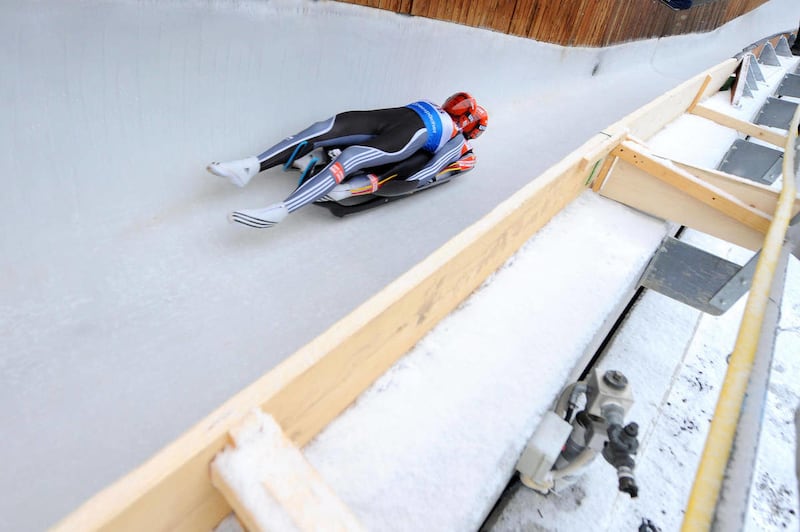
The International Luge Federation (FIL) asked local organizers to extend the track walls on several curves.
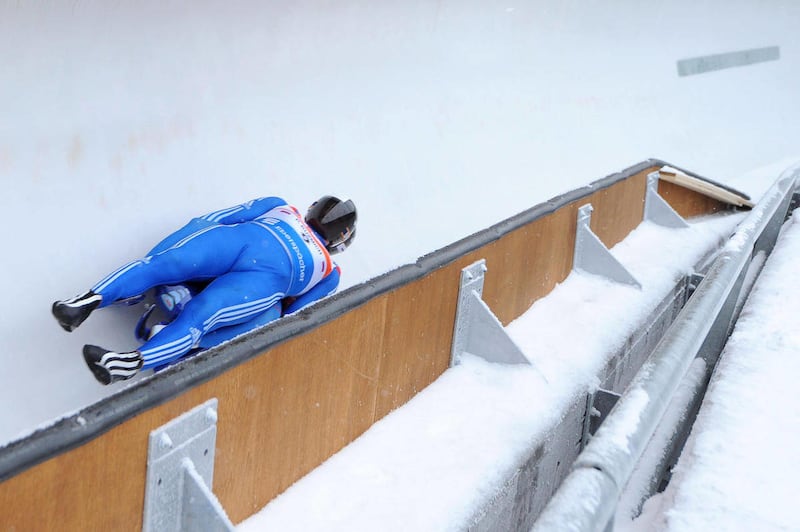
"We added 30-centimeter (foot-long) wood panels in various points where if someone was to make a mistake they could potentially exit (the track)," venue manager Stefano Bompard said. "They're more or less like guardrails.
"Those are the only structural changes we made. Otherwise the track is exactly the same as it was during the (Turin) Olympics."
Georgian racer Nodar Kumaritashvili died after losing control of his sled at nearly 90 mph and flying off the slick Whistler track to hit a metal post in a training run just hours before the Olympics opened last February.
While there are various posts lining the Cesana track, they are not positioned like the ones in Whistler.
"The percentage of accidents we've had on this track in five years of activity is less than 1 percent of the total descents," Bompard said.
There is a medical station located at the bottom of the track. While there is an ambulance on hand, there is not a helicopter on site for emergency evacuation, although Bompard maintains a helicopter from Turin's CTO hospital could arrive in as little as 15 minutes.
There are fewer countries represented here — 19 — than in Whistler, and no athletes from Georgia.
A British Columbia coroner ruled Kumaritashvili's death accidental, but also cited his "relative lack of experience" on the toughest courses as a factor — a suggestion rejected by the racer's family, who says he earned the right to compete at the games.
Bompard recalls that Kumaritashvili trained in Cesana and competed in a World Cup race here before heading to Vancouver "and had no problems."
During training here, none of the racers seemed overly concerned about safety.
"There's a regular inherent risk in sliding in general, but everyone that is here competing at this level is talented enough to get down and compete safely," said U.S. doubles competitor Matthew Mortensen.
"A lot of that stuff — putting up (protection) on poles or putting up extra wood — is for the public so they think that it's safe," Mortensen added. "And it is safe, it's a technical track and if you're not up to speed with it then it can bite you, but that's everywhere."