







As "Gunsmoke" became the longest-running series in television history, airing for 20 consecutive seasons (a feat since tied by "Law and Order"), Dodge City became the most recognized cowboy town in movie history.
KANAB — In 1951, a Hollywood director named William E. Wellman made a film for MGM called "Westward the Women," a movie about 140 mail-order Eastern brides making their way to lonely ranchers in California.
For the sake of realism, and because MGM had the budget for it, Wellman had an entire Main Street built in a place called Johnson Canyon some 10 miles outside of Kanab. The set had a saloon, a blacksmith shop, a doctor's office, a general store and, of course, a hanging gallows at the far end.
It was the quintessential Western town. So quintessential that when other movie companies saw it, they said, hey, don't tear that down.
The set was used in several more movies and then, in 1955, a TV series called "Gunsmoke" moved in.
And stayed.
As "Gunsmoke" became the longest-running series in television history, airing for 20 consecutive seasons (a feat since tied by "Law and Order"), Dodge City became the most recognized cowboy town in movie history.
Not all of the 635 episodes of "Gunsmoke" were filmed in Johnson Canyon, but a lot of them were.
I bring this up because Dodge City is still standing. Sort of.
But if you want to pay your respects, you better hurry.
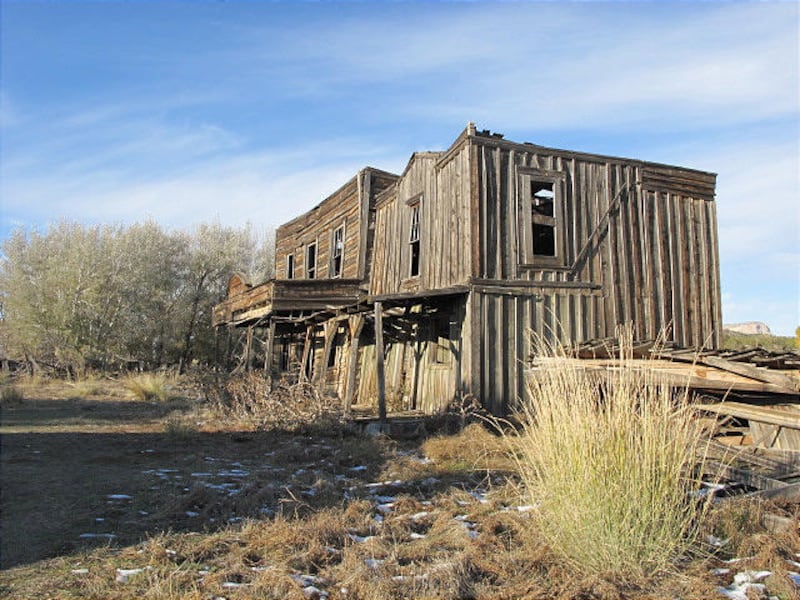
Time, the elements, and what the rest of the world calls progress have all taken their toll on the 60-year-old set.
The blacksmith shop is turning in on itself, Doc Adams' office is in complete disrepair, and the Long Branch Saloon is sagging so much it would break Miss Kitty's heart.
If Marshal Dillon were to gallop down Main Street, he'd have to negotiate about a hundred pot holes.
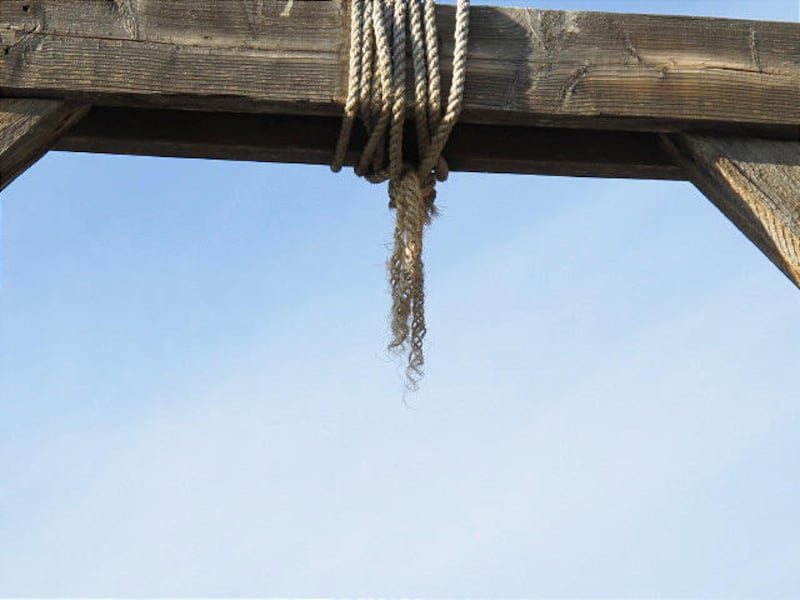
And if he wanted to string up some outlaw at the end of town, somebody cut off the rope.
Alas, when it comes to moviemaking, the decline of Dodge City is emblematic of the decline of Kane County's movie industry.
Time was when Kanab and surrounding area was a bona fide star, earning for itself the nickname "Little Hollywood."
From the 1920s through the 1970s, upwards of 200 movies, the majority of them Westerns, were shot in part or in total in the area.
It began when a silent movie called "Deadwood Coach," starring Tom Mix and Tony The Wonder Horse, was filmed in Johnson Canyon in 1924.
Then, after sound came to films, "In Old Arizona" was shot in Kanab in 1929, the first talkie ever made outdoors. It received five Academy Award nominations, including Best Picture.
After that, John Wayne came to Kanab in 1930 and starred in "The Big Trail," and it was Katie bar the door.
For decades, dozens of movies were filmed on location every year. The peak was the 1950s when more than 40 movies were made in and around Kanab, including 12 in 1957 alone.
Name the star, he or she breathed the clear air in Kanab: Clint Eastwood, Frank Sinatra, Randolph Scott, Barbara Stanwycke, Anne Bancroft, Ronald Reagan, Dale Evans, James Garner, Charlton Heston, Sydney Poitier, Jimmy Stewart, Raquel Welch, Ava Gardner, Maureen O'Hara, Jack Nicholson, Marilyn Monroe, Clark Gable, Richard Burton, Gregory Peck … and we're just getting warmed up.
And, of course, Amanda Blake, James Arness, Dennis Weaver and Milburn Stone — the long-running cast of "Gunsmoke."
But the "Gunsmoke" stars, like so many others of those named above, have passed on. Marshal Dillon was the last to go; James Arness died this past June.
And now, their town is on its last legs.
I got to pay my respects earlier this month when Ed Meyer, a member of the Kanab City Council, kindly extended an invitation to drive out and take a look around. Kelly Stowell, executive director of the Kanab-based Center for Education, Business and the Arts, also came along.
Dodge City is on private land, and Ed and Kelly had permission from the landowner to open the gate so we could walk down Main Street.
We left Kanab, traveled east on U.S. 89 and turned north on the Johnson Canyon road. A few miles later, the buildings came into view on the right.
It was clear they've seen better days.
"If it's a hard winter, they might all be down by spring," said Ed.
But Ed and Kelly aren't pessimists. They're optimists. And while they don't like seeing Dodge City in disrepair, they do see the demise of Kanab's most famous movie set in a positive light.
If the area is ever to return to its glory days, it must turn from the past and look to the future.
"We're still the perfect place to make a movie, with the most spectacular scenery," said Kelly. "Where else can you go and be in the Middle East one minute and Switzerland the next?"
"Movie-making is our heritage; it's who we are," said Ed. "We just can't do it like we used to do it. Hollywood has been redefined, we need to be redefined."
Both men speak enthusiastically about the Little Hollywood Shootout, an annual competition for aspiring moviemakers, and other local programs that are designed to lure Big Hollywood back to Kanab.
Standing with their shoes on the broken down steps of the Long Branch Saloon, they're looking forward, not backward.
Still, we all agree it would be nice if we could go inside and ask Miss Kitty what she thinks.
Lee Benson's About Utah column runs Monday and Friday. Email: benson@desnews.com