

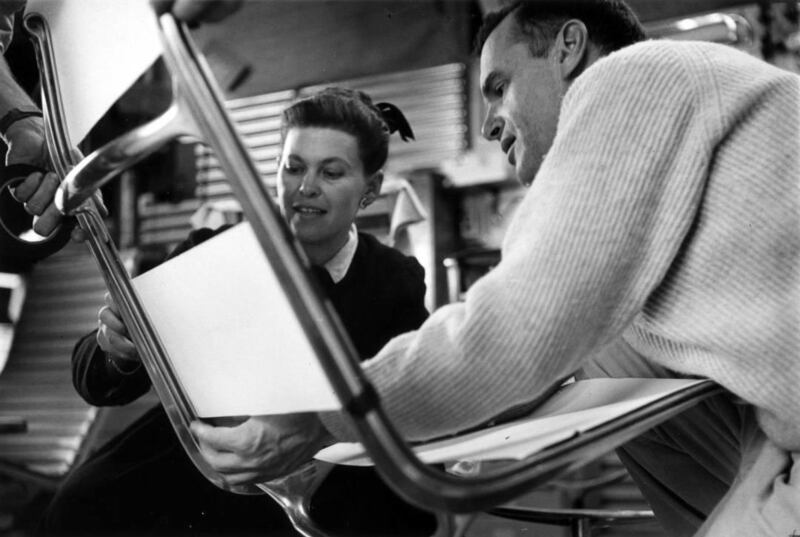
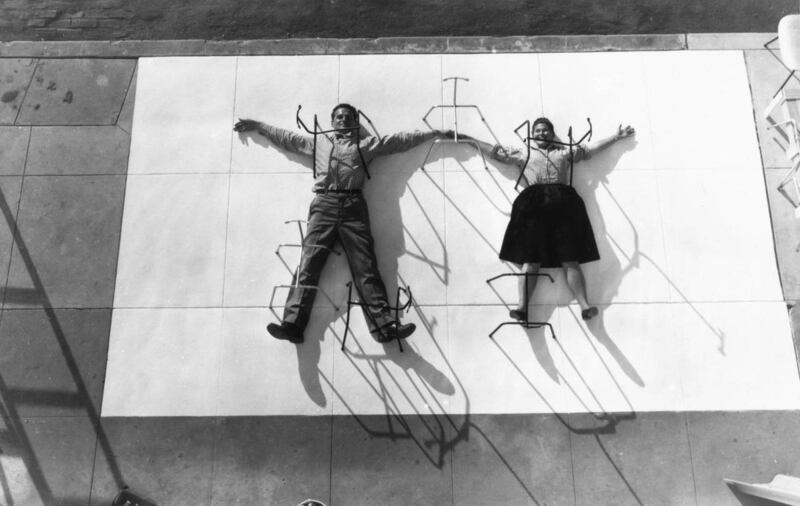
Before the word “ergonomics” was coined, Charles and Ray Eames were designing seating that would comfortably support the human body on their brilliant but affordable cutting-edge furniture designs. The husband-and-wife team completely changed how we furnish our homes and offices.
In a thorough, vibrant documentary, “Eames: the Architect and the Painter,” airing Monday at 9 p.m. on KUED, the continuing legacy is examined of the master Modernists who are widely considered the country’s most important designers.
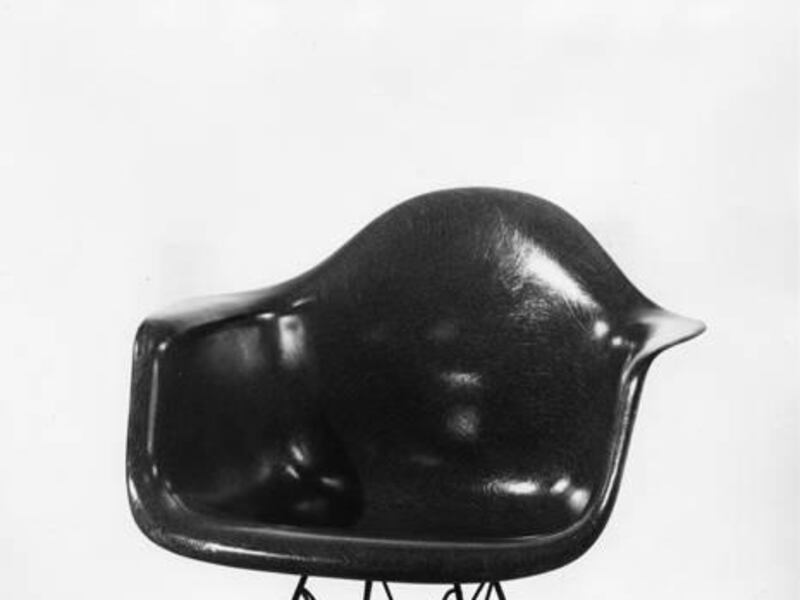
The 82-minute historical documentary appropriately credits the designers for the introduction of dimensionally shaped surfaces to furniture. If the chair you’re sitting in is made of cast aluminum, fiberglass-reinforced plastic or bent and welded wire mesh, the Eameses influenced its design.
“Just like Queen Victoria represents an attitude toward life that is reflected in Victorian art and literature, (Charles) Eames also embodies a certain approach to life and to ideas,” believes filmmaker Paul Schrader, one of the couple's interviewed admirers, a group that includes former employee-collaborators and design experts, including family members who speak with surprising candor.
The film is more than an engaging dialogue on design. It’s a fascinating view of American visual culture from the 1950s to the 1970s.
The two artisans began their collaboration in 1941 in the Los Angeles suburb of Westwood, in a spare-bedroom-turned-workshop. Their work together followed an innovative yet ulitmately failed chair design that still won the Museum of Modern Art’s “Organic Design in Home Furnishings” competition.
On a home-made machine, which they dubbed “the Kazam!” after the saying “Ala Kazam!” because it molded plywood like magic, they fed the woods and glues that Charles sneaked home from his day job as a set architect on “Mrs. Miniver” and other early MGM movies. The duo crafted their first mass-manufactured product: a then-revolutionary plywood leg splint based on a plaster mold of Charles’ own leg. The U.S. Navy purchased 5,000 splints for wounded military during World War II, and their company, Eames Office, was formed.
It wasn’t design for the sake of design. Recognizing the need, Charles said, is the primary condition for design. The philosophy was defined as “getting the most of the best to the greatest number of people for the least.”
Because the Eameses’ interests included photography, multimedia exhibits, graphics, films and toys, their Venice, Calif., workshop was called a “circus” by one former employee and another explains it was like coming to work in Disneyland.
The documentary, from award-winning filmmakers Jason Cohn and Bill Jersey, includes scenes from short films the Eameses made for the U.S government, IBM and Polaroid, now obscure but widely seen at the time.
With the film’s release, the Herman Miller company, for which the pair designed furniture that is still in production, has launched a companion educational website at HermanMiller.com/Eames-Documentary, where design enthusiasts can explore images, videos and quotes collected from archives by former Eames Office designers.