

PROVO — For almost 60 years, researchers from a now BYU-run organization have scoured Mesoamerica for remnants of ancient civilizations and — as they have many times before — discovered another important artifact.
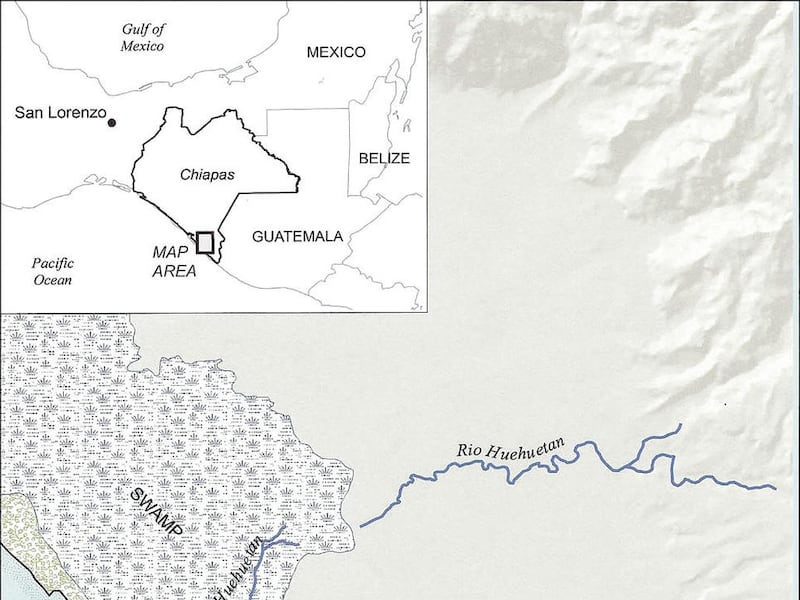
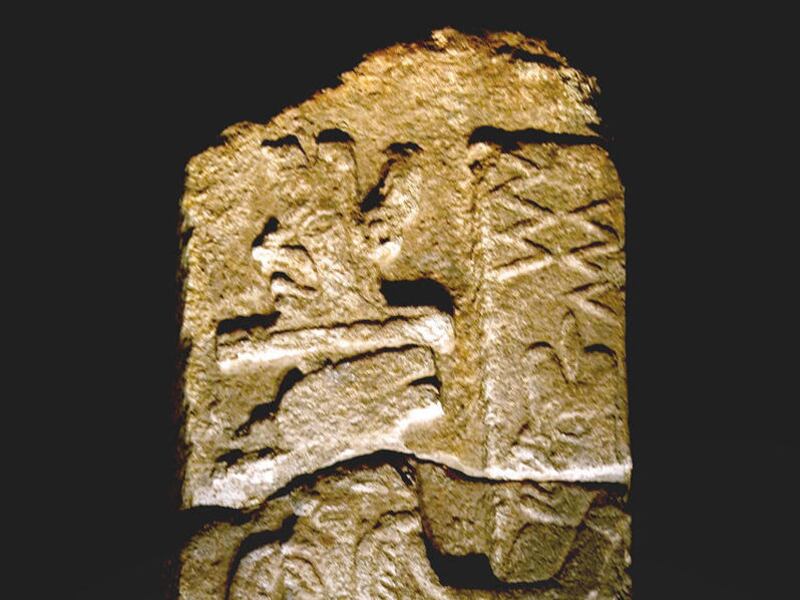
The 3,000-year-old stone monument — containing a corn god or central figure of some persuasion of power — was discovered in 2009 at Ojo de Agua, a site in southern Mexico within the state of Chiapas, with funding and participation from BYU's New World Archaeological Foundation (NWAF).
The finding was recently discussed in the cover article of December's issue of Mexicon, a peer-reviewed journal of Mesoamerican studies.
Emiliano Gallaga Murrieta, study co-author and director of the National Institute of Anthropology and History in Chiapas, said having the opportunity to visit the exact location of the monument's origins allowed the archaeologists often rare chance to study associated materials and better get a feel for the landscape of the finding.
"The style … is clearly Olmec and we think that the community who lived in Ojo de Agua was Olmec or related to them based on the material found, the style of the sculptures found and the time frame," Murrieta said.
Through these factors — as well as carbon dating done on the site — the stone monument has been dated somewhere between 1000 and 1100 B.C.
Predicted to have formerly resided near an ancient temple, Murrieta said the artifact — referred to as "monument 3," coming in the wake of two other local finds — was discovered accidentally by some local workers on the water canal of a banana plantation.
John Hodgson, an archaeologist at University of Wisconsin-Madison and one of the study's co-authors funded by the NWAF, was among the first to examine the monument made up of consolidated volcanic ash.
"After you do archaeology for a long time, when people describe a fantastic find to you, you learn to mentally downplay it in your mind before you see it to prepare yourself to be let down," Hodgson said. "When the monument was first described to me, I was told it was 'a giant warrior with a shield and a spear fighting tigers.' When you hear something like that you prepare yourself for seeing a rusty 1940s ad sign for chewing gum that was found in a trash pit. … In this case, even though not as described, I was not disappointed."
Though a definitive interpretation of the stone's carvings remains elusive, he said it might depict a ruler coming into power or a crude symbol of some more complex event, comparing it to the motifs in the Adam and Eve story, readily known to the people that saw it.
Hodgson said much of the credit for the excavation — as well as other general Mesoamerican archaeological work — belongs to BYU's John E. Clark, the study's co-author and former NWAF director, whom Hodgson said was a "key player in the research" with the foundation.
Clark, who was succeeded as NWAF director by BYU anthropology professor Donald Forsyth in 2009, said he just recently traveled to southern Mexico for the organization's 59th anniversary.
It hasn't always been a BYU-run program, however, or even associated with The Church of Jesus Christ of Latter-day Saints for that matter.
Beginning in 1952, the foundation was a collection of scholars interested in the pre-Columbian cultures of Mesoamerica, Clark said.
Those first archaeologists made some notable discoveries and began receiving funding from the LDS Church early on. Though some were members of the church, religious affiliation was never a requirement.
"The goals of the foundation when it was chartered were to focus on the study of Early Mesoamerica and how Mesoamerica developed into a large cultural region with shared cultural traits," Hodgson said. "The majority of archaeology taking place in Mesoamerica is now and has always been primarily focused of the study of later societies that produced fantastic pyramids and art like the Maya and Teotihuacan."
The NWAF eventually shifted from a privately run organization and became a part of BYU in 1961 with goals not only to research culture in the "New World" but also to "enrich BYU student experience through mentoring and internship opportunities," the foundation's website reports.
"For me, the most interesting part of archaeology is the study of how cultures developed," Hodgson said. "So from an academic perspective, it is refreshing that the NWAF has, for 50 years, primarily focused on studying the origins of Mesoamerican culture."
He said the other aspect of the foundation he has always appreciated — along with many others, both LDS and not LDS — is having a standing research facility in southern Mexico with a staff and logistical support.
"75 percent of the success for any archaeological project depends on resolving the logistical challenges facing a project," Hodgson said. "Having the facility in Chiapas has been instrumental in the success of many research projects. Had the foundation not been in place, outside of large Maya centers such as Palenque, perhaps less then 50 percent of the archaeological research conducted by North American archaeologists in Chiapas would have occurred."
e-mail: clarson@desnews.com