

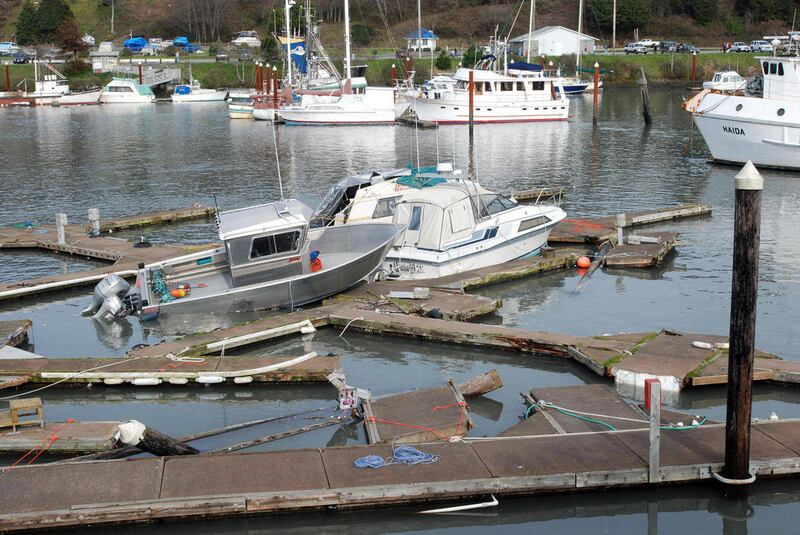
BROOKINGS, Ore. — A tsunami wreaked havoc Friday at a Southwest Oregon harbor, prompted thousands of the state's coastal residents to head for higher ground, and swept four people out to sea, though they were soon rescued.
The harbor at Brookings, just north of the California border, saw the most destruction from the waves that reached Oregon following a giant earthquake off Japan.
"The port is in total disarray," Curry County Sheriff John Bishop said.
The half of the harbor that shelters commercial fishing boats was extensively damaged and up to 10 vessels sank, he said.
One man with a history of heart problems was found dead aboard a commercial vessel. It was unclear exactly how he died but it was likely from natural causes, Bishop said.
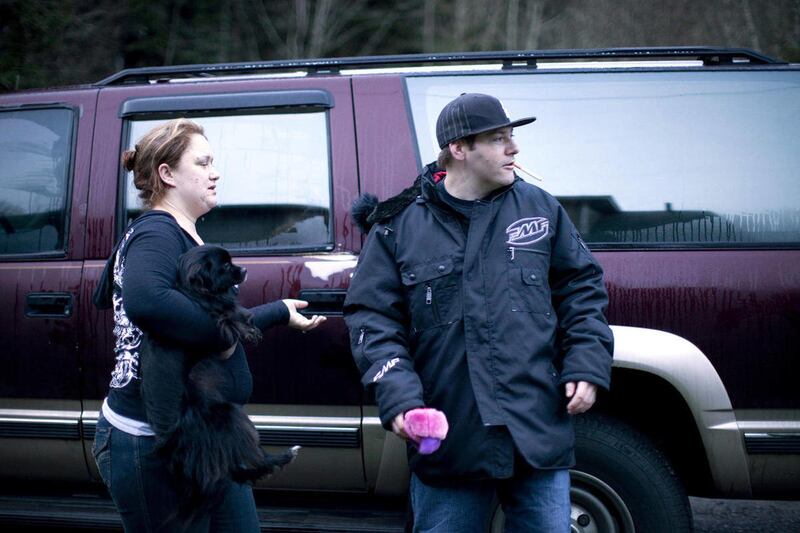
Four people who went to a beach north of Brookings at the mouth of the Pistol River to watch the waves were caught by them instead. Two rescued themselves, and law enforcement officers and firefighters got the other two, the sheriff's office said.
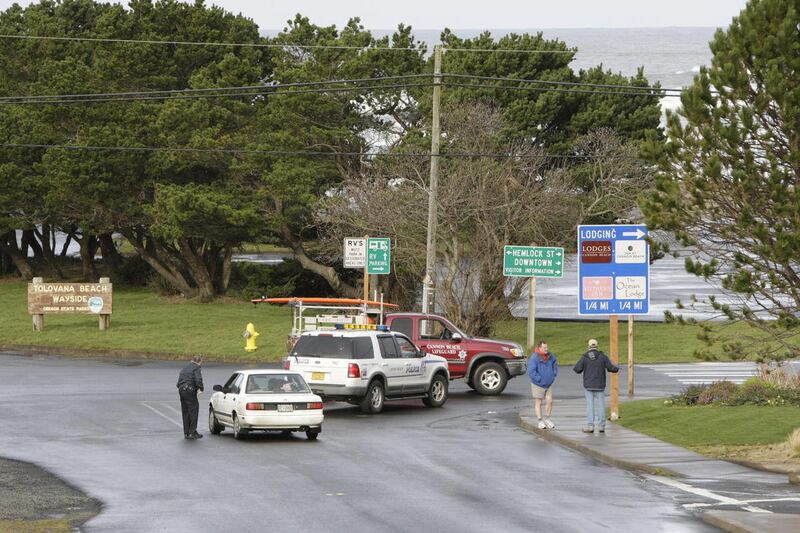
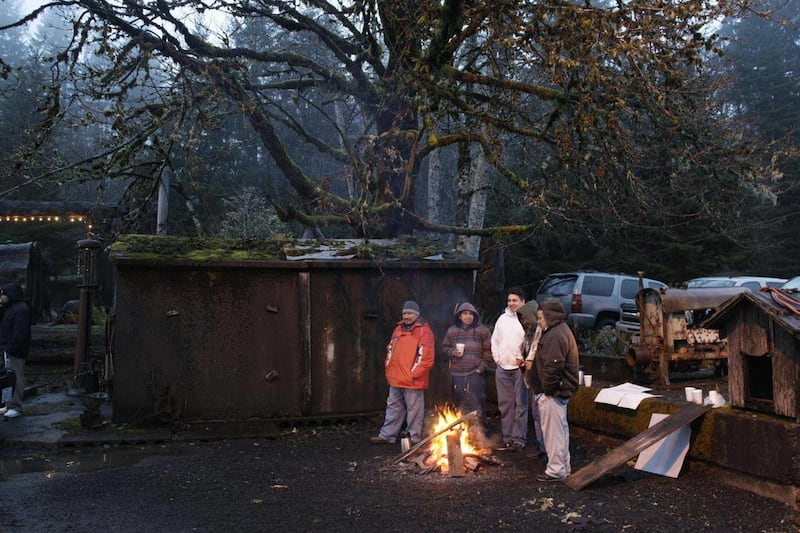
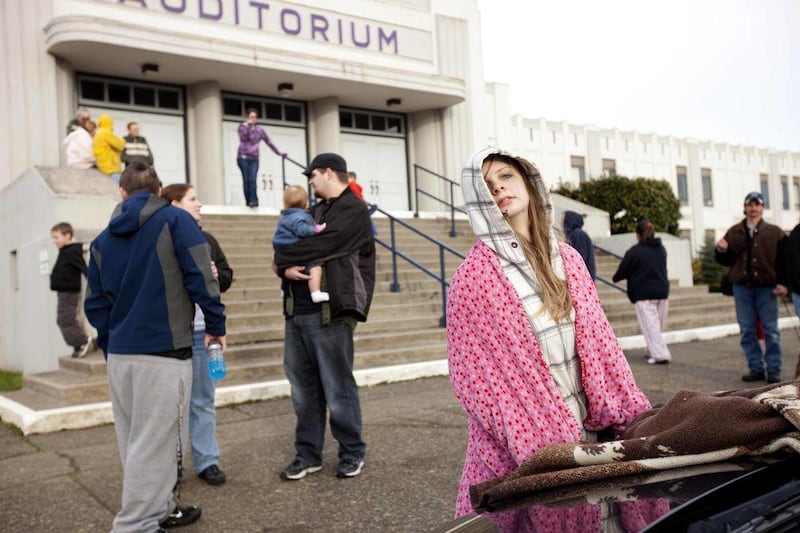
Thousands of Oregonians heeded warning sirens in the early morning hours and headed for higher ground. They got the all-clear late in the morning to return home.
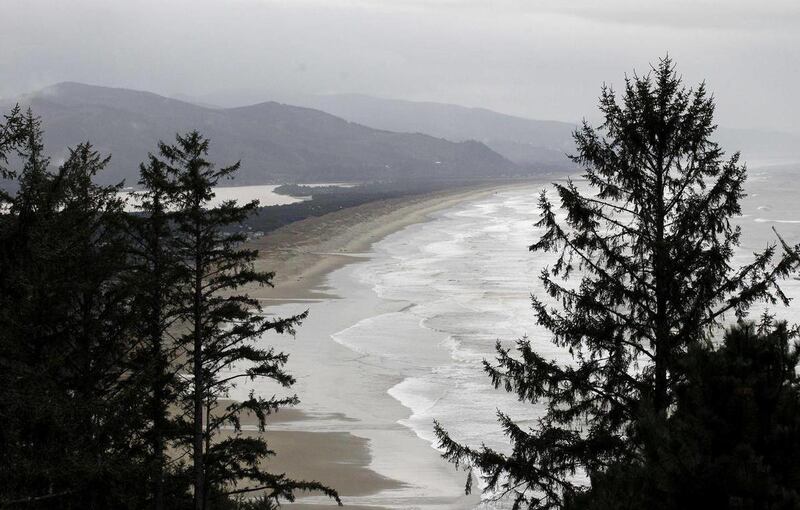
In most cases, there was little damage from the surges that raised waves as much as 3 feet at Port Orford on the southern coast, where the waves were the highest.
Surges continued at midday Friday at Brookings, the largest community in Curry County, with about 14,000 residents.
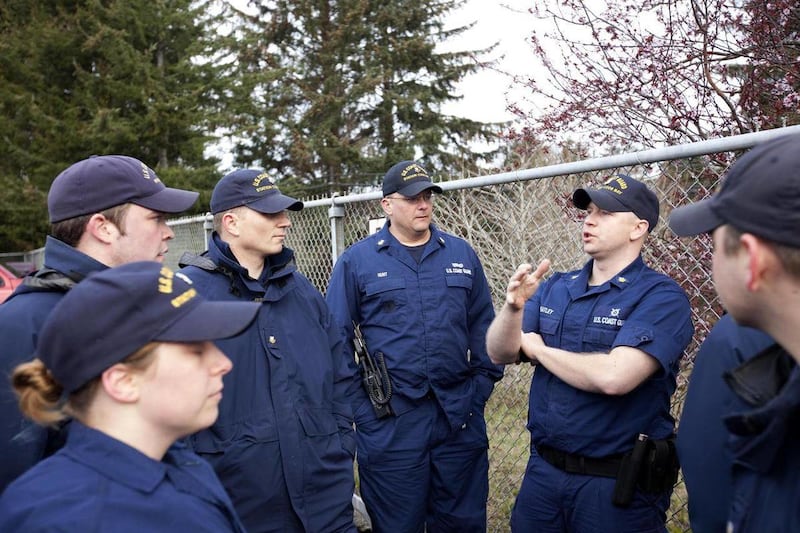
Three boats were sunk in the harbor and seven swept out to sea. All those may be sunk, Bishop said, but authorities were still getting reports from Coast Guard helicopters surveying the coast. More than half the dock structures were destroyed.
The man who was found dead was described as a "live-aboard" on the vessel, Bishop said. None of the vessels swept out to sea had people aboard, he said.
The tsunami hit hard at Curry County, where unemployment has been running at 13 percent through the Great Recession.
Like many Oregon counties, Curry has tried to make a transition from an economy based on timber and commercial fishing to one based on tourism, services for retirees and sport fishing.
"It's still a struggle," said Darrel Miller of Wild River Brewing & Pizza Co. on U.S. 101 above the harbor. Commercial fishing is still an important family business in town. "I know their families," Miller said. "When they get hit, we feel it."
Pat Piper, head of the local Chamber of Commerce, owns a bookstore at the edge of the harbor — she had to fetch the store's cat at 6:30 a.m.
The recreational boating side of the harbor wasn't hurt so badly, and all the business buildings at the harbor are intact, she said. "I don't think it's going to hurt the tourist economy. ... We're just grateful it wasn't worse," she said.
Gov. John Kitzhaber appeared at a news conference Friday with Brig. Gen. Mike Caldwell, the head of the Oregon National Guard. They said the state's emergency plan and the evacuations went well, although some sirens failed to go off automatically and had to be sounded manually.
State geologist Vicki McConnell warned that Oregon faces the risk of a similar quake much closer to home, with notice of a half-hour or less, in an unstable area just off the Oregon coast called a subduction zone.
That warning was echoed by marine geologist Chris Goldfinger of Oregon State University, who was in Tokyo and meeting with fellow seismologists when the earthquake struck.
The Japanese have been living with and preparing for earthquakes for thousands of years, he said. Grim as it was, the earthquake's impact could have been far greater, he said.
By contrast, he said, the jeopardy confronting the Pacific Northwest has only dawned on it in the past two decades.
Americans are decades behind in preparing and executing emergency plans, reinforcing buildings against quakes and taking other steps to prevent catastrophe, Goldfinger said.
"This event looks to be an identical twin to the one we expect in the Pacific Northwest," he said in a telephone interview from Japan. "If it were to happen today in the Pacific Northwest, it wouldn't turn out so well."
Fought reported from Portland.