







Creating art is an interesting process, but one that does not take place in a vacuum. Inspiration can come from many sources; creative sparks have myriad origins.
Two ongoing art exhibitions in Salt Lake City recognize and pay tribute to that fact: "The Smithson Effect," on display at the Utah Museum of Fine Arts, and "Homage," at the Rio Gallery.
The Smithson Effect
Most Utahns know Robert Smithson — if they know him at all — as the creator of the "Spiral Jetty," a huge cement spiral that has resided in a desolate stretch of the Great Salt Lake since 1970.
What many Utahns don't realize, says Gretchen Dietrich,
UMFA executive director, "is how unique and impressive the 'Spiral Jetty' really is, or how important and secure Smithson's place in art history has become."
Smithson is considered the most influential artist of the postwar period, says Jill Dawsey, curator of modern and contemporary art at UMFA. Until then, artistic creation had traditionally been done in the artist's studio, "but Smithson took his activity to the unbounded landscape. He redefined the terms of art's display and exhibition."
Smithson was killed in a plane crash in 1973, but his legacy extends beyond his revolutionary use of land as an artistic medium, she says. "He produced sculpture, drawings, collages, paintings, photographs and extensive writings. His practice of working across various mediums, which was once unusual, has become widespread among artists today. He redefined art itself."
"The Smithson Effect" features the works of a number of artists who, in the mid- to late-1990s turned to Smithson's work as a source of inspiration. It is the largest loan exhibition the museum has ever organized, says Dietrich, and something that has not been done anywhere else. "This original research and cutting edge contemporary art is something we are really proud and pleased to share with the community."
The exhibition features works by 22 artists, most of whom are major figures in today's world of contemporary art. "We have a few who are up-and-comers," Dawsey says, "but most are household names for people who are into contemporary art." Included are Adam Bateman, Tacita Dean, Center for Land Use Interpretation, Cyprien Gaillard, Simon Leung, Deborah Ligorio, Alexis Rockman, Melanie Smith and Tony Tasset.
The exhibition features a number of video presentations, various installations, photographs, one painting and other media.
A couple of recurring themes emerge. One is the idea of site specificity. In addition to the "Spiral Jetty," another of Smithson's most famous works was "Partially Buried Woodshed," an old shed on the Kent State University campus in Ohio that he buried with 20 truckloads of earth.
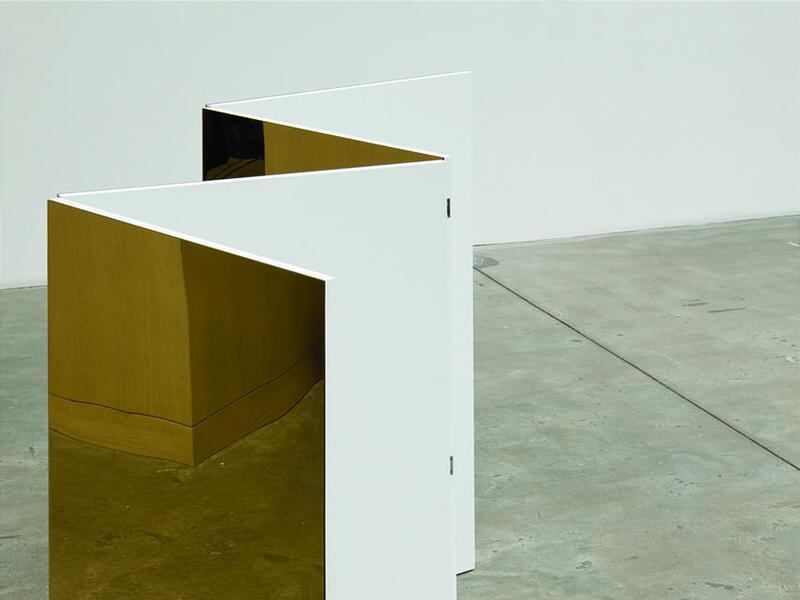
It became a memorial to students who were shot during campus demonstrations a few months later. Sam Durant's "Partially Buried 1960s/'70s Dystopia Revealed" and "Utopia Reflected" feature mounds of dirt placed atop rectangular mirrors, with speakers inside. One plays audio of Mick Jagger trying to calm the crowd at Altamont Free Concert; the other emits the voice of Wavy Gravy at Woodstock.
Peter Coffin's "Untitled (Rainbow)" includes digital images of rainbows in worldwide locations, joined together to form a spiral, and also has a notion of site.
Walead Beshty's "Selections from American Passages" includes photographs showing how "The malls, and the death of the mall, are part of this cycle of overlaid competing histories that are often forgotten."
The Smithson Effect is broad and varied, Dawsey says, "but it has been a pervasive presence in art since the 1990s. The exhibition brings together — for the first time ever — a wide spectrum of work by artists who share an indebtedness to Smithson's art and ideas."
Homage
In his recent work, Brian Christensen wants to pry "beneath the veneer of the familiar to find the liminal space between conscious and subconscious perception. I am interested," he says, "in the ability of the human mind and brain to process exterior information and stimuli into extraordinary visions, hallucinations, visions, revelations and epiphanies, which become their own creative reality."
It's a fascinating quest for the associate professor of sculpture at BrighamYoung University, and one, he says, that has been influenced by the work of Dennis Oppenheim, an American conceptual artist and architectural sculptor who died earlier this year. "I respond to Oppenheim's recklessness and diversity as an artist," Christensen says. "His willingness to try anything thrills me."
Christensen's response to Oppenheim is one of many tributes featured in an exhibition titled "Homage," now on display at the Rio Gallery, in the Rio Grande Station. It runs through April 28.
The show features 30 Utah artists, both well-established and emerging, who work in a variety of media and styles, including painting, sculpture and ceramics, as well as video and installation art. Each artist pays tribute to someone who influenced their current work and style.
"The wide variety of influences is exciting to me," says Namon Bills, show organizer and participant. "As often happens with group shows, participating artists take the curator's concept to a whole new level, which I think makes for a richer show overall."
Variety is apparent, not only in the artwork, but in the influences, which also represent familiar and less-familiar figures.
Aundrea Frahm, for example, discovered the work of photographer Sophie Calle about a year and a half ago and was "completely enthralled with her concept of interlacing life with art," something Frahm does in her photograph of eggshells that have been walked among.
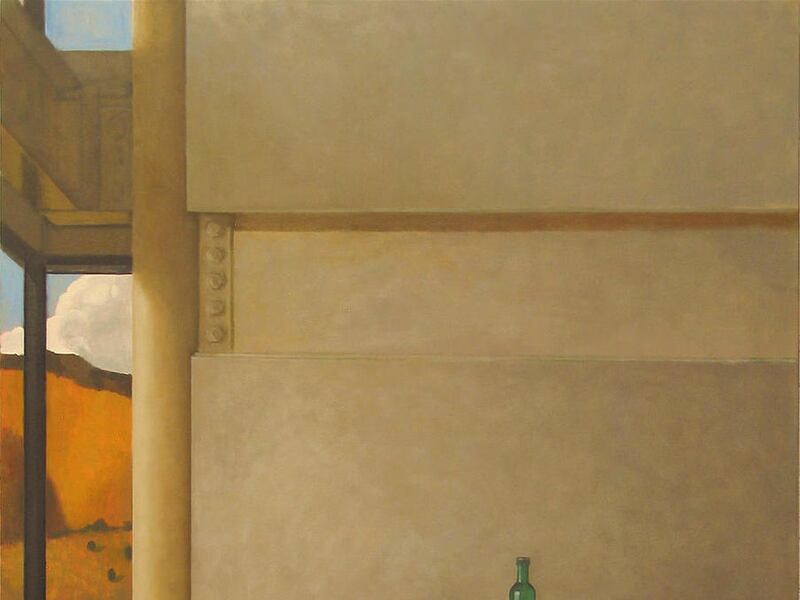
Ric Blackerby has connected to the work of Rene Magritte, known as Belgium's greatest 20th century artist and one of the fathers of surrealism.
"I often look to mythology and symbols found in natural settings; we've used some of the same symbols," says Blackerby, whose works such as "Le beau Monde," in acrylic on bottle, and "Amour dele Mer," in acrylic on paper with wire, reflect that influence.
Josh Toone, who has been making metal sculpture since 2006, chose Josef Muller Brockman as his muse "because I love posters. Brockman was a Swiss graphic designer who advocated the use of grid systems. I love the way he used simple shapes and lines to create his posters. I am fascinated by the way he used so little to such powerful effect."
Toone's works, such as "Gridlocked," "Forever Haunted" and "Depths," also used lines and shapes, as well as the textural contrast between stainless and rusted steel.
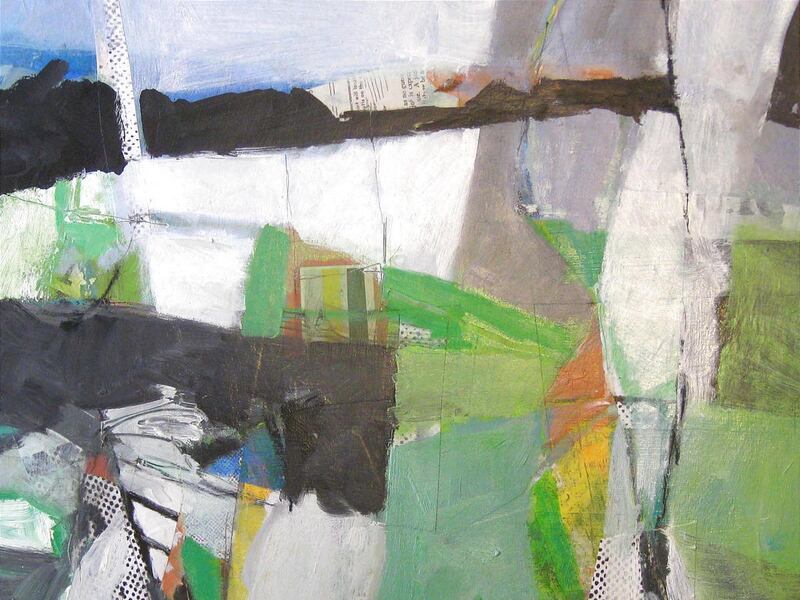
Steven K. Sheffield notes that "Hans Hofmann has influenced me as both artist and teacher. Hofmann believed that a modern artist must create what he called 'push and pull' in the image, that artists should create contrasts of color, form and texture." It's what Sheffield does in his mixed media with collage pieces such as "Stop and Go" and "Here and Now."
Music is the inspiration that often reaches Sandy Brunvand. "When working in my studio, I always listen to music. Sometimes I listen to one artist for months at a time." One of her favorite artists is Bruce Cockburn. "The lines from 'One Day I Walk' resonate strongly with me, especially as I hike the foothills of Salt Lake City." That influence is shown in her drawing "One Day," which also features a collage of shapes and colors.
All of the art works in the show have similar stories, pay similar tribute, connect similar dots in the creative process in thought-provoking and exciting ways.
"I like to think of it as a visual symphony," Bills says, "with each style and medium adding its voice to the whole."
Other artists participating in the show are Linnie Brown, Joey Behrens, Emily Bunnell, Jane Caitlin, Sunny Belliston, Stefanie Dykes, Joe Norman, Barb Frazier, Von Allen, Marcee Blackerby, Spencer Budd, Blue Critchfield, Randal Marsh, Camille Wheatley, Justin Wheatley, Steven Stradley, Chris Terry, Gary Barton, Joe Ostraff, Peter Everett, Noel Carmack, Travis Tanner and John Neely.
If you go...
What: The Smithson Effect
Where: Utah Museum of Fine Arts, 410 Campus Center Drive, University of Utah
When: through July 3; Tuesday-Friday, 10 a.m.-5 p.m. (8 p.m. on Wednesday);weekends, 11 a.m.-5 p.m.
How much: adults, $7; youths and senior citizens, $5
Also: Saturday, April 2, 2 p.m., "Artists on Smithson" symposium featuring artists San Durant, Melanie Smith, Matthew Coolidge of the Center for Land Use Interpretation; Wed, April 13,, 6 p.m., "Viral Jetty: The Smithson Effect in Literature," by Craig Dworkin, U. English department.
Phone: 801-581-7332
Web: www.umfa.utah.edu
What: Homage
Where: Rio Gallery, 300 S. Rio Grande Street, Salt Lake City
When: through April 28, Mondays-Thursdays, 7 a.m.-6 p.m.
How much: free
Web: www.riogallery.org
e-mail: carma@desnews.com