

I have one weakness that I have no desire to change. It’s a beautiful vice, and a temptation I never want to fight. I believe most women will agree with me.
No, it’s not chocolate. It’s shoes.
Ah, I feel tingly inside when I think of them: peep toes; sling-backs; strappy sandals; pointed toes; colorful sneakers; patterned slip-ons; ankle and knee-high boots, and who can forget flip-flops, a staple of my California up-bringing?
Picture them in rows, arranged on display tables, and of course on my all-too-eager feet.
As much as I enjoy my shoe obsession as a young student I almost always have to resist. This is not a bad thing. This way when I actually need and can afford new shoes in addition to desperately wanting them it becomes an even more enjoyable experience.
This is how it typically goes: I browse the store just waiting to see that perfect sandal, sneaker, flat, wedge or heel. And then it happens. My eyes lock onto a shoe, creating a special connection that can only be deterred by a price tag. But when the price is right, the surrounding world seems to fade away and there is just one solitary light on the shoe and I.
When I try it on, I suddenly see myself making this one shoe work with every outfit I’ve ever owned and I wonder how I’ve gone my whole life without it. And then, just like I did when I was a little girl, I wear my new treasures out of the store and I re-enter the world with a new confidence only the perfect pair of shoes can bring a girl.
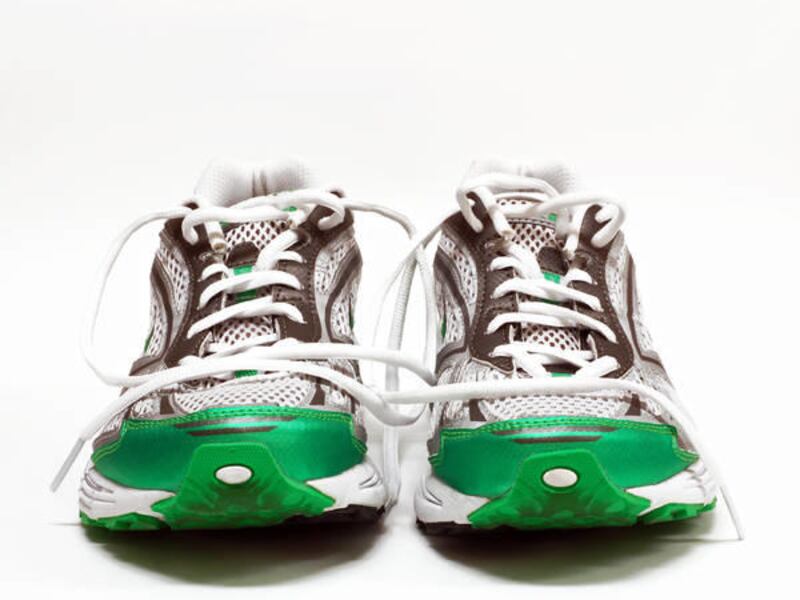
Unfortunately, this is not how it works with running shoes. You shouldn't pick running shoes for looks alone. Instead, move comfort, function and durability to the top of your running shoe criteria list.
Are you slightly disappointed? Don’t be. No one will force you to wear your running shoes at any other time except while actually running. To be honest you should be doing that anyway in order to save all that specially manufactured technology for exactly what it was meant for: a superbly comfortable and injury-free running experience. To do that, you need to know how to shop for running shoes.
Make some commitments before you begin your search.
- You will spend somewhere between $80- $140. Accept it and plan for it. If you find them for less, great, but prepare for more just in case. Remember, this is an investment you want to make. Unless you are OK with getting injured from a less-than-elite shoe and subsequently spending more money on doctor’s visits and rehabilitation supplies.
- You will not be picky about color. Seriously no one cares if you’re running in bright orange and lime-green shoes. Instead, you should care about what the shoes are doing to your body.
- You need to seek out a running specialty store. Find one that will perform some kind of gait analysis, in which they watch you run or look at your old running shoes to determine if you pronate (feet turn in when you land), supinate (feet turn out when you land), or are neutral (feet stay in line). They should know that if you overpronate, you need a stability or motion-control show that has extra support on the inside. A running specific store also typically employs running enthusiasts, so you can ask them running related questions to your heart’s content.
Most running stores will carry a variety of brands but within them will be different styles for neutral runners and for pronators. Once you know what your body does, they can suggest shoes within those categories. Ask them to bring out both their maximum cushioned shoes as well as the less cushioned. You'll want to try both. A shoe can have all the technology or cushioning in the world, but it doesn't matter if it doesn't feel good on your foot. You may even want to try a different shoe on each foot at the same time and compare the two. When you've got the shoes on, have the salesperson check where your toe is. You'll want at least a thumbnail of space between your toe and the end of the shoe. Your normal shoe size will often be the wrong size for running. Your feet swell when you run, and if your shoe is too small, you could be facing problems ranging from blisters to losing toenails.
Next, jog around the store a little. Pay attention to the cushion as well as the way the top of your foot and your arch feel. Do you feel pinching or pressure anywhere? These are the kinds of things you should be looking for. Just remember that what feels good on your individual feet is what matters most. The right shoe for your best friend may not be the right shoe for you, so don't get hung up on what you "heard" was a good shoe.
With these goals in mind, buying running shoes can be just as satisfying as buying four-inch black patent-leather stilettos and it will certainly be more comfortable.
Cecily is a senior at Brigham Young University and is a two-time All American in cross-country and track.