


SALT LAKE CITY
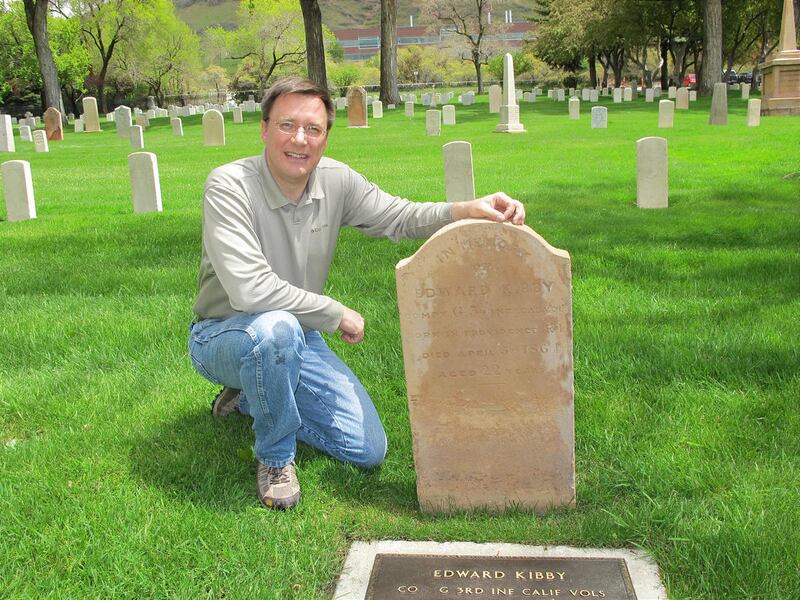
There's a governor buried here, and a brigadier general, and the guy who bayoneted Crazy Horse, and all sorts of soldiers who died while in the service of their country.
But if it's business as usual this Memorial Day, and there's no reason to suspect otherwise, after the traditional Monday morning military ceremony is observed at 10 a.m., the Fort Douglas Military Cemetery will quickly revert to its accustomed solitude.
"It's a quiet place; there usually aren't many visitors," says Ephraim Dickson III, the curator at the nearby Fort Douglas museum who keeps an eye on the cemetery.
Two reasons account for the lack of crowds:
One, many of the tombstones date back to the 1800s.
Two, almost all of the people who wound up here didn't come from here.
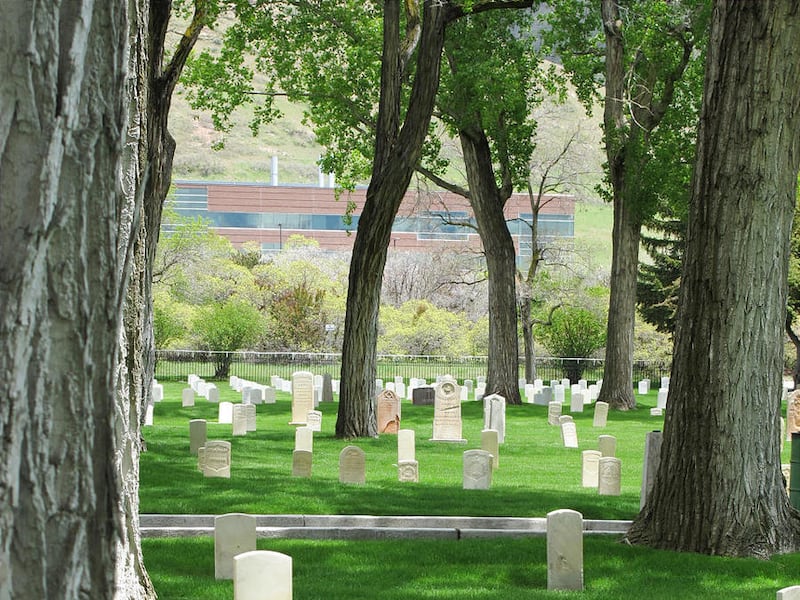
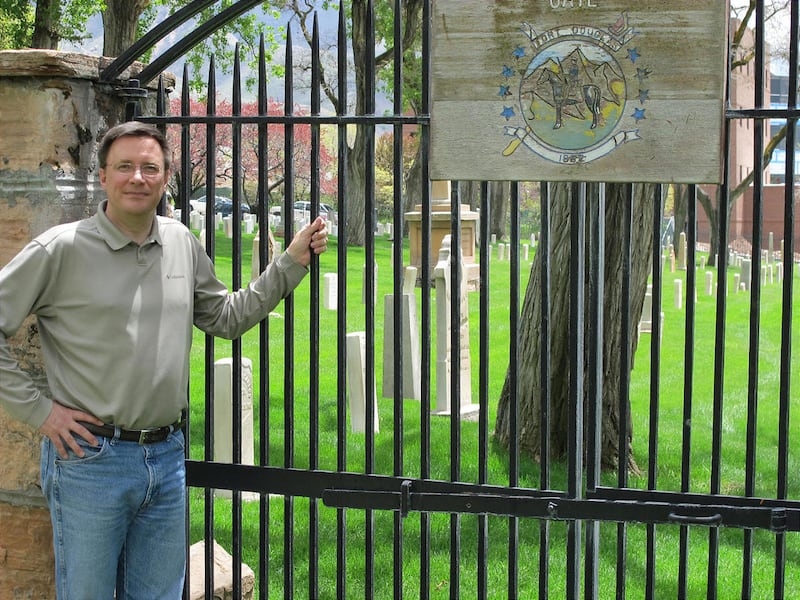
The cemetery, located on Chipeta Way in Research Park just west and south of Red Butte Garden, is full of Utah outsiders who became insiders only after they left this Earth.
In one section are Civil War-era soldiers who came to Utah in 1862 to guard the trail to California and wound up fighting the Shoshone in the Battle of Bear River. In another section are African-American soldiers sent to Fort Douglas in the 1890s. In yet more sections are World War I and World War II prisoners of war from Germany, Italy and Japan.
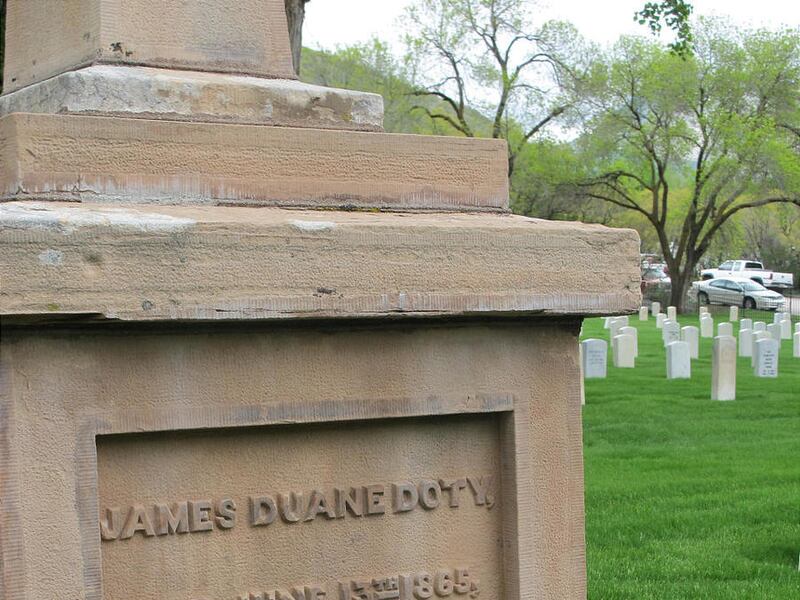
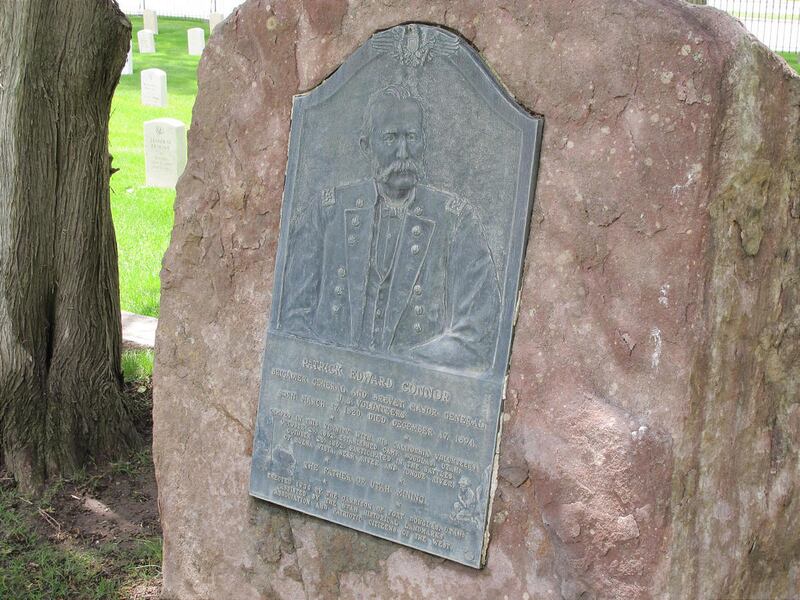
Dotted among all these military graves are the final resting spots of a handful of prominent civilians, including James Duane Doty, the territorial governor from 1863 to 1865, and Brigadier General Patrick Edward Connor, the Union Army officer the government sent in 1862 to establish Fort Douglas and keep the mail route safe while back in Washington they were busy trying to win the Civil War.
Doty, who was appointed governor of the Utah Territory by President Abraham Lincoln, and Connor, who was assigned to his Utah post also by Lincoln, were friends and when Doty, who died in office, was on his deathbed, so the story goes, he asked Connor to circumvent military protocol that at the time prohibited non-soldier burials and reserve a spot for him in the Army cemetery.
Connor's answer — and enduring proof that rank has its privileges — is the impressive sandstone monument with "James Duane Doty" chiseled on the marker that sits in the middle of the graveyard.
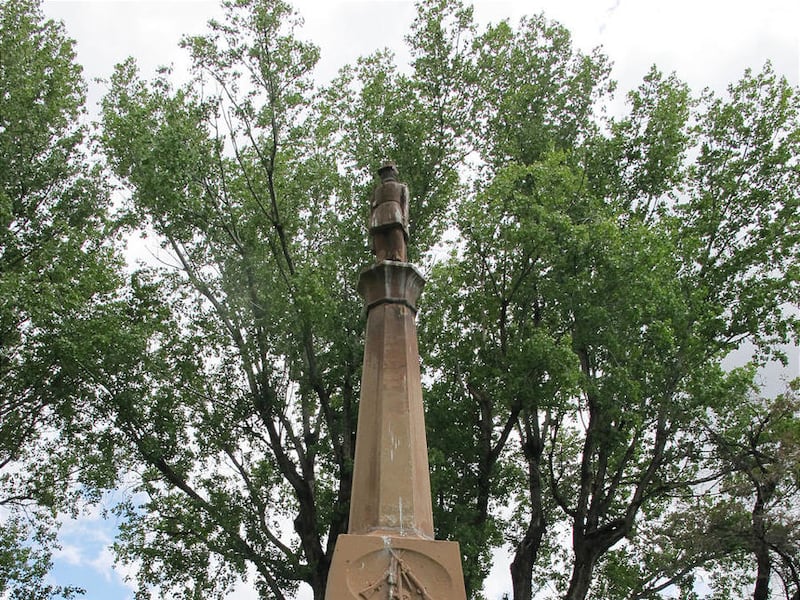
Not far away is an even larger sandstone monument to the soldiers who fought and died in the battle with the Shoshone at Bear River in northern Utah in January 1863.
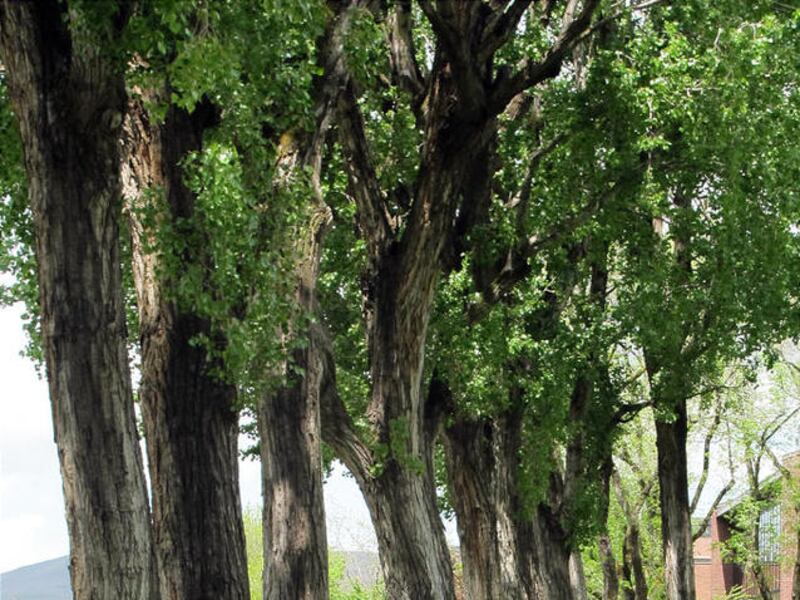
As for Connor, who died in 1891, his marker sits between and beneath two large shade trees and features a large sculpted likeness of the general.
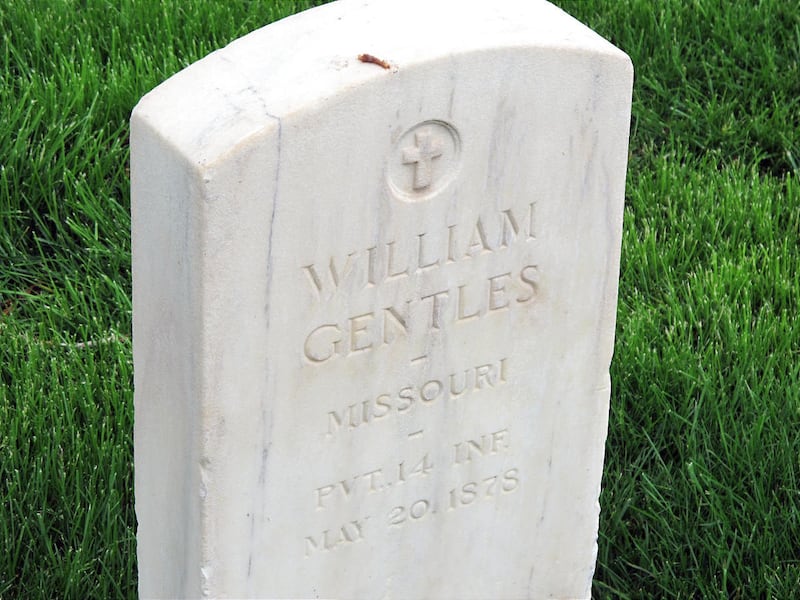
Bearing no explanation whatsoever is a simple white marble tombstone marking the grave of the un-aptly named William Gentles, a Missouri Army private credited with driving his bayonet through the legendary Lakota fighter Crazy Horse while guarding him at a garrison in Camp Robinson, Neb., in 1877. Shortly thereafter Gentles was assigned to Fort Douglas, where he died on May 20, 1878.
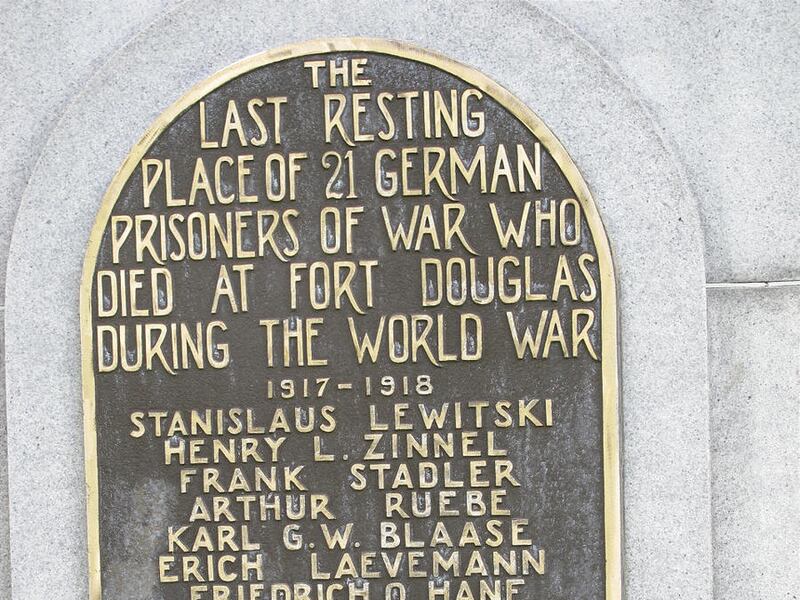
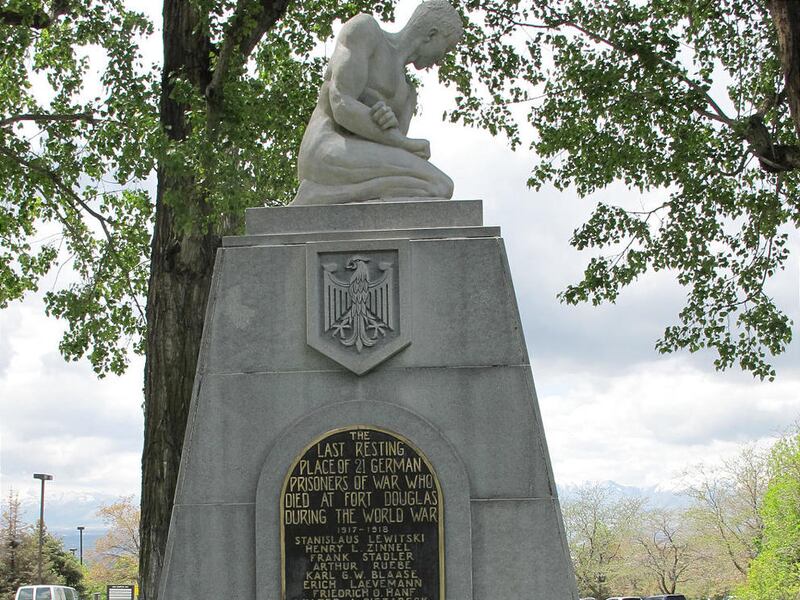
The prisoner-of-war sections include 21 German sailors captured in World War I and shipped for safekeeping to the American West, where many of them fell victim to the influenza pandemic; and a mixture of Germans, Italians and one lone Japanese captured during World War II. All died due to various diseases or accidents while performing manual labor.
There are a few "modern" graves in the cemetery, filled by war veterans or their relatives, and occasionally there is a new burial. But newcomers are rare. The last available plot reservation was taken in the 1970s, making Fort Douglas officially a "closed" cemetery.
But far from forgotten. Every grave will be adorned with an American flag this Monday and speeches will be given by U.S. Sen. Orrin Hatch and newspaper columnist Paul Rolly preceding a gun salute and the playing of Taps.
Every year a crowd of about 200 people shows up for the ceremony.
It's only afterward that they quickly disperse. For the Utah population of 2011, the Fort Douglas cemetery is a place packed with history, but few relatives.
Lee Benson's About Utah column runs Monday and Friday. Email: benson@desnews.com