

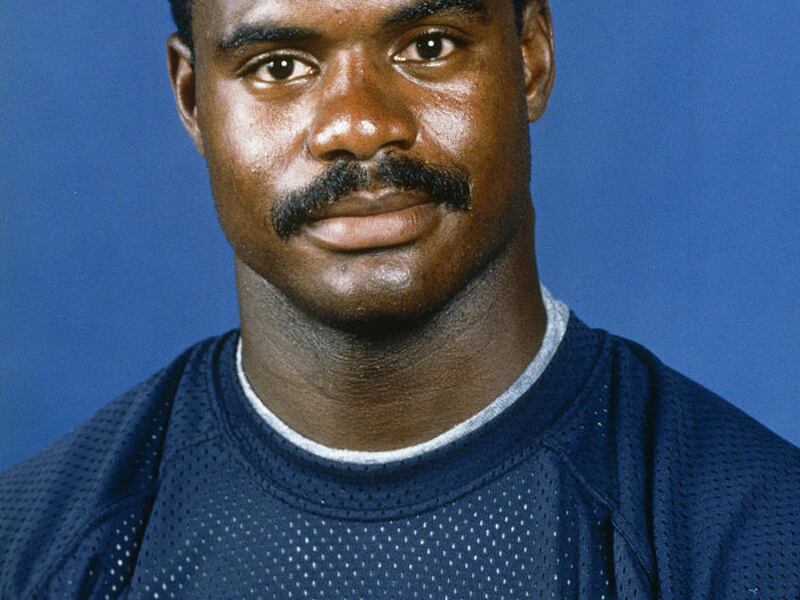
The physical demand of football can bring more than just fractured wrists, chipped teeth and neck strains; long-term consequences can be fatal.
Chronic traumatic encephalopathy (CTE), also known as "punch-drunk syndrome," is a condition former NFL pro Dave Duerson suffered from when he shot himself in the chest on Feb. 17 of this year.
Researchers disclosed the information that he had CTE on May 3 after studying his brain, which Duerson donated to the "NFL Brain Bank".
Duerson isn't the first to commit suicide from the undetectable degenerative disease. It seems that the end result is often suicide. The symptoms begin with affective disturbances and psychotic symptoms. In the next stage, the disease can includes social instability, erratic behavior. By the final stage, it progresses to dementia.
CTE is undetectable in a living person, as it cannot be diagnosed until after death because it requires studying the brain tissue under a microscope.
But the cause of CTE is usually from repeated concussive or sub-concussive injuries.
At 50, Duerson was a businessman in retirement who recently had suffered financial difficulties. And during this time he also "complained of depression, headaches, and cognitive impairments in the months before his death."
Other former football players diagnosed with CTE have complained of similar symptoms in the last couple months or years before their death, which sometimes results in suicide.
Science Daily reports, "Other former NFL players diagnosed with CTE are former Pittsburgh Steelers Mike Webster, Terry Long and Justin Strzelczyk, along with Andre Waters and John Grimsley. Waters and Long committed suicide."
A 2000 study surveyed 1,090 former NFL players, finding more than 60 percent had suffered at least one concussion in their careers and 26 percent had had three or more.
The study indicated the former players suffer unknowingly, along with those close to players.
In 2009, former NFL player Candace Henry shot himself in the head. Beaumont Enterprise reports that his family "didn't understand why he had changed. They just knew something was different about the man they had known and loved. He once was a loving father. Now, he was an absent-minded loose cannon."
Candace, 38, hadn't played in the NFL for 10 years, so CTE took a few years to set in, according to the Enterprise. But there are cases where younger football players have CTE; in April 2010, Owen Thomas, a college football player, hanged himself at 21. He was diagnosed just months later with having CTE.
There's no way to detect CTE but is there a way to help prevent it. Parents may even have cause to worry, In the New York Times that, "More than 100,000 children are wearing helmets too old to provide adequate protection — and perhaps half a million more are wearing potentially unsafe helmets that require critical examination."
While other sports injuries are noted, researchers have often failed to keep track of head injuries. "We count the pitches of every baseball player to ensure a small number do not develop shoulder and elbow problems," said CSTE codirector Robert Cantu, a MED clinical professor of neurosurgery in BU Today. "And yet we don't count how often children get hit in the head playing football, even though it can lead to early dementia or possibly depression and suicide years later."
And it should also be noted: "Neurologists say once a person suffers a concussion, he is as much as four times more likely to sustain a second one. Moreover, after several concussions, it takes less of a blow to cause the injury and requires more time to recover."
When Duerson took his life he left a note behind stating, "Please, see that my brain is given to the NFL's brain bank." The research was key in discovering Duerson had CTE and it will be key in future CTE diagnosis.