

NEW YORK — Early works from even great artists aren't always worth the effort to dig up. That's not the case with Tony Kushner. Before he completed his seminal "Angels in America," the playwright took a commission to reinterpret the 17th-century farcical play "L'Illusion Comique" by Pierre Corneille.
While that may not have seemed like such a good idea, the result that hit the stage in 1989 is a giddy mash-up of both writers that both mocks and honors neoclassical comedy. It also proves that Kushner can be wickedly funny.
A smile-inducing revival of "The Illusion" opened Sunday off-Broadway as part of The Signature Theatre Company's celebration of Kushner that has already included both parts of "Angels in America" and the debut of "The Intelligent Homosexual's Guide to Capitalism and Socialism With a Key to the Scriptures." Kushner kept Corneille's time period and the basic story line, but added characters and scenes, updated the language, shaved it down to two acts and added magic Kushner mediations on the nature of love.
It is set in a cave in the south of France where a contrite father (a nicely grumpy David Margulies) has gone in search of a sorcerer's help. Many years before, his prodigal son was banished and the father wants to know his fate.
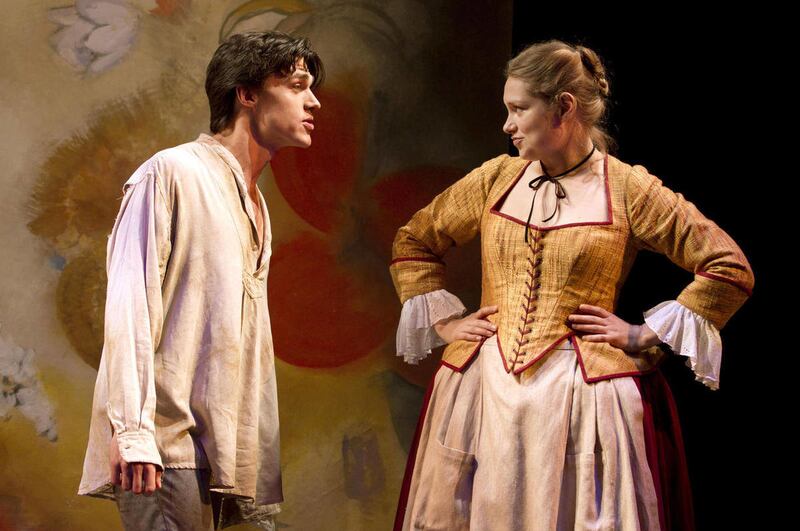
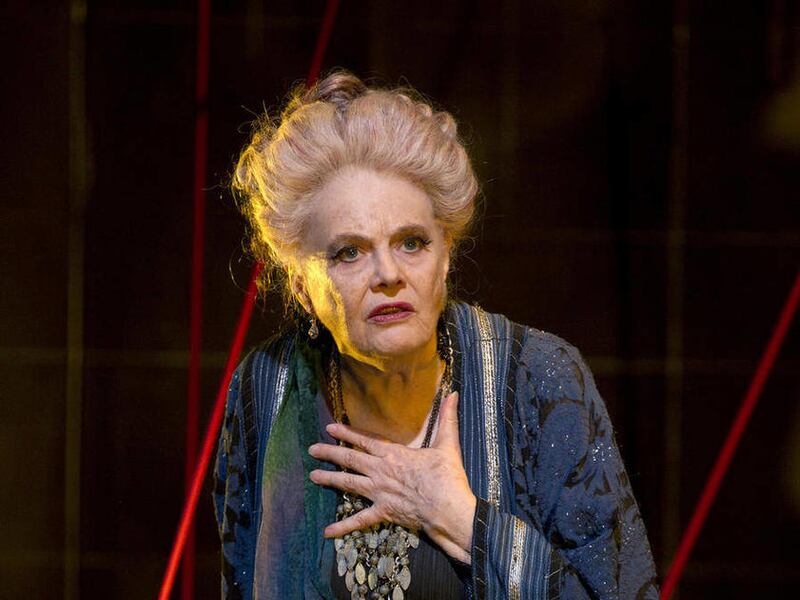
The magician (a winking Lois Smith) conjures up three episodes from the younger man's life — a canny servant wooing a rich maiden and her servant, landing in prison after grappling with a rival, and then as a soldier with a dark side.
While each scene and recurring character seems to lead from the last, the names oddly change and the plot gradually matures from children's' book fodder into modern sophistication. It's all a little freewheeling and sometimes hard to follow, which the play acknowledges.
"A man has a right to expect coherence," the father complains to the sorcerer.
"I gave up hoping for coherence years ago," she replies.
The father — and, as a consequence, the audience — endures any incoherence in order to find out what ultimately happened to the son, played by a fine Finn Wittrock. We learn the truth and get something else: a carefully constructed love letter Kushner has written to the theatrical experience itself. Directed with sly wit and galloping speed by Michael Mayer, "The Illusion" sends up sword fights, romantic rivals and wayward daughters, and tweaks everyone from Shakespeare to Pirandello.
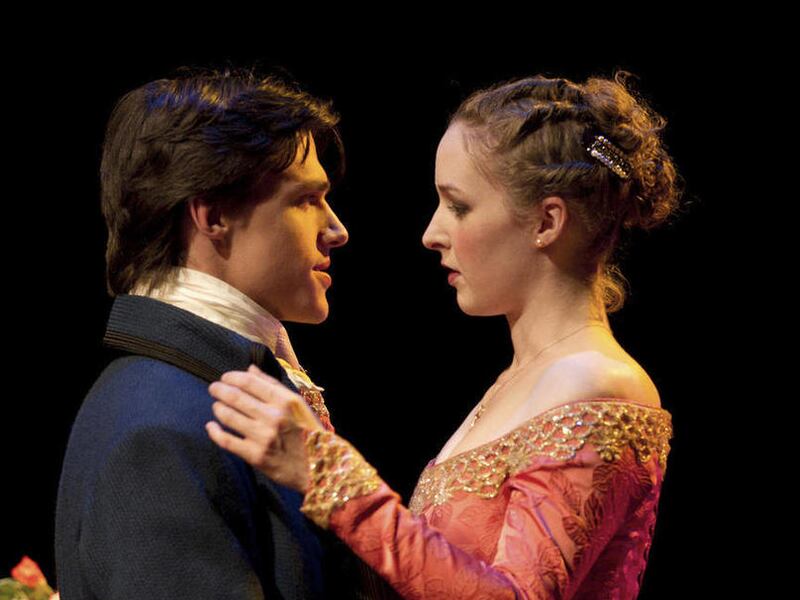
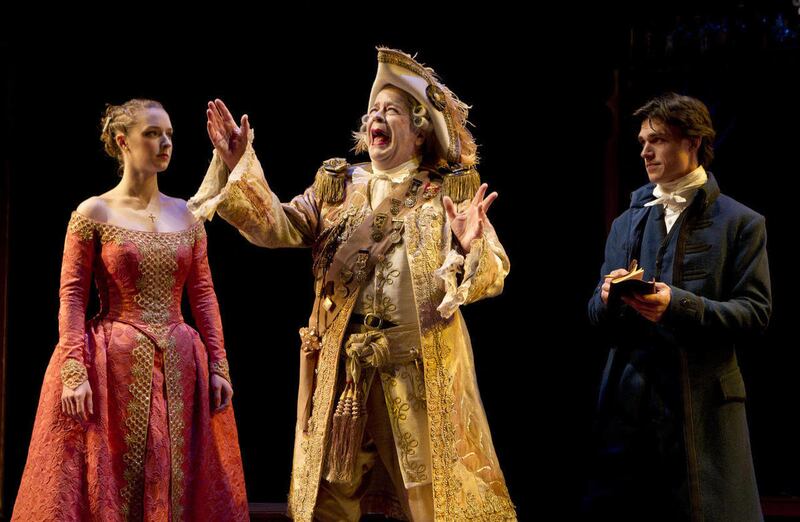
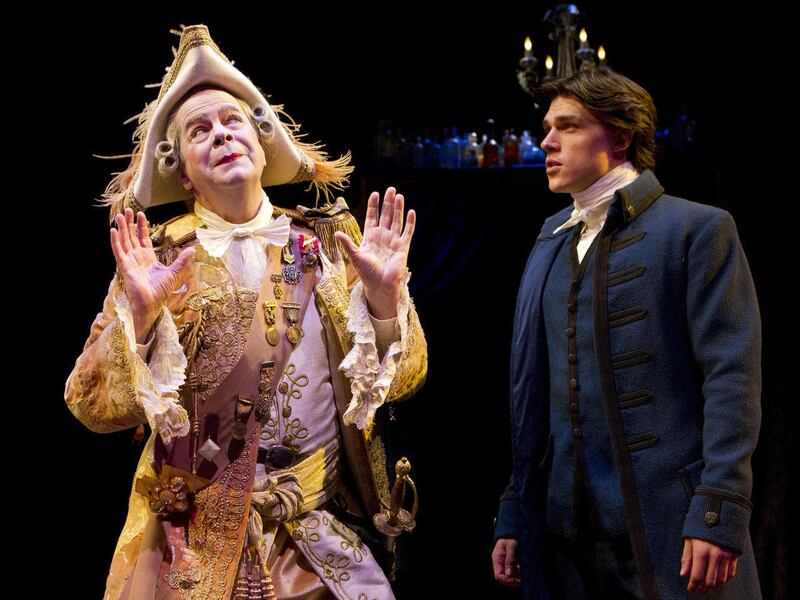
It is populated by stock figures from theater's past, including a cowardly braggart aristocrat (a brilliant Peter Bartlett), a conniving maid (a fantastic Merritt Wever), the sorcerer's slave channeling Caliban and Ariel (a hardworking Henry Stram) and a pure maiden (a lovely and heartbreaking Amanda Quaid).
Another highlight is Kushner himself, no better than in dueling speeches about the nature of love. "An ugly emotion," sneers the maiden's father (Stram again). "Love, that illusion/That hydra-headed gargoyle into whose foul maw/Everyone tumbles, giddily, each/With the same insipid look/Of sheeplike expectation."
Not to be outdone, the sorcerer later comes to love's defense: "It is the inevitable blossoming of its opposites, a magnificent rose smelling faintly of blood. A dream which makes the world seem ... an illusion."
The production is aided by Christine Jones' scenic design that highlights the multiple uses of key pieces of furniture and a clever use of concentric circles of lanterns, music by Nico Muhly that emphasizes piano (Stram), as well as Susan Hilferty's costumes that echo the convergence by sweetly mixing hoop skirts and Elizabethan gowns.
In an interesting twist, Kushner was not the only one starting his career with "The Illusion." Corneille, too, would after writing "L'Illusion Comique," go on to pen such classics as "The Cid" and "Horace." Early works, then, need not be cringe inducing. "The Illusion" proves to be a happy leg to the Signature's Kushner celebration.
Online: