
I recently heard a father speak of an incident that he and his family experienced a few years ago.
For five years, a business assignment had taken them to a foreign country. During that time, they didn’t have access to American television or new movies.
When they returned home to Salt Lake City, the family was anxious to experience TV once again. One evening, they eagerly tuned in and were somewhat shocked at the language and immoral content of the programs. Thinking they had chanced upon a bad evening, they checked the programming out over the next few days only to find similar content present.
The family realized that — like Rip Van Winkle — time had passed them by and they had awakened to find that an alarming number of undesirable things had become a regular part of the entertainment package.
Their viewing void had made that change very evident.
Charles Dickens starts his novel “A Tale of Two Cities” with the memorable line, “It was the best of times, it was the worst of times ...”
Such a statement can be made about entertainment today.
Technically, there are marvelous things to behold. Digital technology has opened up incredible realms of visual possibilities that weren’t available even 10 years ago. On the other hand, the nobility of man has often been submerged into a commercial world of violence, sex and moral decay, all wrapped up in dazzling digital effects and THX sound tracks.
The exciting technological advances of DVD, Blu-ray and streaming along with access to an immense list of titles, have made it possible for viewers to be the masters of what they watch – and that makes it in a way the best of times.
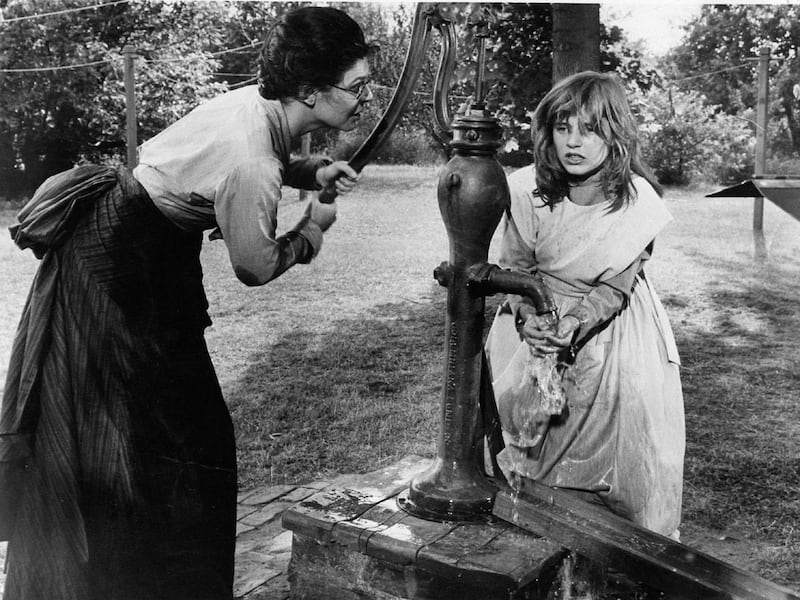
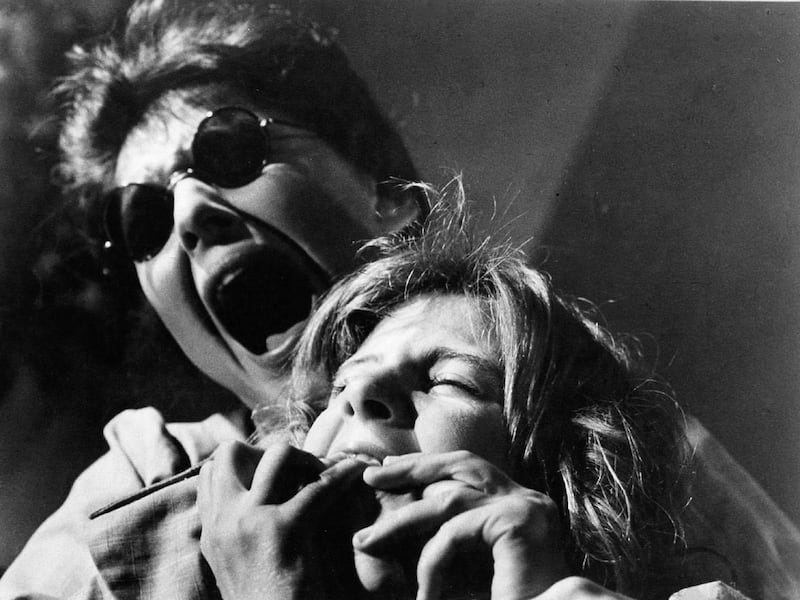
When I added the 1962 version of “The Miracle Worker” to my DVD library, I didn’t stop there. I then went exploring into the world of two of the most remarkable women of the 20th century — Helen Keller and her teacher, Annie Sullivan, as well as Patty Duke and Anne Bancroft, the actresses who brought them to life — first on Broadway and then on film.
Other than the choice of listening to it in English, French or Spanish and watching it in the proper theatrical wide-screen format, there are no bells or whistles included on “The Miracle Worker” DVD, so I found my own and thus greatly enriched my viewing experience.
Keller, born on June 27, 1880, was only 19 months old when she came down with a fever that left her both blind and deaf. Locked in a soundless world of darkness, she struggled for five years to break out of that pall that rendered her a wild child raging to find the lost light.
That light came to Helen in the form of Sullivan, 20-year-old tutor who had herself just regained partial use of her sight.
In “The Story of My Life,” Keller records the coming of Miss Sullivan as, “The most important day I remember in all my life ... I am filled with wonder when I consider the immeasurable contrasts between the two lives which it connects ... ‘Light! give me light!’ was the wordless cry of my soul, and the light of love shone on me in that very hour.”
And this is the story that author William Gibson’s screenplay, based on his stage play, focuses on: Keller’s journey from darkness to light through the untiring efforts of her teacher.
It is as if we are watching the birth of language take place.
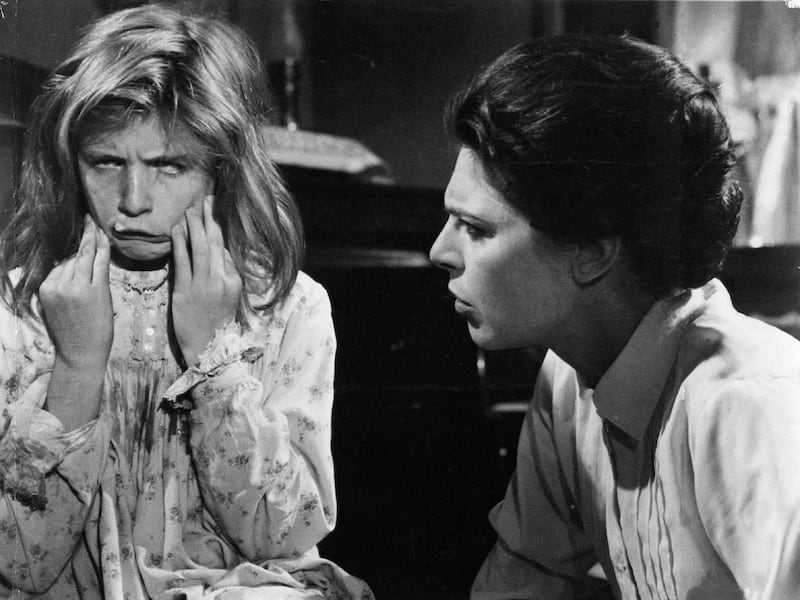
Of Bancroft and Duke’s performance in the film “The Miracle Worker,” Time magazine rightly called them “the most moving double performances every recorded on film!”
Both were honored with Academy Awards for their work.
Bancroft arrived in Hollywood in 1952 after doing TV work and did fine work with inferior roles in 15 films before fleeing to Broadway. Five years later, after great success on the stage, she returned to the screen in “The Miracle Worker” and has since been recognized for the fine actress that she is.
Like Keller, Anna Maria Duke was 7 when her teachers came into her life. Her alcoholic father had left the family, leaving a mother who suffered from bouts of depression to raise her three children.
Ray, Anna’s older brother, had found work in television under the training of a husband and wife team, John and Ethel Ross. The Rosses took Anna under their wings and informed her that “Patty” would be her new name and that Anna was dead.
Like Professor Higgins of “Pygmalion,” they began the process of changing Duke into a youthful Grace Kelly. Hours of drilling replaced her New York speech patterns into one with an English accent. She grew out her hair and because of her small size, she was dressed and passed off as a person two years younger in age.
In her book “Call Me Anna,” Duke speaks of how she was programmed like one of The Stepford Wives to be the perfect child.
She was schooled to handle any conversation that she might encounter. An interview appearing in “Theatre Arts” magazine under the title “A Miracle Named Patty” shows just how well she had been trained.
Author Jack Balch paints a picture of a youngster of great charm and command of expressing herself as he interviews her concerning her role on Broadway as Keller.
Duke recalls in her book that readers and interviewers “… were very taken with the idea of a kid who seemed to be at ease with the language — the Rosses’ footwork totally dazzled everyone.”
A year-and-half before Duke had auditioned for the stage production of “The Miracle Worker,” she had been prepared by the Rosses. She was given portions of books by and about Keller to read. In order to teach her blindness, she was required to move around the apartment with her eyes closed.
The furniture was changed around and objects placed in her way. She learned to take falls and continue moving about. She did dishes and cleaned her room with her eyes closed.
When she had mastered sightlessness, they worked with her on deafness.
For one or two hours a day she was required to ignore all sounds around her. A game was made of it in which she was given points for ignoring hammers banging on the floor, telephones ringing, dishes crashing, questions being asked or commands given to her. But there was never any reward of being able to play like a child for her accomplishments.
There were more than 100 girls who auditioned for the part of Helen Keller, but none came with the training Duke received. After two call-backs, she was interviewed by the director, Arthur Penn.
Asking her what she knew about Keller, he must have been amazed at Duke’s articulate reply, having no idea about her having been programmed for a year and half.
The part was hers with the warning that she would be out if she grew two more inches.
As rehearsals began in August of 1959, Duke learned that she was to be playing Helen with her eyes open. Now she had to unlearn all that she had mastered sightlessly. She was challenged with creating a fixed stare that was believable and with moving about as though she were blind.
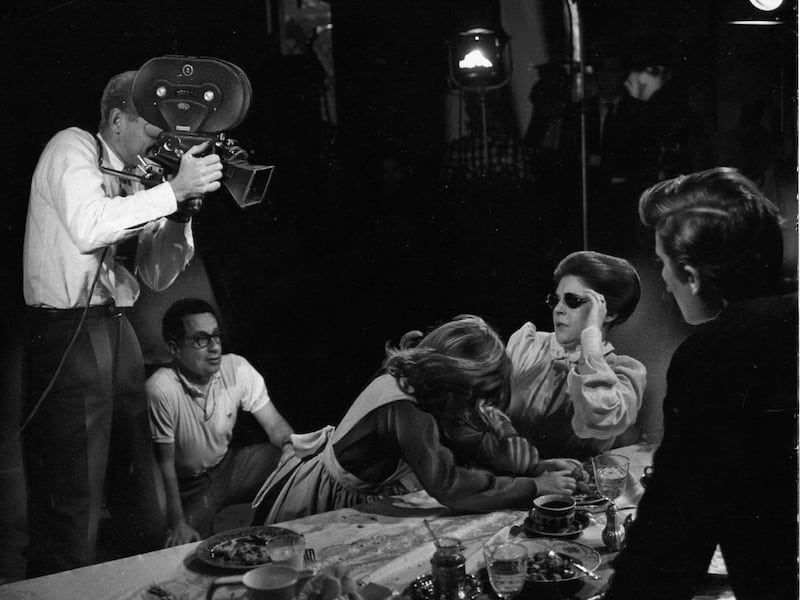
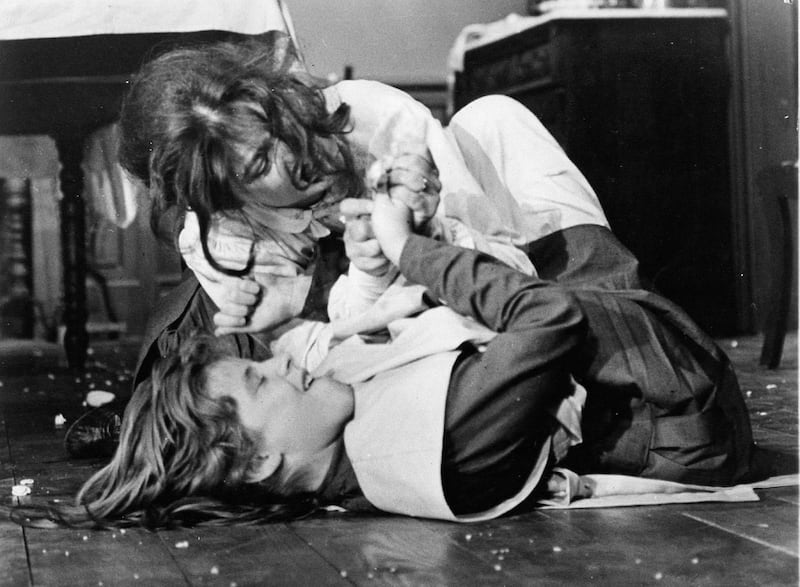
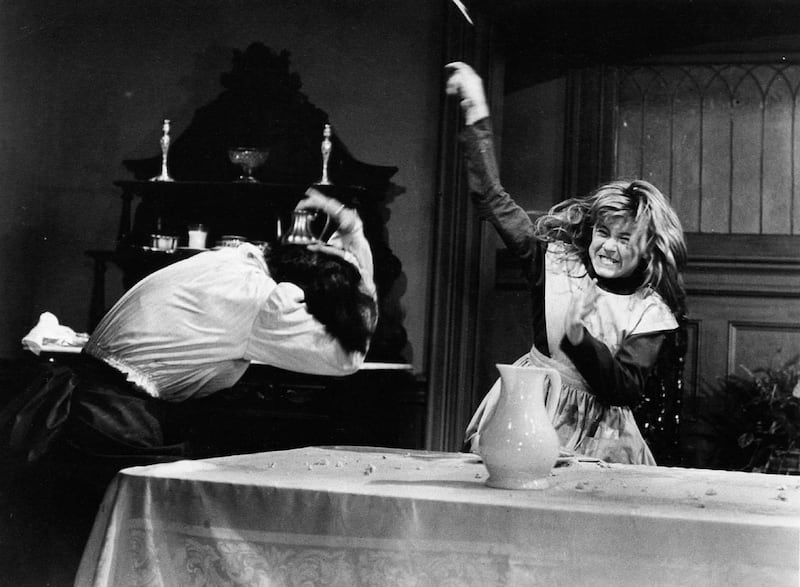
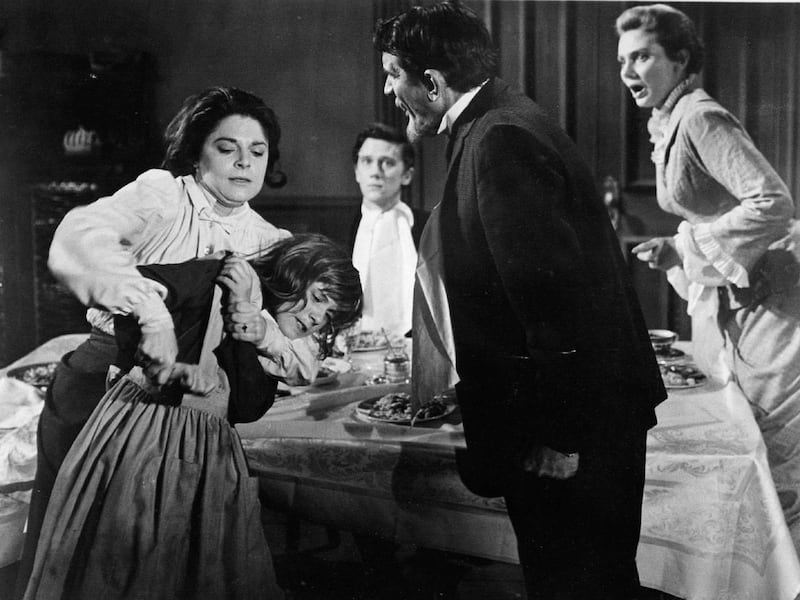
Without the use of her eyes it would have been infeasible to safely execute the most difficult scene of the play (and the movie): the fight scene around the dinner table in which Sullivan stands up to one of Helen’s dinnertime tantrums.
“The battle lasts a full 10 minutes on-stage and although it’s realistic enough to scare the life out of you, it was as intricately choreographed as a ballet," Duke said.
The slapping of the face was the one part of the fight that couldn't be faked. It had to be done for real without flinching, even though both knew they were going to get slapped in the face.
When filmed for the screen version, the fight scene was so exhausting for the actors and the cameraman, who had to hand hold the camera in order to following the action, it had to be filmed half-a-day at a time over a four-day period.
The stage production of “The Miracle Worker” opened on Oct. 19, 1959, and became the talk of Broadway when it received 13 curtain calls — a feat unheard of for a nonmusical play.
With the exception of one week off, 12-year-old Duke performed eight times a week for more than 700 performances.
For Duke it was the acting opportunity of a lifetime.
“I felt transported in that role, it came to be almost like a religious experience to play Helen,” she said. “There was never a night when there weren’t tears. I can’t imagine playing the end of that show, when Annie Sullivan finally reaches Helen, and not crying.”
And it is at that moment in the film version when a remarkable happening involving light took place before the camera.
Duke, as Helen, has just understood that 'water' has a name and the world of language is born for her. Passionately she touches everything within her reach and requests Annie to spell the object's name for her. Then she stops and touches her mentor.
Annie spells ‘t-e-a-c-h-e-r’ in Helen’s hand. As she does, a single tear falls down Duke’s face and the sun emerges from behind the clouds causing that tear to glisten and adding a gentle glow of light to the scene as her world moves from darkness to the light.
It is subtle and one of the most beautiful unplanned moments ever caught on film.
The famous stage actress Katherine Cornell asked Duke if she would like to meet the real Helen Keller.
Cornell had narrated the 1955 Academy Award documentary, “Helen Keller In Her Own Story,” which uses newsreels, sound interviews, photographs and even clips from a 1919 silent movie, “Deliverance” that Keller appeared in, to tell her story before spending a typical day-in-the-life of Miss Keller at her home.
Keller, even at the age of 80, was a very jolly person who laughed a great deal. She had been told how good Duke was at playing her and they embraced warmly. She would spell things out in Duke’s hand because she knew that she enjoyed communicating this way, but she preferred to put her thumb on Duke’s throat and her fingers on different vibration points (lips and nose).
She was able to understand everything said. Keller introduced her dogs and took Duke on a long walk through her garden, identifying each flower and tree. It was a most memorable meeting for both.
“She radiated a large, good spirit. Just to be in the woman’s presence felt wonderful,” Duke recalled.
She saw her one more time and wrote letters to her. Occasionally, she would receive a hand-written note back. Following Keller’s death on June 1, 1968, Duke received a package containing a lovely jade bottle that Keller wanted her to have.
To more fully appreciate the beauty captured in “The Miracle Worker,” one must turn to Keller’s book, “The Story of My Life.”
Here readers find not only her life told in her own words but also the remarkable writings of her teacher, which helps to illuminate the changes taking place.
In 1887, for instance, just three-and-a-half months after Sullivan began to teach her, Helen was learning to write letters such as one to her cousin that in part reads:
“Helen write anna george will give Helen apple simpson will shoot bird jack will give Helen stick of candy ...”
By 1901, her ability to express herself was second to none.
“... I think only those who have escaped that death-in-life existence ... can realize how isolated, how shrouded in darkness, how cramped by its own impotence is a soul without thought.”
The challenges of being a teacher can be seen in the kinds of questions Helen asked of Annie, like “Who made God?”; “What did God make the new worlds out of?”; “Where did He get the soil, and water, and the seeds, and the first animals?”; “Where is God?”; “What is a soul?” and “Where is heaven?”
The brilliance of her mind is often sensed.
Helen asks, “Do you not think we would be much happier always, if we did not have to die?”
Annie replies, “No, because, if there were no death, our world would soon be so crowded with living creatures that it would be impossible for any of them to live comfortably.”
“But,” said Helen quickly, “I think God could make some more worlds as well as he made this one.”
Someone rightly observed, “Once movies were rated by how good they were not by who should see them.”
As viewers rent or purchase films for their collections, they have the ability to set their own standards.
Like great literature or music, we can include film classics such as “The Miracle Worker,” films that will not dim with time — and with a little extra effort we can let them help us to open up enriching avenues to explore.
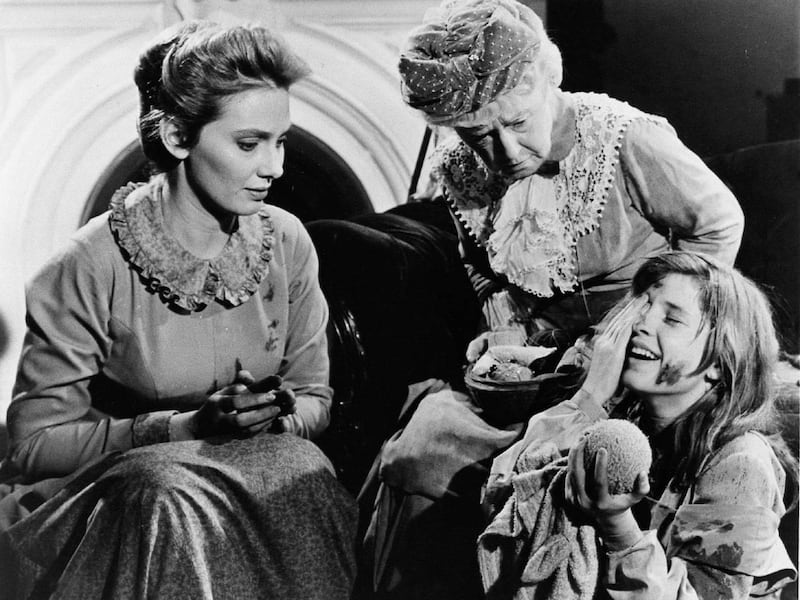
In addition to the Bancroft/ Duke 1962 film, there is also the 2001 Disney TV version with Alison Elliott as Anne and Hallie Kate Eisenberg as Helen.
Keller’s father and step-brother are somewhat rewritten to make them more humane and less abrasive, and Hallie Kate Eisenberg is closer to being the right age than Duke was in the film.
The 1991 TV documentary “Famous Americans of the 20th Century: The Story of Helen Keller,” hosted by H.V. Kaltenborn, is outstanding as is the above-mentioned “Helen Keller In Her Own Story.”
Check local public libraries for available titles or providers such as Netflix.
There are, of course, quite a number of books on and written by Keller that might be explored, but a good starting spot would be with Keller’s “The Story of My Life.”
There is an excellent little book titled “Helen Keller: A Photographic Story of a Life” (DK Biography) that tells her life using photographs that can be purchased for less than $6. This would be good to use with younger children.
E. Hunter Hale has been interested in classic films from early childhood. He has written, viewed, taught and created films over his lifetime.