
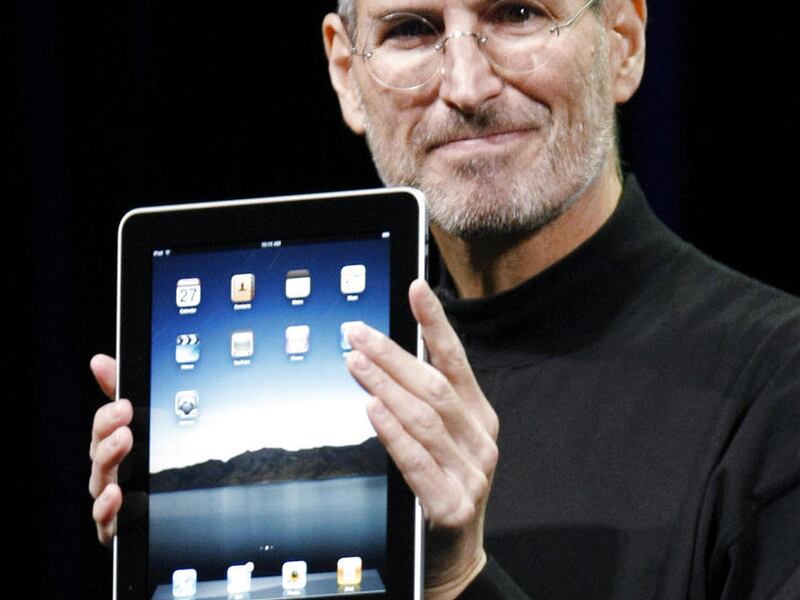
America hasn't seen the likes of Steve Jobs since the death of Thomas A. Edison in 1931. That is beginning to sound like a cliche, but it is true. And only when an unexpected event makes the world pause and reflect, such as Jobs' announcement this week he is stepping down as CEO of Apple, does it become obvious.
Edison never assembled focus groups to tell him what the world wanted him to invent. He had an imagination with universal appeal and a creative impulse unfettered by the assumptions of his age. The result was the light bulb, with all the countless applications that sprang from its simple design; the phonograph, the motion picture and many other devices. He changed how people lived and recreated, and he created new wealth-generating industries with the power of his mind. The world didn't know it wanted these things until he showed them.
Jobs has this same sort of imaginative genius. He began by revolutionizing a fledgling home computer industry, using a mouse and an intuitive interface, together with an eye-pleasing design, to make computing a part of the home, rather than a novelty. But when Apple, the company he cofounded, fired him, he didn't let the creative energy die. He formed NeXT, a computing system geared toward higher education and businesses, and he founded Pixar, which revolutionized animation. Apple ended up acquiring NeXT, which brought Jobs back into the Apple fold just as the company was on the verge of bankruptcy and irrelevance.
That was when Jobs' real genius emerged. Instead of trying to only out-do Microsoft at its own game, he gave the world the iPod, the iPhone and the iPad. He wasn't the first to conceive of MP3 players or tablet computers, but he had the imaginative strength to build them in ways that made them indispensable to own. He brought the world iTunes, Apple Stores and an online app store, making that three-letter abbreviation for the word "application" a part of everyday language. He told the world what it wanted, and the world learned to line up to get it.
Think of the change. The CD and DVD industries have been pushed aside. The world now knows how to tap, slide or turn the little wheel to get music, movies, electronic books, instant news or an endless variety of other things. This is true even if the device isn't made by Apple. He took Apple from the edge of the abyss to, as of earlier this month, the world's most profitable public company, surpassing Exxon. But more importantly, like Edison, he gave the world tools it can use to improve life in endless new ways.
His contributions are larger than Apple as a company. Imitators are bound to find new uses as Jobs' genius sparks the creative impulses of others.
Jobs, who has battled cancer before, faces health challenges. That has given him a unique perspective. "Remembering that I'll be dead soon is the most important tool I've ever encountered to help me make the big choices in life," he told Stanford graduates in 2005. "Remembering that you are going to die is the best way I know to avoid the trap of thinking you have something to lose. You are already naked. There is no reason not to follow your heart."
He followed his, earning a unique place in the history of America's inventive spirit.
Editors Note: The Apple Board of Directors announced today that Steve Jobs died on October 5, 2011.