

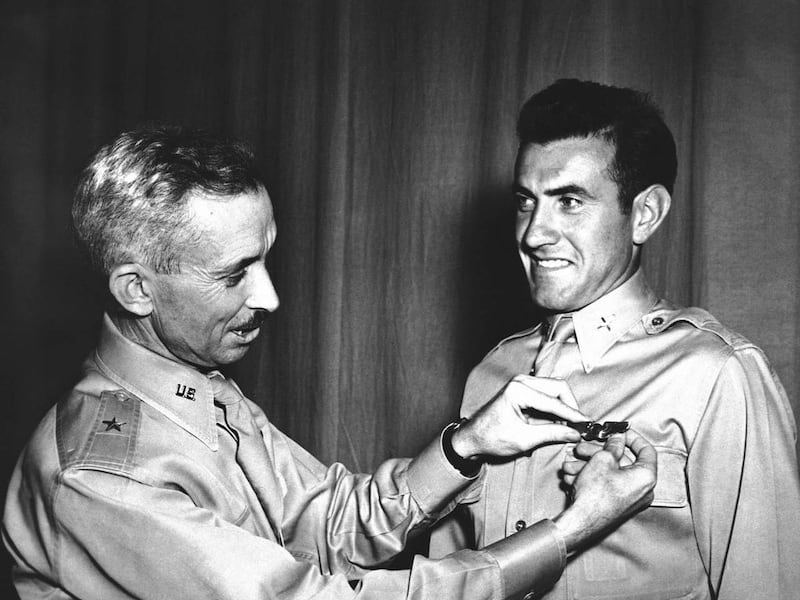


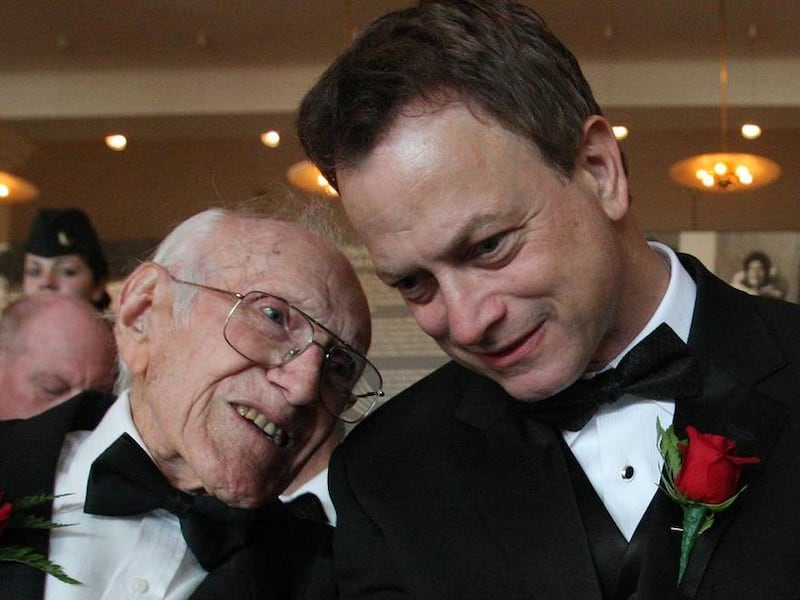


For father’s day, my married son LJ, gave me a book called "Unbroken," by Laura Hillenbrand, the best-selling author of "Seabiscuit" — the story of the Depression-era racehorse.
LJ knew I loved reading "Seabiscuit" seven or eight years ago, not because I cared about horse racing, but because of my fascination with the people of that era, and how an undersized thoroughbred rallied the country.
Having already read “Unbroken,” my son knew that it dealt with two subjects I’d connect with — a real-life World War II hero and sea survival. My mission president was an Air Force brigadier general who was a WWII fighter pilot; he earned the Purple Heart and the Flying Cross. My grandfather was a shipwreck survivor who was lost at sea for three months.
"Unbroken" is the story of Louis Zamperini, a juvenile delinquent turned USC runner who was a miler on the 1936 Olympic team where he was teammates with Jesse Owens at the Berlin Games.
Zamperini had a brush with the Fuhrer, Adolph Hitler, as well as the SS when he attempted to steal a Nazi flag for a souvenir. When the war broke out, he became a bombardier, flying missions in the Pacific theater. He survived one vicious firefight where his plane was hit roughly 600 times during an attack that killed or badly wounded everyone in his plane but him.
In May 1943, while stationed in Hawaii, Zamperini was one of three survivors of a plane crash that occurred while searching for another party in a missing plane.
Adrift on a rubber raft for weeks without food or water, they managed to dodge sharks that leapt into their small raft and, even more miraculously, they escaped death after a Japanese attack plane spent several cartridges of ammo shooting at them. The shots missed the men but badly damaged their raft.
They also survived 40-50 foot swells in a hurricane. When they finally spotted land, they had unknowingly drifted into enemy territory. That's when they were picked up at gunpoint by a Japanese boat.
Zamperini's ordeal was just beginning. He would eventually be taken to Japan as a prisoner of war where he faced the brutality of a camp commander who took special pleasure torturing him physically and emotionally because of his exalted status as a world-class athlete.
"Unbroken" is about the will to live and the indomitable nature of the human spirit, even when under the thumbs of sadistic psychopaths. It’s a real-life lesson on how optimism offers hope and aids survival while its fraternal twin, pessimism, can be a self-fulfilling prophecy, leading to defeat and, ultimately, death.
Zamperini nearly lost control of his life before, and following WW II, due to crime and alcoholism. Sports saved him from crime and Christianity cured the alcohol addiction and his lingering bitterness from his imprisonment.
As I read “Unbroken,” I kept thinking of General Douglas MacArthur — an ardent believer that sports helped prepare young cadets at West Point for war — and his famous quote: "On the fields of friendly strife are sown the seed that on other days and other fields will bear the fruits of victory."
MacArthur probably had Zamperini in mind. Clearly, among the factors that contributed to Zamperini’s ability and will to survive was his superb fitness, single-minded focus and experience in athletic competition.
So, as we begin a new school year and go root for our teams, here’s hoping that we see sports for what it is — as something that will prepare young people (and old) to do things “on other days and other fields (that) will bear the fruits of victory.”
Sports can be extremely gratifying and fun, but also difficult. That’s partly why it’s such a great lab and training ground for one's work in life. Harvard professor Clayton Christensen recently wrote that, generationally, we aren’t asking our youth to do hard things anymore — certainly not in the manner that was expected of the Greatest Generation, men like Zamperini.
I’m certain my kids wouldn’t think so, but I worry I haven’t been more demanding of my children. Those of us who have risen from difficult circumstances are often tempted to steer our children and families from those same paths in the interest of protecting them. Sometimes, in doing so, we also unknowingly steer them from learning the exact characteristics that helped us succeed.
I’ve often wondered if the Great Depression of the early 1930’s didn’t serve to tighten the country’s belts and strengthened their backs for war in the 1940’s. Few would argue the Greatest Generation were more willing to sacrifice, more willing to go without and more selfless than we are now.
Do yourself a favor and pick up “Unbroken.” You may recommit yourself, as I have, to be more patient, more grateful for simple things that make life worth living —the love and loyalty of a good spouse, healthy children, simple foods like fresh fruit and raw vegetables, clean water and freedom. More freedom than has ever been granted to any people in history...
... because of men like Louie Zamperini.
Vai Sikahema is the Sports Director and Anchor for NBC10 Philadelphia and host of the "Vai & Gonzo Show" on ESPN Philadelphia Radio. He is a two-time All-Pro, two-time Emmy Award winner and was a member of BYU's 1984 National Championship team.