


SALT LAKE CITY — A paper clip. It’s a small object that helped teach a very important lesson on the Holocaust.
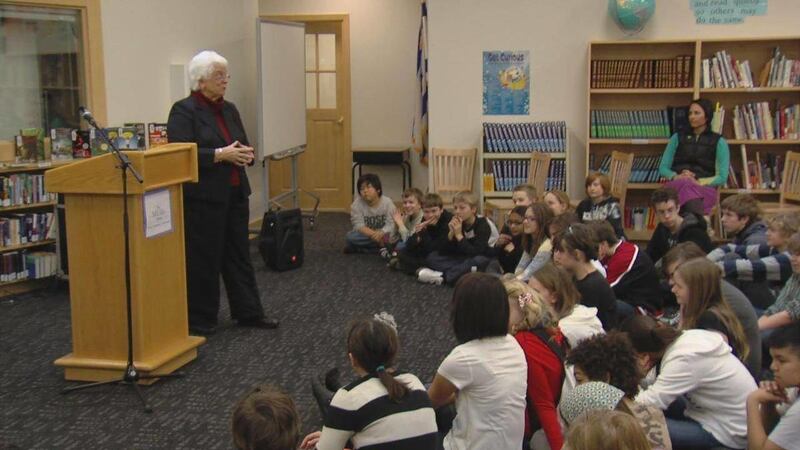
Linda Hooper visited with students at McGillis Elementary School in Salt Lake City Thursday to share how a school project brought the teaching of the Holocaust to new heights.
Hooper, the principal of Whitwell Middle School in Tennessee in 1998, was looking for a unique way to teach kids about the Holocaust.
To help children visualize and commemorate the lives of the 6 million Jews and 5 million Gypsies, homosexuals and others during World War II, students at Whitwell wanted to collect something. The kids decided they would collect paper clips. Why? Because Norwegians invented the paper clip and used it as a symbol of solidarity against the Nazis.
It was an easy way to help the kids understand the enormity of what happened during the war. Word spread, first online, then in a story in the Washington Post.
"Our children had managed to collect 150 paper clips,” she said. “Within six weeks after her article appeared, we had 24 million paper clips and counting."
The students at McGillis Elementary School were impressed with the project. “I thought it was amazing, just how they got the whole thing together,” eight-grader Isabel Harris said. They had everybody give letters and give paper clips.”
“I knew a little,” admitted eight-grader Sam Galvez, “and now I learned more about it.”
As the Paper Clip Project gained momentum, the students heard from people all over the world, including survivors.
An authentic railcar was donated and shipped from Germany free of charge, becoming the site of a memorial at the school. The whole story was captured in an award-winning documentary.
"It is a project that the world needed, and we were just the vehicle for that,” Hooper said. “People want to know that somebody cares."
"(A paper clip is) something that you see every day, that you use, could come to symbolize the life of a person, and that is really extraordinary to me,” seventh-grader Robin Young said. “And I think it's so important."
E-mail: jdaley@ksl.com