

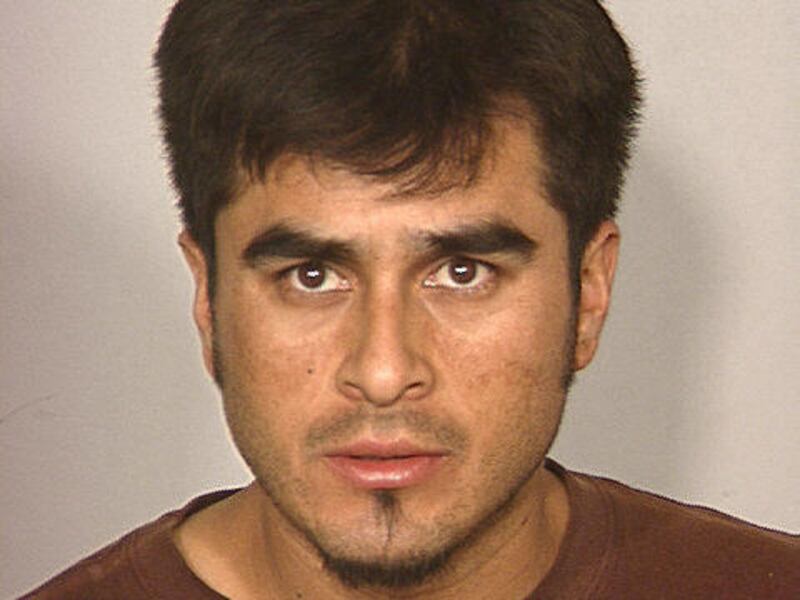
LAS VEGAS — The case against Noe Perez seemed lock-tight, and it was.
For the nine counts he faced for sexual assault and lewdness with a minor, a jury last year convicted him of eight.
A judge handed down a life sentence with the possibility of parole after 35 years, and that seemed to be the end of the case against Perez.
But now he is appealing his conviction — not because of the evidence against him, which included his wife witnessing the assault.
He's appealing because of one of the courtroom experts prosecutors used to convict him.
Perez's case is obscure — it received no media attention and his conviction is unlikely to be overturned, although he could receive a new trial.
But defense lawyers hope that the Nevada Supreme Court uses it to rein in what they describe as Nevada's Wild West attitude toward courtroom experts, who are routinely called to explain or dispute complicated evidence.
Depending on what side of the case you're on, the quality — and number — of experts often makes the difference between exoneration or a conviction, and some cases rest solely on which experts jurors believe.
"In Nevada, you can be an expert in almost anything," said Norm Reed, a public defender. "There is no limit to who is an expert."
Nevada is unusual among the states in that it hasn't adopted standards for courtroom testimony. As long as the testimony helps the jury, it should be allowed to be heard, the state Supreme Court has ruled.
That kind of freewheeling attitude can lead to wrongful convictions, however. The 1980s and 1990s saw several breakthroughs in forensics, including the introduction of bite-mark evidence, hair and blood spatter analysis and medical work that led to an increase in "shaken-baby syndrome" cases.
But the reliability of those techniques was measured by whether they were successful in obtaining convictions — not whether they were actually reliable — and the last decade has seen many of the breakthroughs cast aside as "junk science." A number of innocent people have been exonerated after DNA or other evidence surfaced and cleared them.
The use of unreliable courtroom experts is to blame, lawyers say.
"We let these people come in and both sides put on experts and the jury decides what the truth is," said Scott Coffee, a public defender and president of Nevada Attorneys for Criminal Justice. "But the problem is that sometimes one side isn't based on science at all."
Perez traveled to Las Vegas in September 2008 to see a concert with his wife and their 13-year-old niece. They stayed at the Luxor, where Perez allegedly assaulted the girl in the room while his wife was in the shower.
The girl said that in the months leading up to the incident, Perez began to show affection for her - touching her, calling her, admitting feelings for her and eventually kissing her.
Prosecutors believed that his behavior was typical of predators who "groom" their victim before assaulting them. They hired a local clinical forensic psychologist, John Paglini, to testify about grooming.
Paglini has spent more than a decade in the courts doing child custody evaluations, domestic violence and sex abuse cases. He's done more than a thousand psychosexual evaluations for the department of parole and probation, and grooming is one of the subjects he has to consider in the evaluation, according to prosecutors.
But he's never performed a study of grooming and hasn't written about it in any scientific journals. This was his first time testifying about it. And since he had never evaluated Perez, he mostly spoke in generalities about grooming behavior.
Perez's lawyer, David Lee Phillips, cried foul. He objected to Paglini's testimony before and during the trial.
The psychologist was not an expert on the subject — he hasn't devoted his career to studying grooming behavior — and shouldn't have been allowed to testify, he said.
"It's not a proven science. It's a behavioral thing," Phillips said.
Phillips appealed the conviction to the Nevada Supreme Court, which this year asked two groups — the criminal defense lawyers' NACJ and the Nevada District Attorneys Association — for their opinions on the case. The organizations came to contrasting conclusions.
The district attorneys wrote that Paglini's testimony was relevant. If the crime was a jewelry store burglary and the evidence showed the suspect printed off diagrams of the alarm system and points of entry, wouldn't that evidence be allowed in the courtroom, they argued.
Besides, the prosecutors wrote, courts across the country have allowed grooming testimony.
But the NACJ argued that the judge should not have allowed Paglini to testify, saying the doctor's credentials weren't properly vetted, that he had never testified or written a peer-reviewed article about grooming, and that it wasn't relevant to whether Perez committed the crimes in the Luxor hotel room. In short, the testimony biased the jury.
The justices haven't ruled on the case yet, but they have a few options for dealing with grooming experts. They could send it back to the District Court to sort out whether Paglini's testimony was proper, they could make that decision themselves and set a standard for future grooming experts, or they could set a more defined role on the use of all experts in Nevada courtrooms.
The latter is unlikely. But some lawyers say it's needed.
"We do need standards in Nevada," Clark County Public Defender Phil Kohn said.
Clark County District Attorney Steve Wolfson declined to comment on the use of experts in the courtroom. But his predecessor, David Roger, said he did not believe that Nevada needed to set limitations on them.
"I have a great deal of faith in jurors," he said.
For Phillips, he's hoping Perez will have his case overturned. But he now thinks that the case could set an important precedent.
"If we're going to be sending people to death row, we should be a little more in depth with what we're doing, have a little better system," he said.