

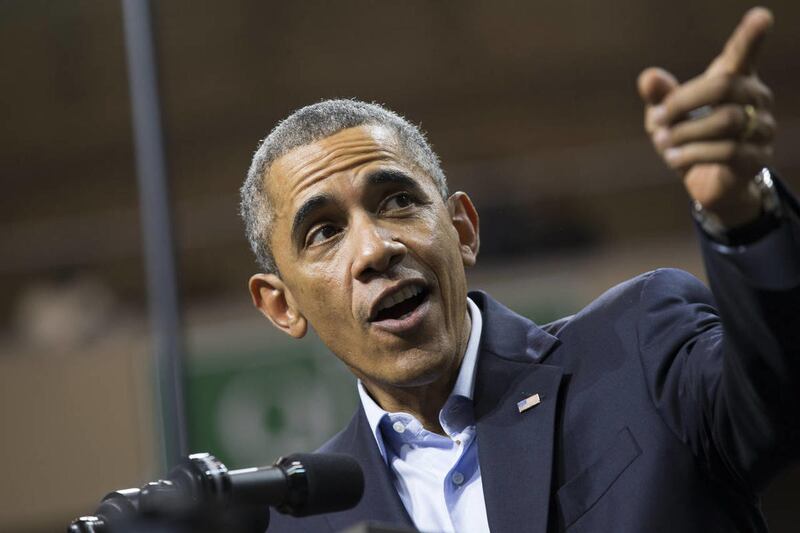
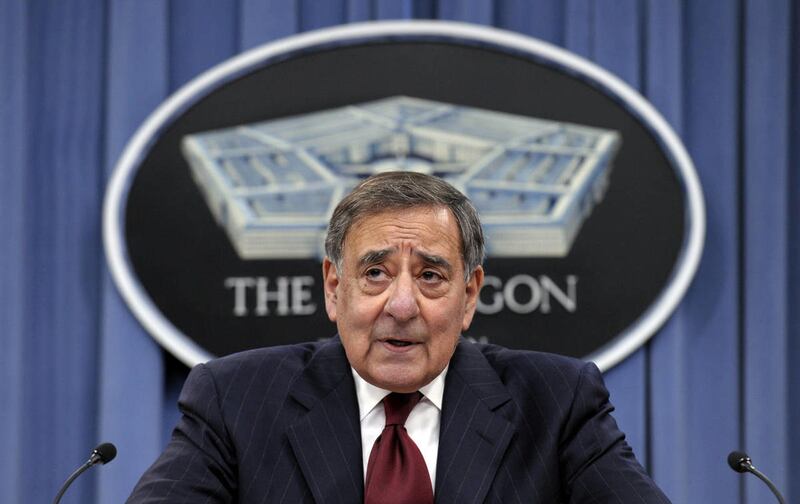
Former Defense Secretary Leon Panetta has written a book in which he says that President Obama “lost his way” in policy decisions concerning the Middle East. This has created a media frenzy, with at least one journalist calling him “stunningly disloyal.”
But Panetta is no eager climber, seeking to advance his career or enrich himself. He served in the House of Representatives for 16 years, after which President Clinton named him director of the Office of Management and Budget and then White House Chief of Staff. President Obama made him CIA director and then secretary of defense. He has great experience, a deep understanding of the world and a towering reputation.
His judgment of the president’s performance focuses on events that occurred when the date set for the withdrawal of American troops in Iraq drew near. He writes, “It was clear to me — and many others — that withdrawing all our forces would endanger the fragile stability then barely holding Iraq together.” He acknowledged that there were serious objections from Iraqi Prime Minister Al-Maliki with respect to residual forces, but believed they could be handled. “We had leverage.”
He says, “My fear, as I voiced to the president and others, was that if the country split apart or slid back into the violence that we’d seen in the years immediately following the U.S. invasion, it would become a new haven for terrorists to plot attacks against the U.S. Iraq’s stability was not only in Iraq’s interest but also in ours.”
Defense Department officials did their best to make the case, which Panetta describes as reflecting “not just my views but also those of the military commanders in the region and the Joint Chiefs.” However, “the president’s team at the White House pushed back, and the differences occasionally became heated.”
This stirred my memory. I served in the executive branch (albeit it at a much lower level) and saw these kinds of standoffs firsthand. Department officials claim a better understanding of what to do because of their policy expertise; White House officials claim a better understanding of the political realities involved. The White House team always wins these arguments unless the Cabinet officer involved can get the ear of the president.
Undoubtedly, no one knows that better than Panetta. But he was unable to get Obama to take a decisive position. He writes, “without the president’s active advocacy, Al-Maliki was allowed to slip away. The deal never materialized.” And the consequences? “To this day, I believe that a small U.S. troop presence in Iraq could have effectively advised the Iraqi military on how to deal with al-Qaeda’s resurgence and the sectartian violence that has engulfed the country.”
Some of Obama’s more partisan defenders blame Bush for all this because Obama followed Bush’s timetable. That’s nonsense. The Bush deadline wasn’t carved in stone and, when it was laid down, ISIS wasn’t present in Iraq. Policy could easily have been changed in response to changed conditions on the ground, and that’s what Panetta and his experts urged the president to do. He didn’t. It was Obama, not Bush, whose performance disappointed his first two secretaries of defense — Robert Gates and Panetta — as well as she is now hinting, his first secretary of state, Hillary Clinton.
So, as Panetta feared, we are again at war in Iraq, which will be waged by the Obama adminstration for the next two years. If Panetta’s book can help improve its decision-making process for the better in that time, he will have done the country a huge public service.
Robert Bennett, former U.S. senator from Utah, is a part-time teacher, researcher and lecturer at the University of Utah's Hinckley Institute of Politics.