

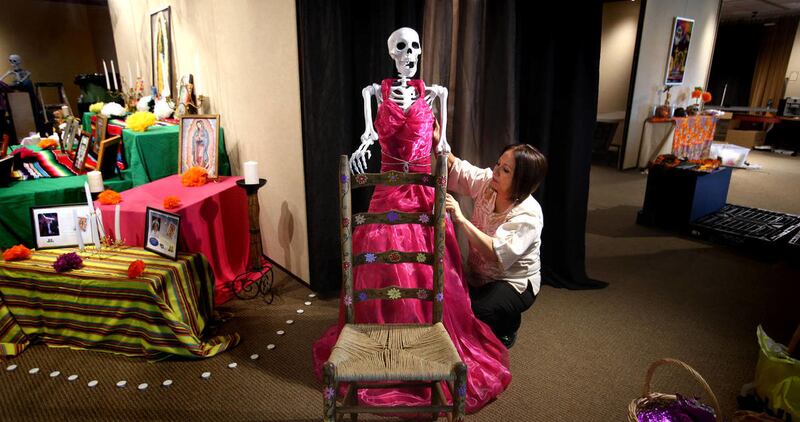
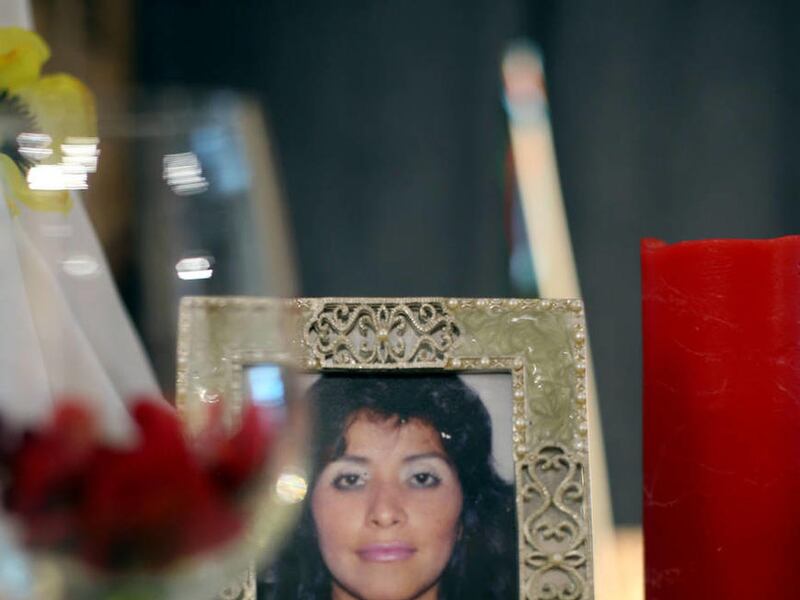
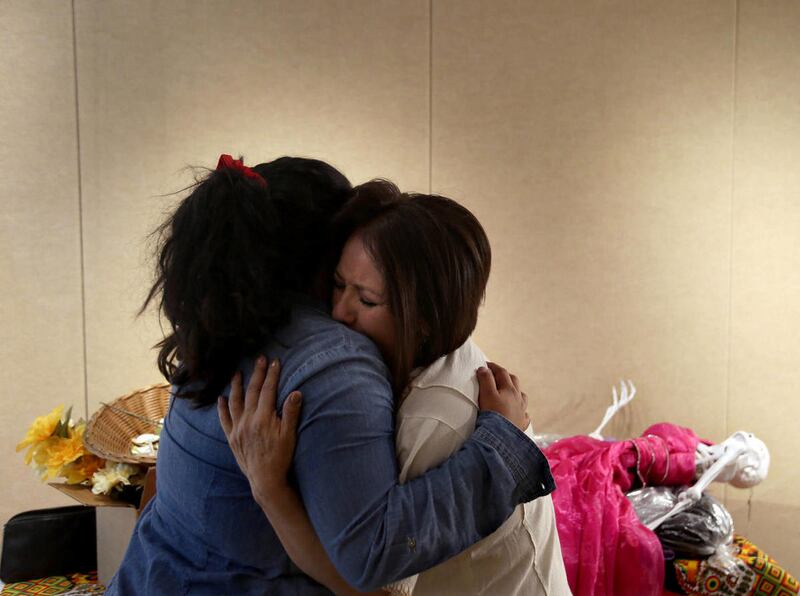
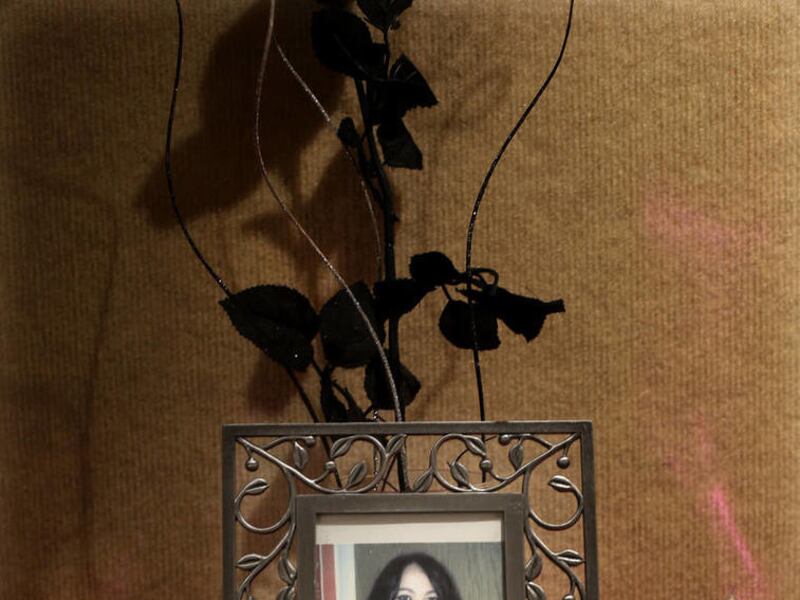
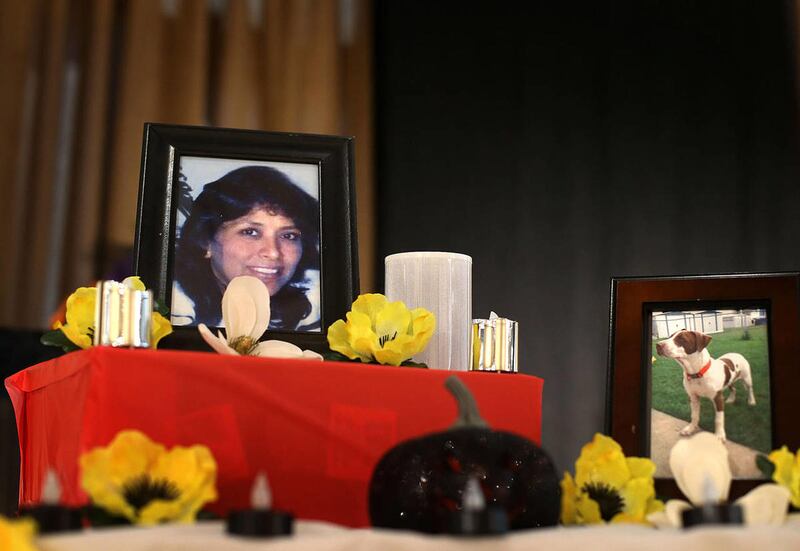
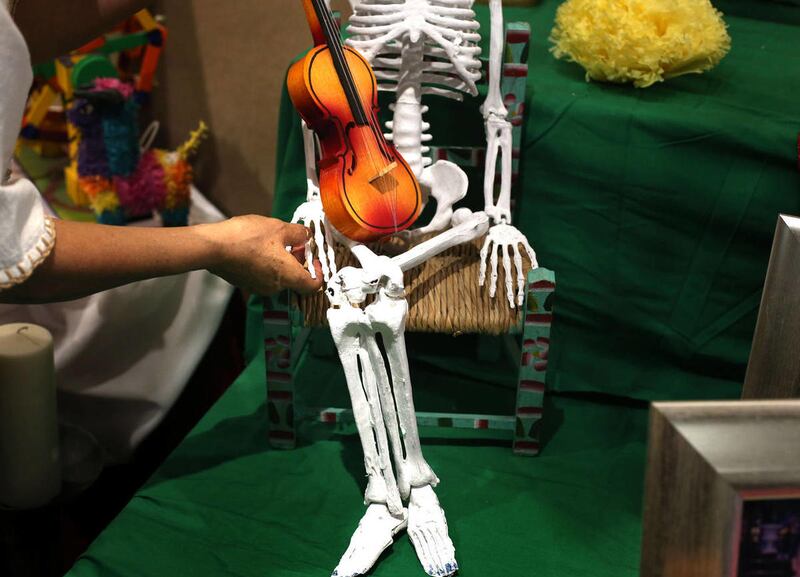
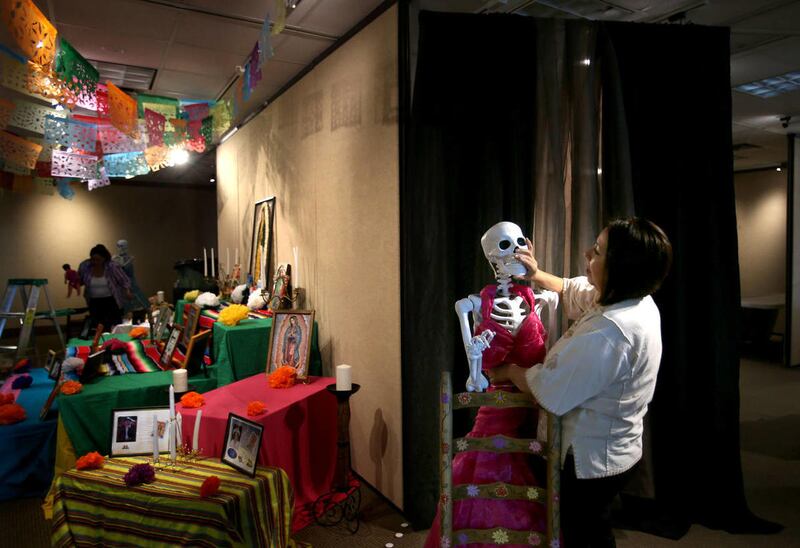
WEST VALLEY CITY — A picture of a young girl sits in the center of an altar, next to a winged skeleton as well as Backstreet Boys, "Nightmare Before Christmas" and Harry Potter memorabilia.
The girl, Heidi Martinez Muenchmeyer, died in 2004 when she was 15. Her sister, Hildegard Koenig, creates the altar each year as a way of remembering and celebrating her sister's life.
"I always think that she's around me," Koenig said. "To me it's very emotional because at least I keep her memory alive."
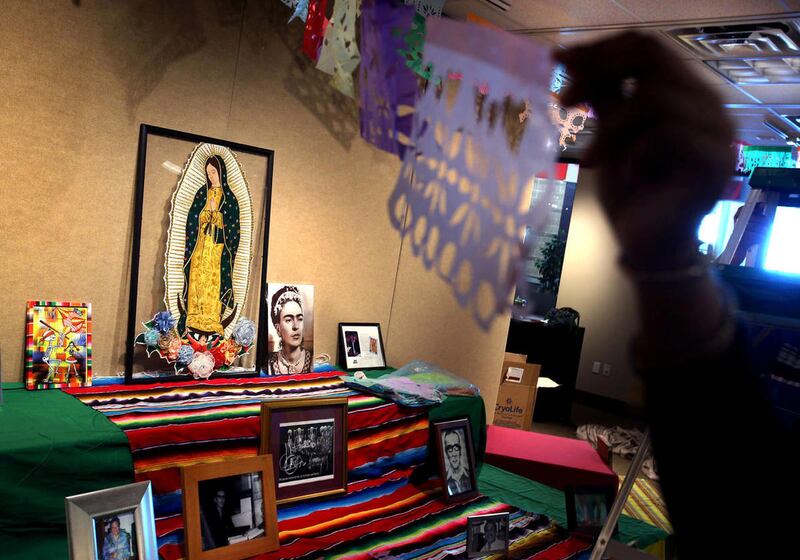
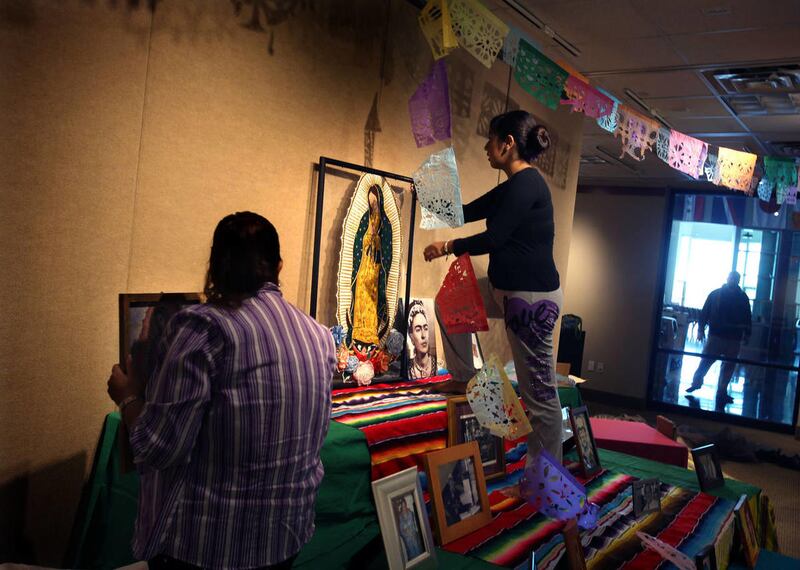
Hers was among 10 smaller tables set up as altars, or tributes to those who have gone before at the Utah Cultural Celebration Center, 1355 W. 3100 South. It is one of the local venues hosting Dia de los Muertos — Spanish for "Day of the Dead" — celebrations Saturday.
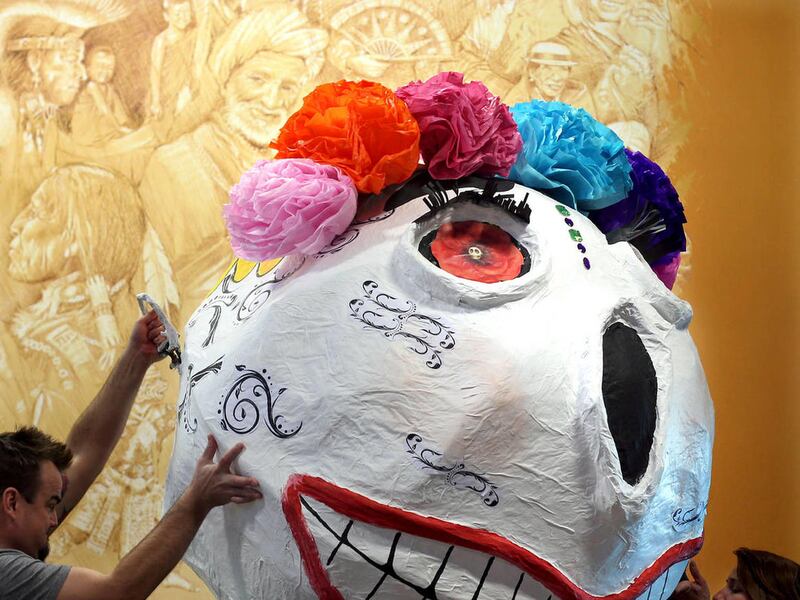
The celebration is often associated with observers' faces painted like skulls, and food offerings to those who have died. In addition to cultural significance, the holiday has rich historical, symbolic and spiritual contexts.
“It is about celebrating and honoring the persons that are close to us that have passed away," said Claudia Benitez, Artes de Mexico in Utah board member and cultural representative for the consulate of Mexico in Salt Lake City.
History
The holiday stems from traditions of Aztecs, Toltecs, Olmecs and Mayans who would dedicate months to celebrate and honor their dead, according to the Smithsonian Latino Center. They believed the dead would come back to Earth, so they would play music, dance and leave flowers and food to share with those who were returning. The tradition continues with modern observers in Mexico and Central American countries. It is a time for them to "share a moment with the living," according to Benitez.
“Even though they were all different and they didn’t all coexist at the same time, they did inherit and share common thoughts about principles of life, time and nature," she said. “They perceived the universe as a unit and they perceived life and death as a unit. Based on that perception … death in what we call Mesoamerica … was in integrity with life.”
When the Spanish arrived in Mesoamerica in the 1500s, they required the indigenous people to observe and pay tribute to their dead on the same days as All Saints' Day and All Souls' Day, Nov. 1 and 2.
All Saints' Day is a Christian holiday that celebrates all known or unknown saints. On All Souls' Day, observers remember all the dead who were faithful, according to newadvent.org.
Modern observers of Dia de los Muertos from Mexico and Central America celebrate all the deceased, observing for children on the first day and adults the next.
Traditionally people will visit houses of people who have lost a loved one on the first day, bring them a candle, and receive a tamale in return, according to Susie Porter, a historian of Mexico and director of gender studies at the University of Utah.
"It's a ritualized form of support for people who are grieving," she said.
On Nov. 2, families will spend all day and night at their loved one's grave or tomb, eating and dancing to celebrate that person's life.
“It’s not precisely like a party but it is a way to honor our loved ones in a very festive way,” Benitez said.
Symbolism
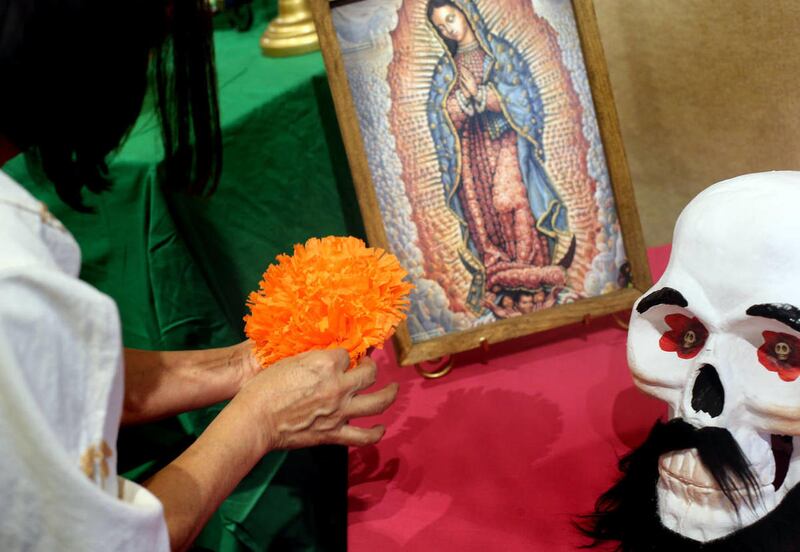
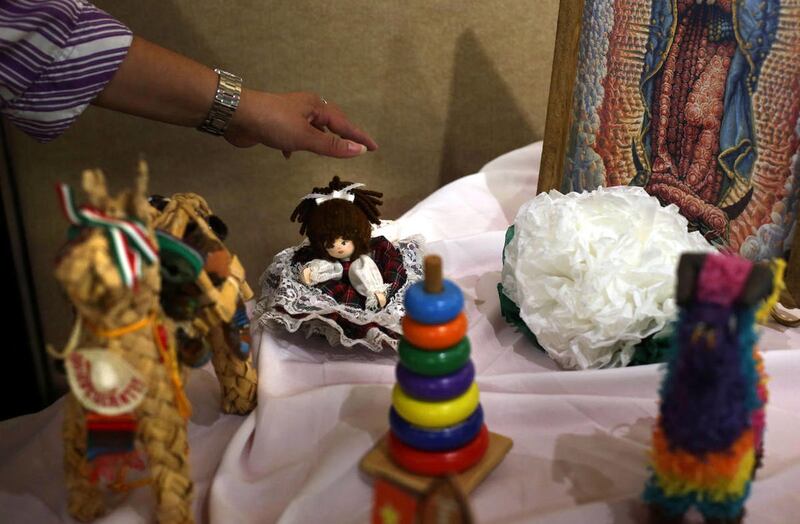
The holiday is rich with symbolism in the ofrendas, or items offered to the loved ones who come to celebrate.
"(The deceased) are coming to share the things they miss with us," Benitez said.
Water and salt are often placed on the altar because "they're coming from a long journey to visit us … so they're thirsty, so they need water, so we must have water. Salt, because salt is purification of your soul," according to Rocio Mejia, organizer of this year's event at the Cultural Celebration Center and director of nonprofit Una Mano Amiga.
A mirror is also included, she added, because "they come and they need to have a little touch up themselves."
Marigolds are placed on altars as a "symbol of light" and candles "illuminate the path that people are traveling to come here," Benitez said.
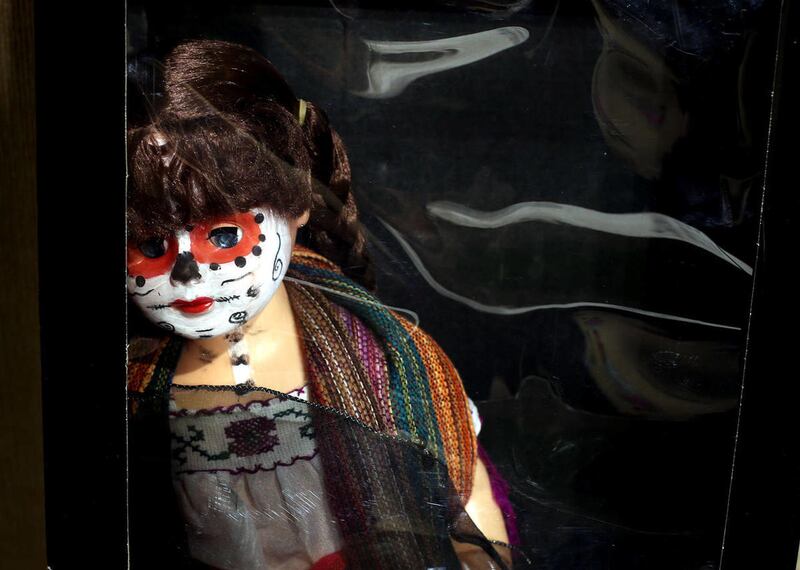
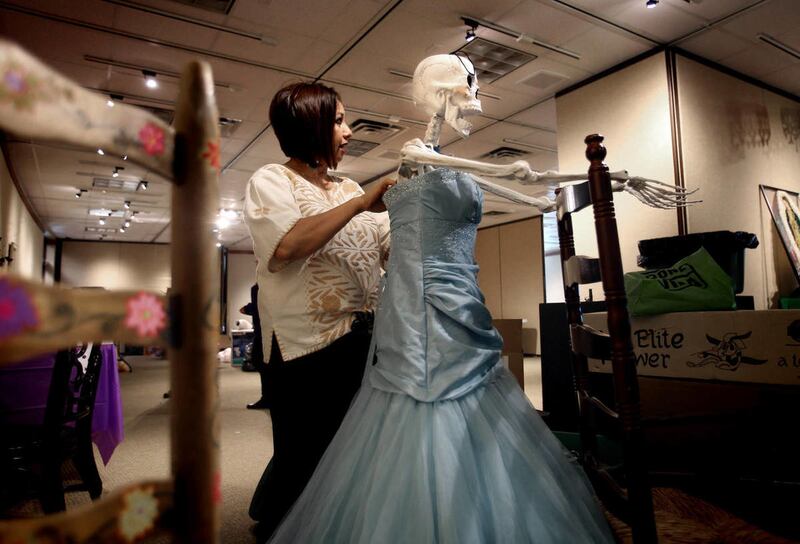
Catrinas and Catrins are skeletons dressed up in fancy clothes to represent the dead.
Spiritual
Elsa Rodan died about 15 years ago while waiting for a liver transplant. Her daughter, Brania Gutierrez, 22, creates an altar for her mother each year and fills the table with fruit, flowers — she loved flowers — water, and candles to guide her.
“I do feel that she’s around me all the time, maybe in just a spiritual way," Gutierrez said. “By doing this celebration and by doing this altar for her, I think it helps us understand her life a little bit more and also understand her passing and how much she loved life in general.”
In cities, "religiousness and traditions tend to fade away," compared to the way people traditionally observe in rural areas, Benitez said. "I don't think we could say exactly who thinks what."
While someone may not believe that their loved one is physically with them, they are still honoring that person, she said.
The holiday is generally celebrated privately with families.
“It is not a social event. It is a very family holiday,” Benitez said. “That also imprints in this celebration a very warm sense and a very spiritual sense, because family has a sense that you cannot break and that you cannot feel around other people.”
In many ways it "has become a cultural symbol," Porter said. It is a bank holiday in Mexico and Central American countries where altars are built in the public sphere, including at schools and universities.
She has also seen it take root in America and sees it as a gift to and from the Mexican and Central American communities. They are able to share a piece of their culture and are given a voice in return, she said.
Ways to celebrate
Benitez will give a presentation on the Day of the Dead on Saturday at Discovery Gateway, 444 W. 100 South, every hour from noon to 4, in addition to activities for children.
The Cultural Celebration Center, 1355 W. 3100 South, will host a gathering on Saturday from 6-9 p.m. The altars will be on display through Nov. 6.
Thanksgiving Point, 3003 N. Thanksgiving Way, will host a festival and dancing on Saturday from 10 a.m. to midnight.
20th Century Fox has released a movie about Dia de los Muertos called "The Book of Life."
Email: wevans@deseretnews.com, Twitter: whitevs7