

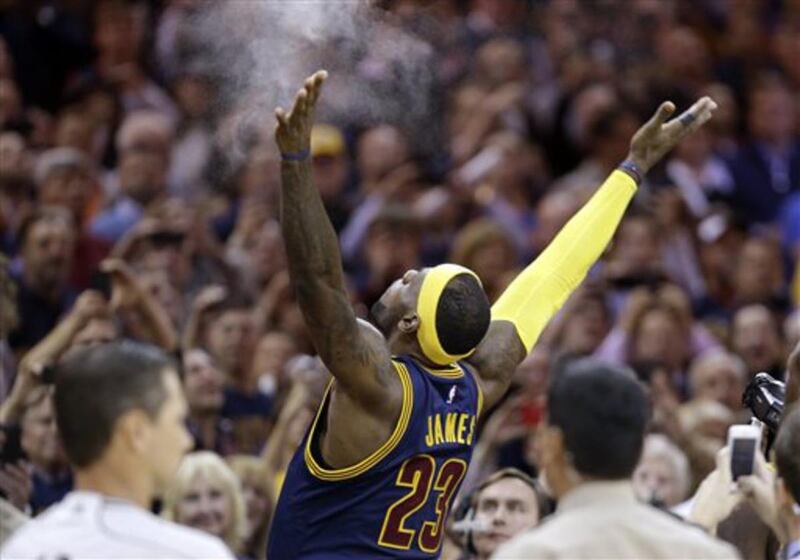

SALT LAKE CITY — When the Jazz meet Cleveland tonight, it will feature a high-altitude star for the ages. Not only has he been known to execute acrobatic dunks, but to swat opposing shots into the $9 seats.
No, this isn’t about LeBron.
It’s about Quin.
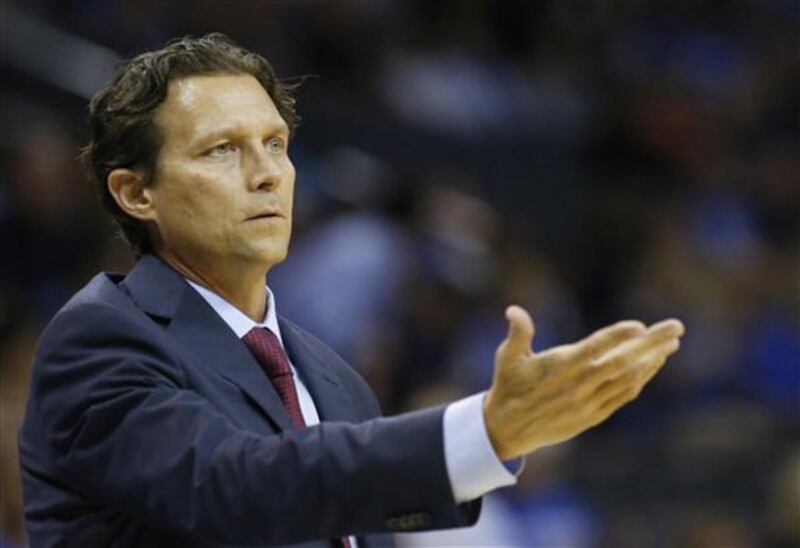
Who knew that, back in the day, Jazz coach Quin Snyder was a sky-walking Pacific Northwest version of LeBron James?
“When you talk about North Carolina basketball, who do you think of?” says Snyder’s high school coach, Ed Pepple.
“Jordan,” a writer responds.
“Jordan,” Pepple affirms.
“And when you say Ohio, who do you think of?”
“LeBron?”
“LeBron.”
“And if you go to Washington,” he continues, “and you say ‘Quin,’ it’s Quin Snyder — and everybody knows it. He was an icon in the day, and he was fun to watch play because he was so explosive when he went up in the air.”
So the new Jazz coach is apparently a one-name celebrity in the Evergreen State, like Apolo and Ichiro.
“I could do a 360,” the 6-foot-3 Snyder says, sounding sheepish. “Don’t tell the players; they won’t believe me.”
“We’re in the state tournament,” Pepple says, holding his hands up, the memories flooding back, “and our guy has a turnover and the other guy goes coast-to-coast and goes to shoot the ball up here. And Quin goes sailing out of nowhere and knocks that thing about eight rows up. You had to see it to believe it.”
OK, it’s been awhile. Snyder has had a hip replacement and is no longer touching the rafters, though he may try if the Jazz beat Eastern Conference favorite Cleveland.
Back at Mercer Island High School in Seattle, Snyder was just a kid who practiced relentlessly to improve his jumping, shooting and ball-handling skills.
“Not a trash-talker,” Pepple says. “But he had great hops.”
It served him well. A McDonald’s All-American, Snyder moved on to play at Duke, where he was part of three Final Four teams. Between that and his coaching career, he has been influenced by Mike Krzyzewski, Larry Brown and Gregg Popovich.
Pepple chuckles when asked if he ever advises Snyder.
“I never volunteer any information,” he says. "Think of who he’s worked with.”
Pepple is a legendary coach himself, a member of the National High School Hall of Fame. When he signed up in 1967 to coach Mercer Island High basketball, after a playing career at the University of Utah, the Islanders had never won a championship. Townspeople referred to the curse of Mercer Islanditis.
His first team went 32-2, launching a 952-306 career. Pepple’s plan from the start was stressing fundamentals, i.e. “if you pass the ball, you get the ball.” It’s a trait he sees in short supply in the NBA.
“You see them pounding their chests, when what they should do is pat the other guy on the back,” Pepple says. “Go pound the guy that made the pass.”
Through the years, Pepple saw many players come and go — including sons of Bill Russell and Rick Barry. Barry’s son Jon lived with the Snyders for a 1½ years while his dad traveled for work. Jim Zorn, Mike Holmgren and Microsoft co-founder Paul Allen, as well as the Nordstrom family, all lived on the island at some point.
“I don’t know all that,” Snyder defers, when asked about growing up in the moneyed world of urban island life. “This is my world.”
In spite of a 42-year, four-championship career at Mercer Island, Pepple wasn’t always so settled. An “Army brat,” he attended 16 different elementary schools. That almost certainly figured into his philosophy of discipline and attention to detail. Snyder fit well into the system.
When Snyder was a senior, the Islanders lost to an all-star team in Las Vegas that included future NBA player Dennis Scott. Snyder was MIHS’s point guard. Pepple realized in that game that even though Snyder was the team’s best ball-handler, he needed to be switched to shooting guard. He was their best scorer, too.
Thereafter it was the other guard’s job to get the ball to Snyder.
The team went undefeated the rest of the season.
The trick, Pepple says, is to utilize basics and pass profusely, the way the Islanders did — and the way the Jazz are attempting.
“Quin is very cerebral,” Pepple says. “He’s got a tough challenge ahead, but he never shied away from challenges. We didn’t have the greatest athletes in the world, but we were fundamentally sound and played together unselfishly.”
Could that work in the NBA?
“Fundamentals are fundamentals,” Snyder says.
Three decades later, he’s hoping the Jazz can use them to beat teams with one-name stars of their own.
Email: rock@desnews.com; Twitter: @therockmonster; Blog: Rockmonster Unplugged