

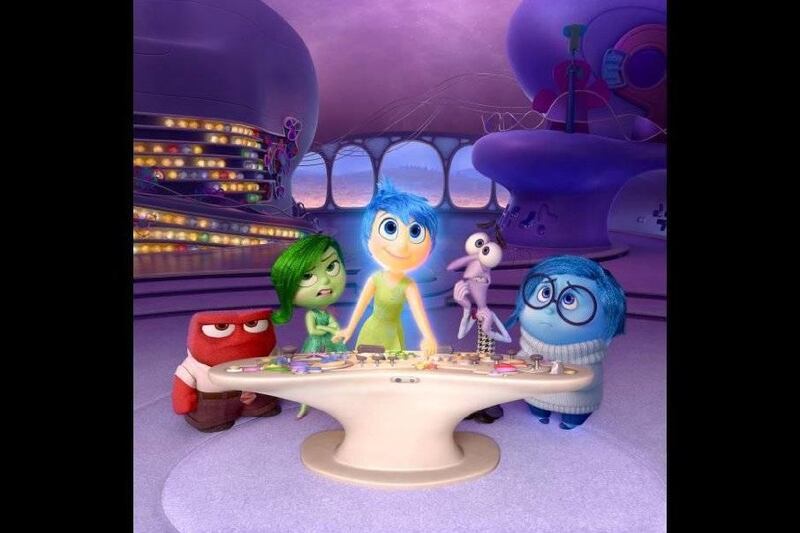
Pixar, the studio behind classics such as "Toy Story" and "Finding Nemo," has a new film with a unique premise up its sleeve. The new trailer for "Inside Out," hitting theaters next summer, takes a look at the root of our emotions and how they function.
The film is centered around "Riley, who is uprooted from her Midwest life when her father starts a new job in San Francisco. Like all of us, Riley is guided by her emotions — Joy (Amy Poehler), Fear (Bill Hader), Anger (Lewis Black), Disgust (Mindy Kaling) and Sadness (Phyllis Smith). The emotions live in Headquarters, the control center inside Riley’s mind, where they help advise her through everyday life," MovieViral reports. "As Riley and her emotions struggle to adjust to a new life in San Francisco, turmoil ensues in Headquarters. Although Joy, Riley’s main and most important emotion, tries to keep things positive, the emotions conflict on how best to navigate a new city, house and school."
The idea for this first Pixar release featuring a "princess-free" female protagonist, originated as director Pete Docter watched his daughter grow up "she started to lose the natural joy that once seemed so inherent in her personality," reports Vulture.
"There's our world which we're conscientious of and looking at. So we're driving, eating dinner, whatever. And inside our head there's this whole rich internal dialogue and world no one else knows about," Docter, who also directed "Up," told USA TODAY. "This film gets you inside each character's heads."
Those characters include Riley's parents as well. "Dad's emotions have Headquarters like a Norad missile defense site and have mustaches. Very male," USA TODAY reports. "Meanwhile, Mom's Headquarters features emotions wearing her red glasses and who engage in civil discussion à la 'The View.'"
"Inside Out" is being produced as scientists push toward "the final frontier: the human brain," reports The Wall Street Journal. Evolving technology and research will shed light on our "limited understanding of how the brain translates its rich sensory experiences into complex mental states and behaviors, all at the speed of thought."
"Over the next two decades, our understanding of emotion — as well as a host of other mental phenomena like memory, decision-making, and consciousness — will be transformed by richer empirical data," writes Lisa Feldman Barrett, professor of psychology at Northeastern University, in Science 2034. "Of all the scientific endeavors humans will undertake in the coming decades, understanding how the brain creates experience is perhaps the most important. Curing cancer, slowing aging, and even mastering quantum mechanics all depend on knowing our own minds and using this insight to unlock our full potential."
Email: jpeacock@deseretnews.com Twitter: @thejoepeacock
You may also be interested in the following stories:
Sony theaters pull 'The Interview' amid threats- did the hackers win?