


SALT LAKE CITY — In 1963, Duchesne County became the last county to sign on to a complex agreement so Utah could tap its share of the upper Colorado River and grow the Wasatch Front.
The formation of the Central Utah Water Conservancy District paved the way for hundreds of thousands of acre-feet of water to be diverted from the Uinta Basin in one of the biggest water diversion projects in the West.
Now, after 51 years and what it says are a host of broken promises, Duchesne County leaders say it is well past time the county be made "whole" for the nearly half million acre-feet of water it gave away for the Central Utah Water project, and they have hired a Denver law firm to help make it happen.
"I do not think you do an agreement and fail to deliver," said state Sen. Kevin Van Tassell, R-Vernal. "I think the locals have felt the promises were never quite fulfilled."
Van Tassell is one of several lawmakers and other state leaders in discussions with Duchesne County officials and the head of the water district, Scott Wilson, over the emerging water dispute with the Central Utah water district.
It was Wilson, with the approval of the Duchesne County Commission and county attorney, who fired the warning shot in December when he circulated a press release and referenced several newspaper articles from 1963 that detailed a nine-point agreement necessary for the Central Utah Water project to move forward.
"Our role in the partnership was to not oppose the half million acre-foot of water filing that was part of the Bonneville Unit of the project," he said. "They fully applied for all of the surface waters in the Duchesne River drainage, and our part was to not oppose that."
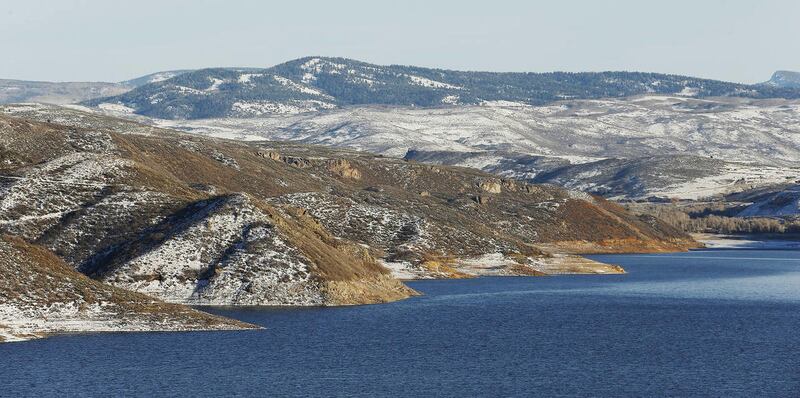
The Bonneville Unit of the Central Utah Project intercepts the water in the Duchesne River drainage, puts it in what is known as the Strawberry aqueduct and moves it over to Strawberry Reservoir for delivery to the Wasatch Front.
"The founders knew very well that the life blood of any community is water," Wilson said. "They knew they were bargaining away through contract negotiations with six other counties, that they were exchanging in contract the promise of Duchesne County's economic future."
In exchange, Wilson said the nine-point agreement spelled out projects that would be completed over the years for the benefit of Duchesne County, including additional storage on the Lake Fork River and enhanced water rights on the Duchesne River.
The Duchesne River was also to be adjudicated, or surveyed by the State Engineer's Office, to more firmly determine the amount of water available for development.
That has yet to happen.
Water for growth
At the time, 1963 newspaper articles from the Deseret News described the contentious and controversial process that played out involving the seven organizing counties that had to sign off on the formation of the Central Utah water district, including giving it the power to levy taxes so Utah's biggest water transfer could unfold.
"Economic growth on the Wasatch Front was limited without the Bonneville Unit of the Central Utah Project and to allow the Wasatch Front to develop past 1964 levels, this needed to happen," Wilson said. "You can begin to see the the kind of pressure that was rained down on Duchesne County."
Chris Finlinson, governmental affairs director for Central Utah Water Conservancy District, said the agreement from 51 years ago has been fulfilled as much as it possibly can, and there is nothing to make "whole" with Duchesne County.
"We feel like we have done everything we possibly can for Duchesne County," she said. "We have acted in good faith with Duchesne County and will continue to work with them."
Wilson and other Duchesne County officials disagree.
"There's been 50 years of history and we have come up far short of what those original promises were. I think we have missed the mark by a long ways," he said.
The Bonneville Unit of the Central Utah Project has not yet been completed, and there's no timetable on when that is to happen. Funding for the now $2 billion project has floundered and environmental opposition has slowed the process, Finlinson said.
"The world we live in now does not allow us to do some of the things that we would have wanted to do 50 years ago."
Finlinson points to the completion of Starvation Reservoir as a benefit to Duchesne County, but Wilson and Van Tassell disagree it did much beyond stabilizing flows of water for the project, and did not provide any additional water beyond what already existed for agricultural users.
"Starvation was done because the trans-basin diversions to the Wasatch Front would not have been possible without the reservoir in place," Wilson said.
He added that Duchesne County officials believe it is time to raise the issue of the nine-point agreement for a number of reasons, including the Central Utah Water district's celebration of its 50-year history during 2014.
"They point to this glowing record of accomplishments, and we want to have a conversation about it," Wilson said.
More projects
As the state plans for the doubling of its population over the next 35 years, large water development projects like the Lake Powell Pipeline and the Bear River Development Project are on the table, pitched as vital, new water transfers that will be necessary to accommodate that growth.
"Utah has to have a plan 50, 75 or 100 years out into the future, and as that is being discussed, Duchesne County is part of that. We have an active growth rate and to have a vibrant economy moving forward, there needs to be some consideration," Wilson said. "Having transferred water resources to the Wasatch Front and not being made whole, we are short-changed."
That becomes a concern, Van Tassell and Wilson say, as Duchesne is experiencing its own growing pains.
Last year, the U.S. Census put Duchesne County among the top in the country for its explosive population growth, jumping 5.5 percent from 2013.
"There is concern there that will be limited for development because of our water being moved," Van Tassell said. "And we will have to look at that. This agreement is over 50 years old and was entered into with some of the best water minds in the state of Utah."
Finlinson said there is no water to be "returned" to Duchesne.
"I think the district has tried to be more than fair with Duchesne County. As a result of the construction of Starvation Reservoir, the irrigation projects that were not even thought of 50 years ago, treatment plants — they have a safe drinking water supply that was unheard of prior to their construction. Any of the points we had control over have been completed."
Wilson said once the water was taken out of the basin, there were many steps along the way in the project that were simply not completed, and funding problems or policy hiccups are not an excuse.
"If the Central Utah Project and that policy vehicle ran out of gas along the way, we need to get a new policy vehicle to get to that agreement. That is our concern," Wilson said.
Email: amyjoi@deseretnews.com
Twitter: amyjoi16