


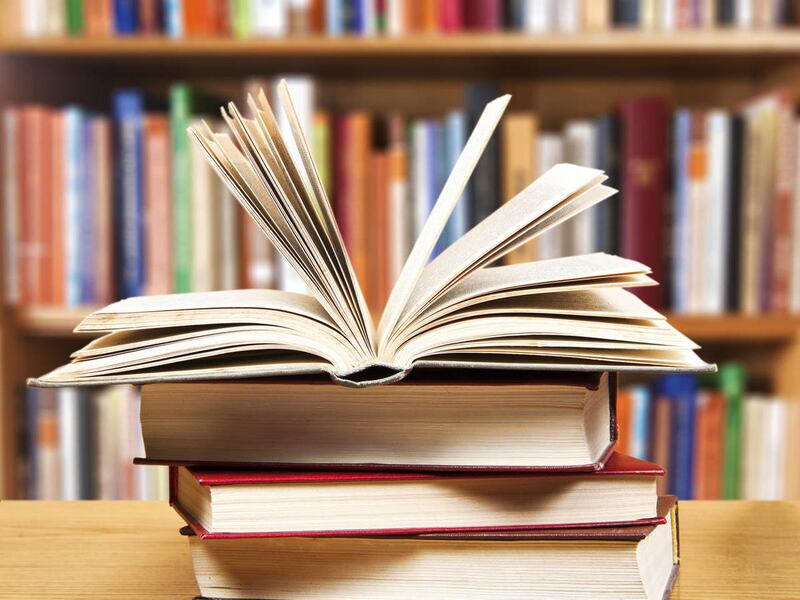
Long ago, I realized I would never be able to keep up with all the interesting books that get published each year. Heck, I can barely keep up with the stack of books piled up on my bedstead or on my desk, just begging to be opened.
But that doesn't mean there's not a reason to try. In fact, research shows reading is beneficial for your mind and mental health and aids in stress management. And that's not counting the pleasure or increased knowledge and vocabulary that come from time spent reading books.
But there's still that whole limited-time thing. There's never enough of it.
That's why I read more than one book at a time. A lot more than one. Right now, my reading list is 10 deep, and it is just as likely to grow before it gets shorter.
Here are a few things I've learned over the years of reading multiple books at once.
1. Reading books is an entertainment choice. During my leisure time, I make a habit of picking up books. Some people watch ESPN, some people quilt and others exercise. Well, OK: I'm some of those people, too, but reading books is my first choice. With a finite amount of time, I have to recognize that I can either watch the latest episode of "Downton Abbey" or I can read one of the books on my list. At least when I watch a football game (average play time: 11 minutes for every four-hour game) I can also find time to read between plays. (True story: I finished John D. Brown's "Bad Penny" during the depressing BYU-Utah State game in October. At least that way the evening wasn't a total loss). Whether I'm relaxing, at the gym or just plain bored, I habitually pick up a book to pass the time.
2. Reading in any medium counts. I love the smell of paper. I mark notes in the margins, and I keep my books. (You can borrow them. Just bring them back, please.) Even so, I've adopted the future, too. I keep my Kindle app stocked with books and my phone always has a couple of audiobooks ready to listen to in the car, at the gym or on walks. I recently finished the second volume of William Manchester's obnoxiously long biography of Winston Churchill, listening to it on my way to work and reading it at home. Thank heavens for audiobooks, or I'd still be reading it! Whether I use a device, listen to an audiobook or dig into a good old-fashioned paperback copy, reading in any medium counts.
3. Read more than one to stay fresh. A lot of books just don't grab me right away but need a little time to get rolling. For example, "The Anubis Gates" by Tim Powers — a fantastic, award-winning novel about time travel and Dickensian London — started off slow and with a strange cast of characters. It was intriguing, but I struggled to stay with it. So I would switch to something else for a day and come back to it later. Sometime around page 80, I think, something clicked, and I plowed through the rest of the novel, putting it down with a satisfied feeling only when I had finished it.
4. Beg, borrow or buy, but stack them up: If you surround yourself with books, chances are you will read them. Writer Laura Vanderkam suggests, quite astutely, "If you want to read more books, you need more books sitting around triggering thoughts like, 'Hey! I could be reading right now!' ” But what if you don't have money for books? Pro tip: Most libraries won't stop you from checking out as many books as you can carry. Besides, the library has a larger selection than even Amazon, according to a Wall Street Journal article. So what if you don't read them all? If you read just one of the four, you've still read one of the four. As an added bonus, you can probably request the books you want on the library's website and have them waiting for you when you arrive. I live in Salt Lake County, which has a stellar collection of books, audiobooks and, yes, movies and music. Get online, reserve a few and stack those books up.
5. Keep track: I love metrics. I track my exercise habits, what I eat, how many hours I bill and more. I also keep track of what I'm reading on Goodreads and LibraryThing. Not only does it allow me to remind myself what I haven't opened in a while, but I can write notes about the experience, too.
6. Save your brain: Reading is actually really good for you. Research shows it helps prevent Alzheimer's disease, improves concentration, reduces stress and deepens thinking, empathizing and listening abilities.
Make the choice, stack up those books and start reading. You'll never know how enjoyable it can be until you start.
Daniel Burton lives in Holladay, Utah, where he practices law by day and everything else by night. You can follow which books he has read lately at attackofthebooks.com.