

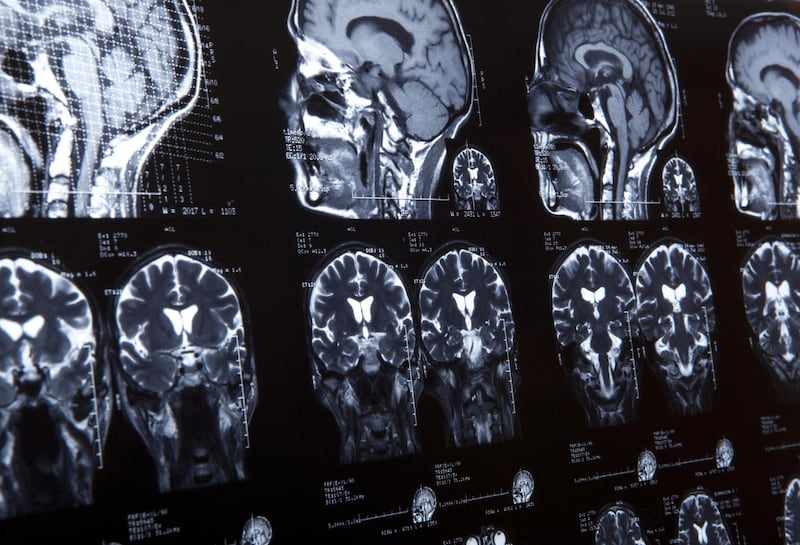
For many people, classical physics is the model of what science ideally ought to be. And one of the assumptions commonly associated with classical physics is materialism — not in the sense of greed and covetousness, but referring to the idea that matter (i.e., atoms and subatomic particles) is the only reality and that, at least in principle, complex things can be understood by reducing them to the interactions among their component physical parts.
Beginning especially in the 19th century, this assumption was transformed into a dogmatic ideology. Because of the remarkable success of modern science and technology and their resulting prestige, both scientists and laymen began to believe that “scientific materialism,” as it’s sometimes called, rests upon actual evidence and is, in fact, the only rational view possible.
Taken to its logical conclusion, though, it has dramatic implications. For example, it implies the “mind” is nothing more than the physical brain, that “consciousness” is merely another way (and perhaps a very unscientific one) of describing neurochemical activity inside our heads. As the German scientist Karl Vogt (d. 1895) put it, “The brain secretes thought as the stomach secretes gastric juice, the liver bile and the kidneys urine.”
The late Francis Crick, co-discoverer with James Watson of DNA’s double helix structure, called this “the astonishing hypothesis,” though he scarcely treated it as merely hypothetical, holding "that 'You,' your joys and your sorrows, your memories and your ambitions, your sense of personal identity and free will, are in fact no more than the behaviour of a vast assembly of nerve cells and their associated molecules.”
A few critics have observed that such a materialist view appears to be quite obviously self-refuting. If our “thoughts” are merely the result of literally mindless physical events within our brains, with each brain state determined by the neural conditions preceding it, it’s very difficult to see a role for evidence, analysis, argument and logic in those successive brain states and in the neurochemical processes underlying them — and, therefore, difficult to understand how materialists can justify their claim that materialism is “true.”
Some scientists have now begun to dissent openly from “scientific materialism.” Recently, for instance, strong dissent has been registered by a number of internationally known biologists, neuroscientists, psychologists, physicians and psychiatrists in a “Manifesto for a Post-Materialist Science” (online at opensciences.org). They write that the dominance of scientific materialism “has seriously constricted the sciences and hampered the development of the scientific study of mind and spirituality. … This has led to a severely distorted and impoverished understanding of ourselves and our place in nature.”
Science, they insist, should be open-minded, not ideologically rigid.
In support of their advocacy of a “post-materialist science,” the eight scientists who wrote the “Manifesto,” joined by more than 70 additional scientists who have endorsed it thus far, cite the profound and profoundly puzzling branch of physics known as “quantum mechanics,” which first arose in the 1920s.
Quantum mechanics strongly suggests that the consciousness of observers is vital to the very existence of the physical events being observed and that mental events can and do affect the physical universe. They also draw upon recent research in psychoneuroimmunology that suggests that mental events have a specific and measurable effect upon the brain.
More controversially, they point to “psi phenomena,” which seem to illustrate a capacity in human minds to act upon physical objects, even at a distance, and to communicate with other minds in verifiable ways yet in the absence of physical means of doing so. They also mention conscious mental activity in cases of cardiac arrest, when electrical brain function has ceased — suggesting the possibility of “the survival of consciousness, following bodily death.”
“Some materialistically inclined scientists and philosophers refuse to acknowledge these phenomena,” the Manifesto’s authors write, “because they are not consistent with their exclusive conception of the world.” Such dogmatism, though, is “antithetical to the true spirit of scientific inquiry, which is that empirical data must always be adequately dealt with. Data which do not fit favored theories and beliefs cannot be dismissed a priori. Such dismissal is the realm of ideology, not science.”
Perhaps the fundamental assertion of the new “post-materialist science” for which the authors and signers of the “Manifesto” call is this: “Mind represents an aspect of reality as primordial as the physical world. Mind is fundamental in the universe, i.e. it cannot be derived from matter and reduced to anything more basic.”
Daniel Peterson teaches Arabic studies, founded BYU's Middle Eastern Texts Initiative, directs MormonScholarsTestify.org, chairs mormoninterpreter.com, blogs daily at patheos.com/blogs/danpeterson, and speaks only for himself.