

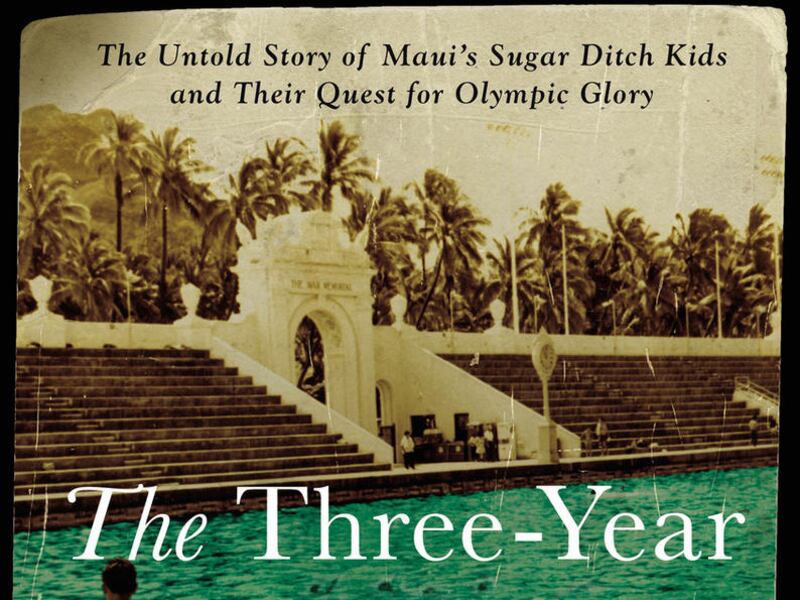

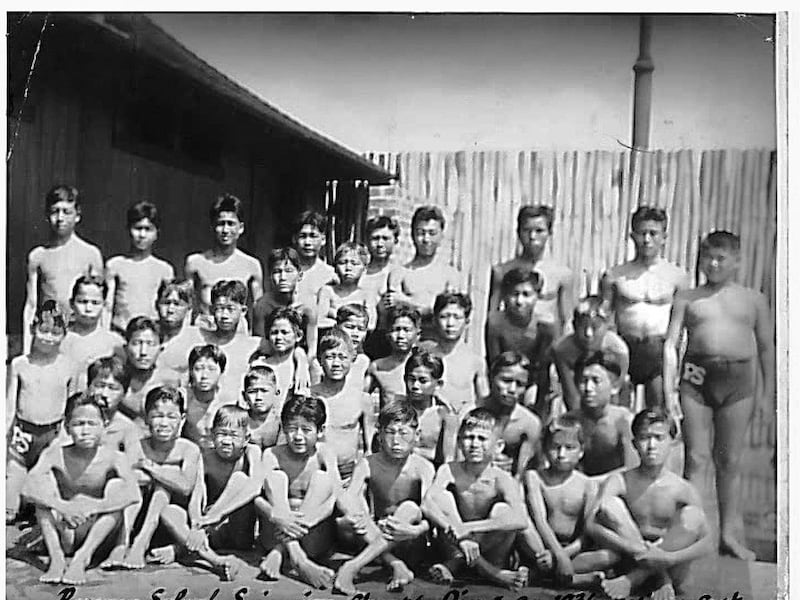
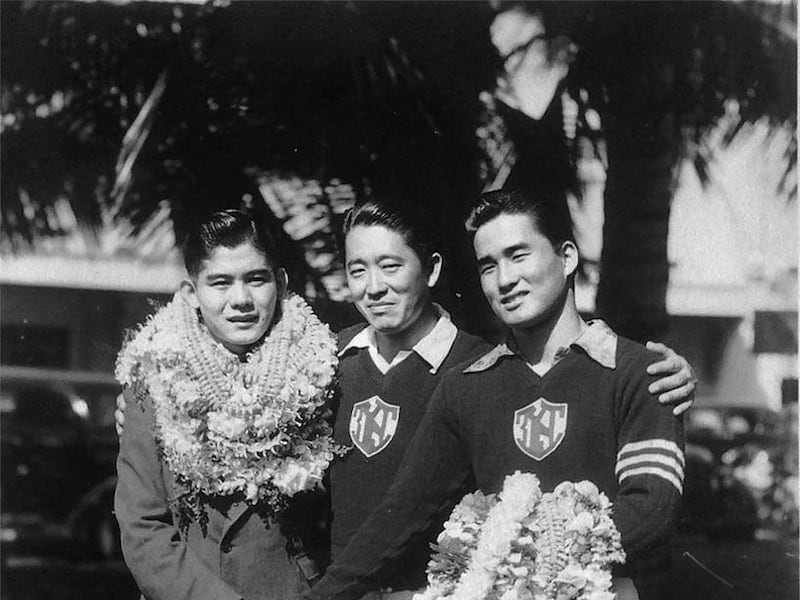
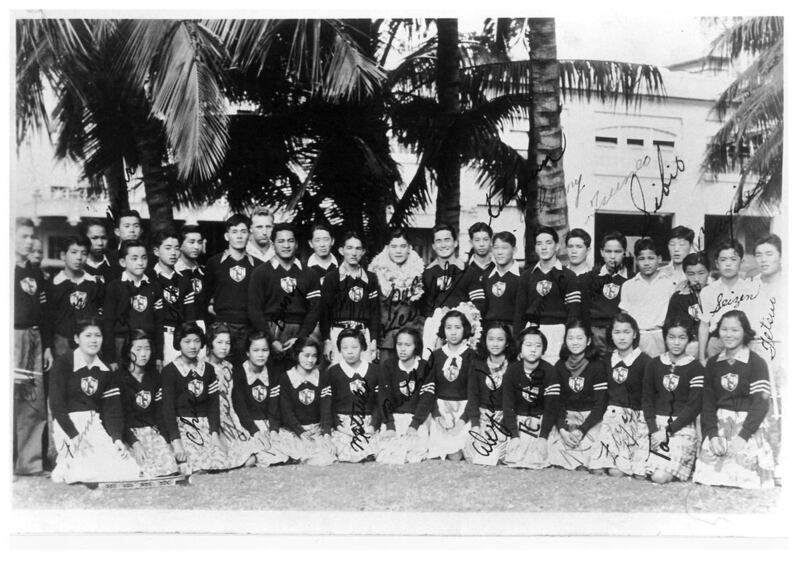
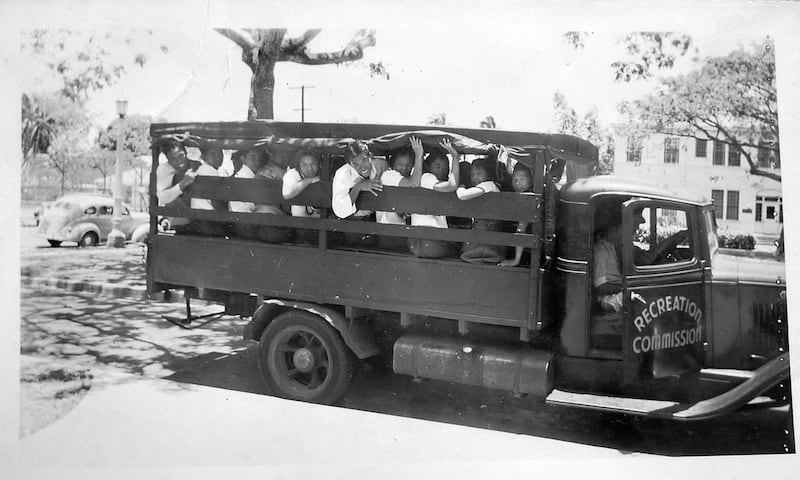
After a previously planned book project fell through, author Julie Checkoway and her literary agent started looking together for a new idea for Checkoway to write about. Her agent then came to her with the true story that would turn into Checkoway’s new book, “The Three-Year Swim Club: The Untold Story of Maui's Sugar Ditch Kids and Their Quest for Olympic Glory" (Grand Central Publishing, $27), scheduled to be released Tuesday, Oct. 27.
A graduate of Harvard-Radcliffe and a former tenured professor, Checkoway is an author and has also directed a documentary. She grew up in Massachusetts with working-class parents who had never gone to college. She had little to connect her to a story about the children of Japanese immigrants living and working on a sugar plantation in Hawaii in the 1930s who learned to swim in irrigation ditches.
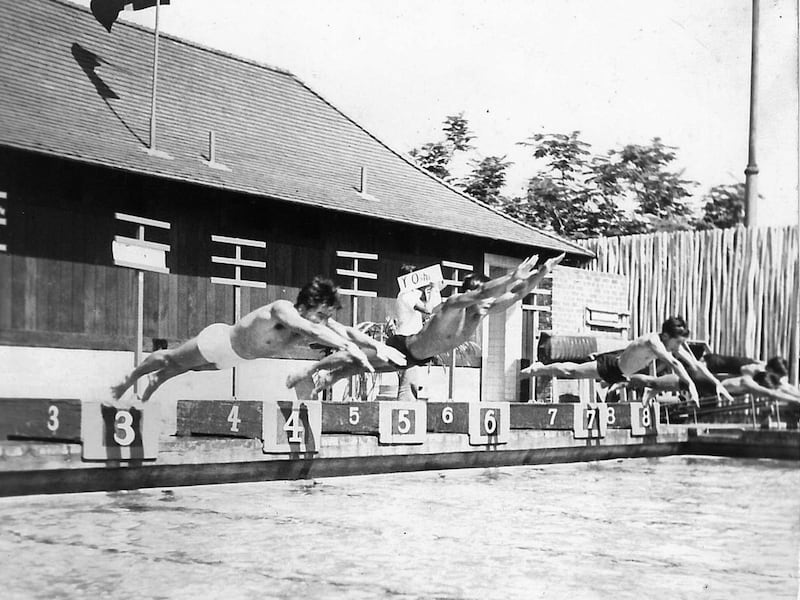
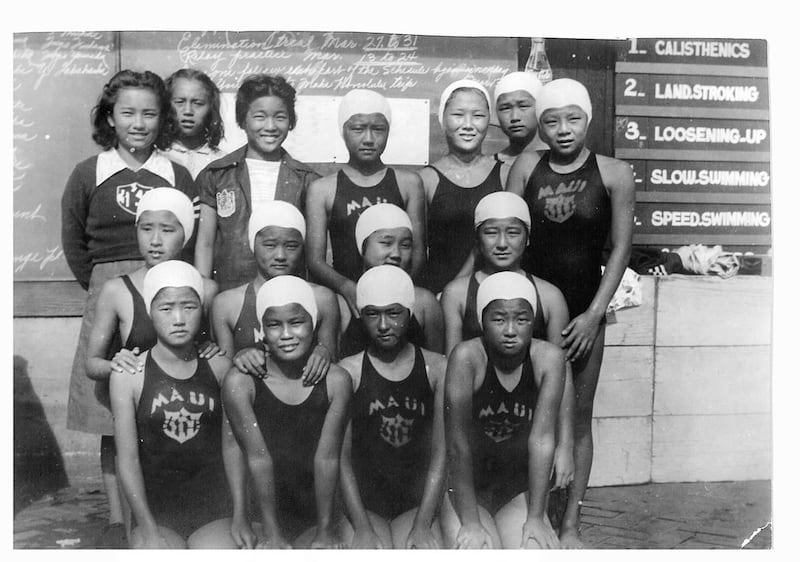
Despite that, when Checkoway heard about these children and their goal to swim in the 1940 Olympics, she very quickly became obsessed. She found out some of the swimmers were still alive and in their 90s, and she interviewed them and looked through their scrapbooks. She found every newspaper article and public record she could on the story, and she couldn’t believe that no one had ever told it to its full extent.
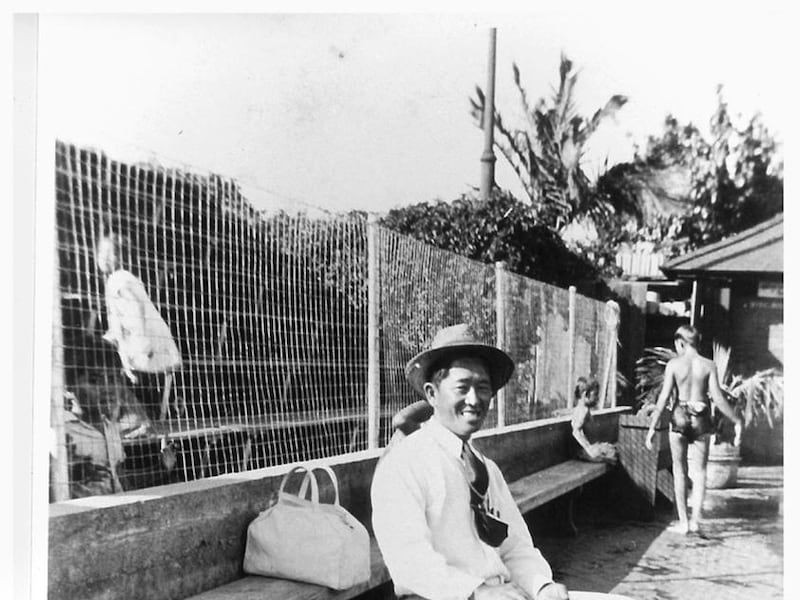
Ultimately, the 432-page book captures the story of swim coach and teacher Soichi Sakamoto and his desperate attempt to make something of his impoverished, starving students despite all odds. Almost every obstacle was thrown in their way, including the onslaught of World War II, the canceling of the Olympics in 1940 and 1944, and the intense xenophobia toward Japanese-Americans following the bombing of Pearl Harbor.
“It’s impossible to tell this story clearly without race being central,” Checkoway said. “Through sport these students could attempt to gain upward mobility, citizenship and respect where there were no other possible ways of doing so. In the pool, they were racing against race. They wanted to be seen as not just Japanese-American, but American.”
In the book, she shows the paradox in the fact that Japanese-Americans were sent to internment camps on suspicion of being spies yet fought in their segregated unit during World War II.
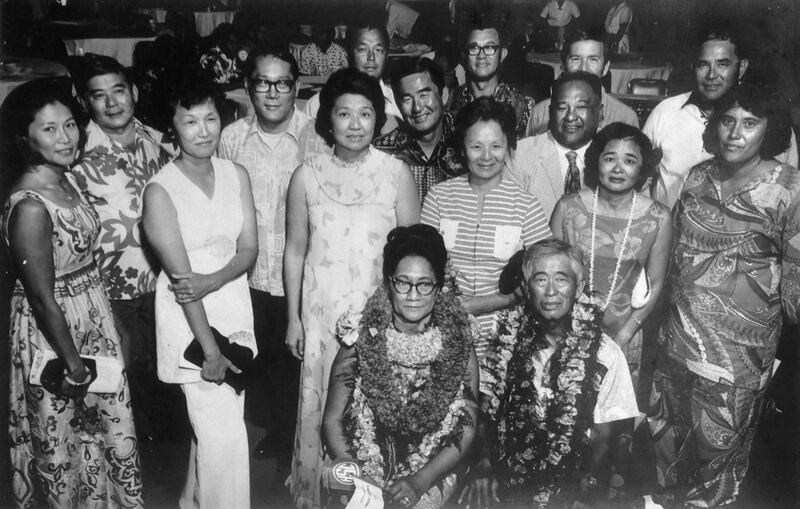
Though not all of Sakamoto’s swimmers ended up at the Olympics, Checkoway found it important that many achieved things in their lives that they never would have otherwise. Keo Nakama, one of the main swimmers in the story, went from barefoot and starving on a sugar plantation in Maui to earning a master’s degree and serving on the legislature in Hawaii.
“Sakamoto was trying to imbue into the children that through hard work, determination, grit, constancy and courage in the face of disappointment, one can do amazing things,” Checkoway said. “The fact that many of the swimmers went on not only to become coaches but teachers like Sakamoto, to me is heroic and a fulfillment of that dream. The legacy that he left for the kids was to go to college, better yourself, get off the island and not get stuck in the virtual slavery that their parents did, and the kids were able to achieve that.”
Since many of the original swimmers did not reach the Olympics, Checkoway struggled for a long time with finding the right way to end her book. Right after finishing the final draft of the book, Checkoway fell down the back steps of her home in Salt Lake City and sustained a concussion that affected her memory and ability to retrieve language. She received the proofs back and had her husband help her go through them.
“We got to the ending, and I said, ‘I have to rewrite this ending; it’s not the way I want it,’” Checkoway said. “So we sat on the couch and I dictated the last section of the book to him in the haze and chaotic thinking of a traumatic brain injury. Word by word, I pulled it from the back language area of my brain. It felt like swimming long distance in rough water. We were both crying. It was a really moving and powerful experience.”
Like the members of the Three-Year Swim Club, Checkoway was able to fight through unexpected difficulties to accomplish her goal.
The book contains little to no swearing, foul language, violence or sexual content.
If you go ...
What: Julie Checkoway book signing
When: Tuesday, Oct. 27, 7 p.m.
Where: The King's English Bookshop, 1511 S. 1500 East, Salt Lake City
Web: kingsenglish.com
Note: Places in the signing line are reserved for those who purchase a copy of the featured book from The King's English.
Michelle Garrett is a journalism graduate from BYU and currently works as a business magazine writer for a network marketing company in Utah. She is also a contributing blogger at utahchildrenswriters.blogspot.com. Email: mgarrett3589@gmail.com