

SALT LAKE CITY — In a nondescript building in Salt Lake City, just off the TRAX line on 900 South, women at risk for incarceration are finding a second chance thanks to a nonprofit organization called Journey of Hope.
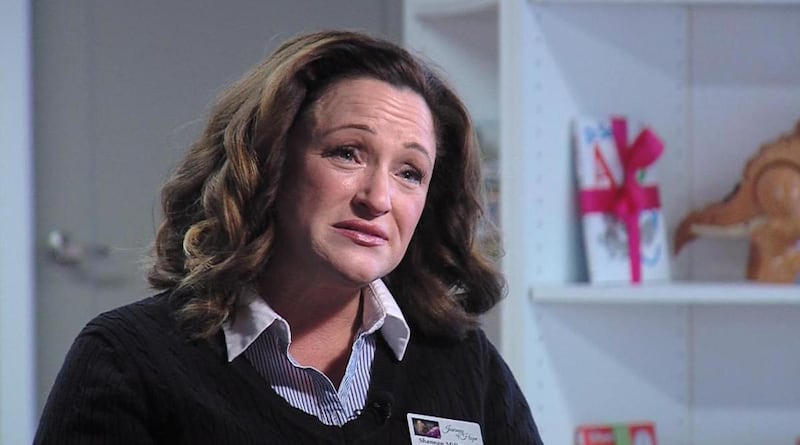
“It’s powerful work we do here with these women, and it’s a blessing,” said Shannon Miller Cox, executive director at Journey of Hope. “They have survived horrific addictions and mental health disorders and trauma, some even torture."
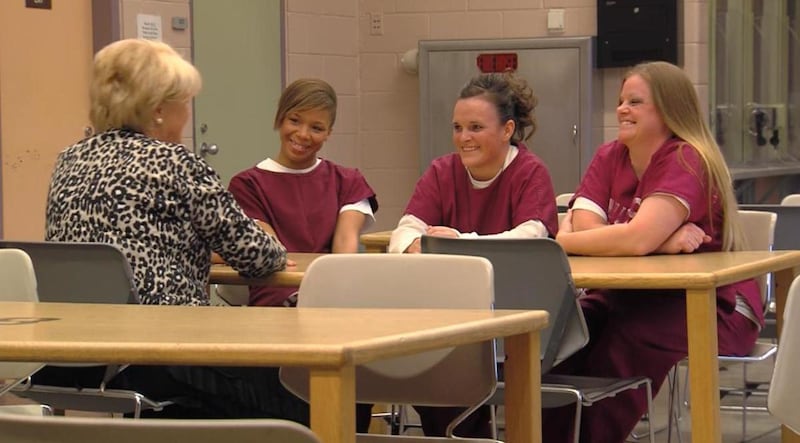
Journey of Hope works with women on probation or parole, those who face a serious sentence, those at risk for recidivism, and those who are trafficked as sex workers and whose status puts them at risk of criminal charges.
Most of the women served by Journey of Hope have had prior convictions. The goal of the program is to keep these women from re-entering the prison system by pairing them with someone who can offer guidance.
“I was a hit woman for the mob mostly because of my dad,” said Jeanie Inalou, who has been out of prison for three years and is currently being mentored at Journey of Hope.
“They have done everything (for me),” she said. “They have gotten me furniture, they’ve gotten me clothes. I mean, Shannon even brought over some clothes for me out of her own closet. … I just can’t say enough about them.”
Frank Christianson, a mentor at the center, said the role they play has a significant impact.
“When somebody who needs help knows that somebody cares about them,” he said, “it just takes a weight off their shoulders.”
Some of the women who enter the center face significant challenges having survived severe addiction, mental health disorders and trauma. Access to someone they can rely on is important at Journey of Hope, as mentors come from all walks of life.
“We’ve got judges that are mentors,” said mentor Jolene Dew. “We've got people that are members of many different denominations that are mentors. You’ve got people who are professionals, and you’ve got homemakers. What is nice is they seem to look at that diversity and match up a woman with whoever is best suited to help that person.”
Mentors are given training to help them be successful. “Once we help these people not return to prison, it’s just going to make society a better place to live,” mentor Bill Dew said.
The program currently has about 150 trained mentors and is making a tremendous difference in the community.
“We can choose to spend $36,000 a year to put them in prison, or we can spend half that to put them in programs in the community, or a third of that to mentor and case manage them in the community,” Cox said.
She understands better than most the needs of these women.
“I’m a survivor of trauma,” she said, “but I had an amazing family and an amazing support system. My parents plucked me out of school and threw me in an inpatient program when I was losing my mind after a rape.”
She worked for 20 years as a corrections and parole officer for the state of Utah and worked tirelessly for many years to help get the program up and running.
So far, the program has proved successful. The recidivism rate for the women who have participated is only 13 percent — compared to the current Utah rate of 46 percent.
“There go I but for the grace of God,” Cox said with a tear running down her cheek. “I think when you know better, you do better, and the more that I know, the more that I do. It is a labor of love.”
Email: spark@deseretnews.com