





A social deduction, role selection game allows a large group of friends to all join together in one game, take on secret roles and try to accomplish specific agendas without being discovered. It's a blast, and a new and impressive title in this genre is Deception: Murder in Hong Kong from Grey Fox Games. It can handle four to 12 players and lasts about 20 minutes.
The theme behind the game is that the players are investigators in a crime unit investigating a mysterious murder. The only problem is that one member of the police unit is actually the murderer. To start, each player is given a secret role card that determines who is the murderer and who are the detectives.
The person who receives the murderer card is trying not to be discovered and will use a variety of techniques to deceive his or her opponents. The true investigators are trying to figure out the clues and means that will lead to the capture of the murderer to win.
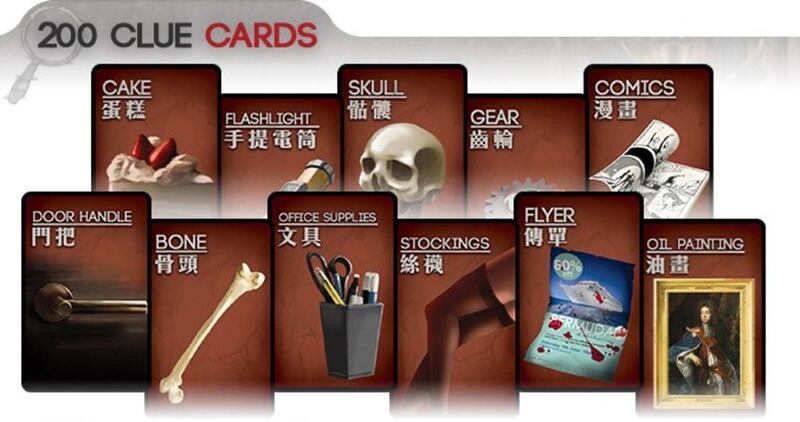
Each player including the murderer is dealt four clue cards such as a bone, door handle or oil painting and four means cards such as sniper, axe or explosives. They are displayed face up in front of each player. One of the real investigators is also designated the forensic scientist who will know who the murderer is but must give clues to other players to help them find the truth.
On the count of three, everybody closes their eyes and then the forensic scientist, murderer and any accomplices are asked to open their eyes. The murderer is then asked to point to one means card and one clue card that he or she was dealt. These will be the two cards that the investigators need to discover to win. Everyone opens their eyes and the investigation begins.
The forensic scientist now tries to help other players find the right clue and means card to win. A set of special scene tiles featuring different categories are placed on the table and the forensic scientist highlights a series of spots on the tiles to provide help in order to deduce the truth.
For example imagine the clue card is a door handle and the means card is an axe. One of the special tiles labeled location has a list of places such as school, bank, alley, supermarket, villa or park. The forensic scientist places a marker by the location category that best fits the clue and means card. So for the cards door handle and axe, the choice may be a villa.
When clues are given, the players discuss the possible solutions. If an investigator thinks he or she has figured out the clue and means cards, a guess can be given. If it was correct, the investigators win, but if wrong, the player who guessed may not guess again for the rest of the game but may continue playing. After three rounds of clue giving, the game ends, and if the correct cards are not found by then, the game ends and the murderer escapes, winning the game.
Deception: Murder in Hong Kong is a well-designed game with a ton going for it. It is different from other social deduction games on the market because it's better. Instead of just guessing, players use detective work, reasoning and teamwork to solve the case. There are hundreds of cards, so every game will be different. The game scales up the player count with additional roles such as an accomplice for the murderer or a witness who gets to peak at the murderer's selections and help give clues. This is a great game for ages 10 and up and will definitely be the hit at a party.