



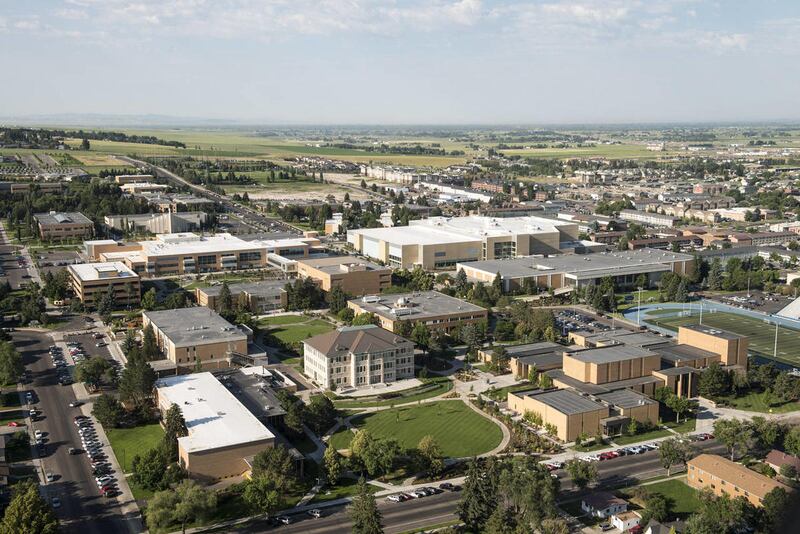
REXBURG, Idaho — Brigham Young University-Idaho has come a long way. What started in a single-room log cabin has now become the largest private university in Idaho and home to 40 major buildings.
The institution "was founded upon the firm belief there are extraordinary possibilities in ordinary people," said John L. Clark, former president of Ricks College.
The school that would become Ricks College was established in 1888 by Mormon pioneers who had recently settled in Rexburg, Idaho, according to BYU-Idaho's website. On Nov. 12 of that year, the Bannock Stake Academy convened for the first time. At the academy, elementary-level courses were taught to 59 students between ages 5 and 20.
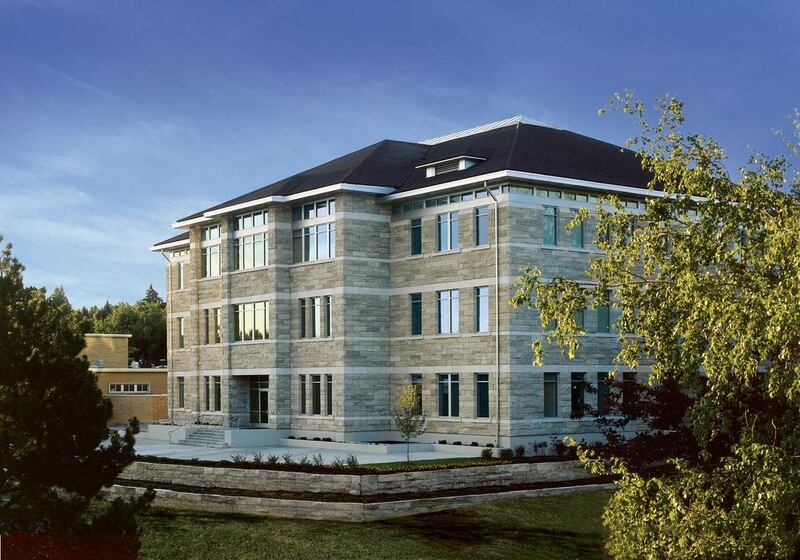
Twelve years later, the Bannock Stake Academy curriculum was expanded, high school-level classes were added, and the cornerstone was laid for the Spori Building, named after the first principal of Bannock Stake Academy, Jacob Spori.
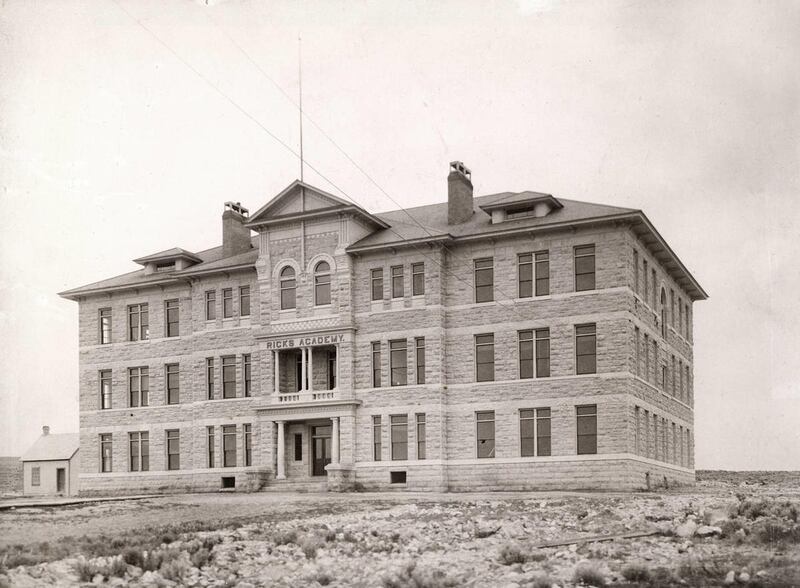
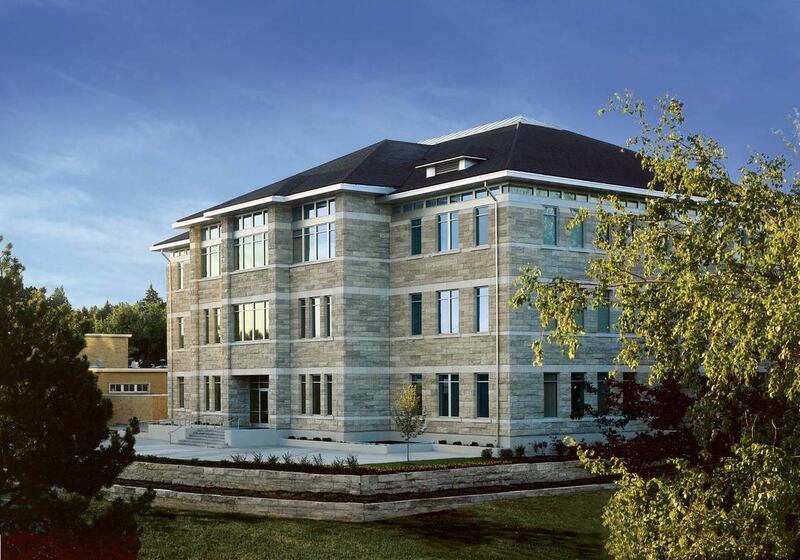
In 1903, the name of the academy was changed to Ricks Academy after its founder, Thomas E. Ricks. The Spori Building was also completed that year. The original Spori Building stood on campus until 2000, when it was destroyed by fire during demolition. The new Spori Building, dedicated in 2003, was constructed with similar architecture.
In 1915, the curriculum was expanded to include college-level courses. Less than a decade later, the high-school courses were phased out and Ricks Academy became Ricks College. By 1999, Ricks College was the largest private junior college in the United States.
In 2000, LDS Church President Gordon B. Hinckley announced that the name of the institution would change yet again as part of the school's transition to a four-year university. On Aug. 10, 2001, Ricks College officially became Brigham Young University-Idaho.
“I submit that this campus, with its adjoining buildings, may literally offer a foretaste of heaven with the imparting of knowledge, both secular and spiritual, with the encouragement of unselfish service, with the teaching of values that are everlasting in their consequence, and with faith in the Living God,” said President Hinckley, as quoted on the BYU-Idaho mission statement page. “I pray that it may be so.”
Now, almost 127 years after Bannock Stake Academy opened, BYU-Idaho offers higher education to 28,000 students from all 50 states and over 80 countries worldwide, according to the school's website.
The school runs on a three-semester schedule, with each student assigned to a "track" of two semesters a year.
BYU-Idaho offers 25 associate degrees and over 100 bachelor's degrees, with seven colleges and 33 departments. The university also offers 17 online degrees with over 300 online classes.
President Henry B. Eyring (1971-77) of the First Presidency of The Church of Jesus Christ of Latter-day Saints and Elder David A. Bednar (1997-2004) of the Quorum of the Twelve Apostles both served as presidents of Ricks College, with Elder Bednar overseeing the transition to four-year university status.
BYU-Idaho has a long list of notable alumni, including President Marion G. Romney, a former member of the First Presidency; Stew Morrill, former men's basketball coach at Utah State University; Matt Lindstrom, a Major League Baseball pitcher; and Del Parson, an acclaimed LDS painter.
Current President Kim B. Clark has guided the university since 2005. In April, Clark G. Gilbert, president and CEO of the Deseret News and Deseret Digital Media and an executive vice president of Deseret Management Corp., will become the school's 16th president.
Email: mswensen@deseretnews.com