

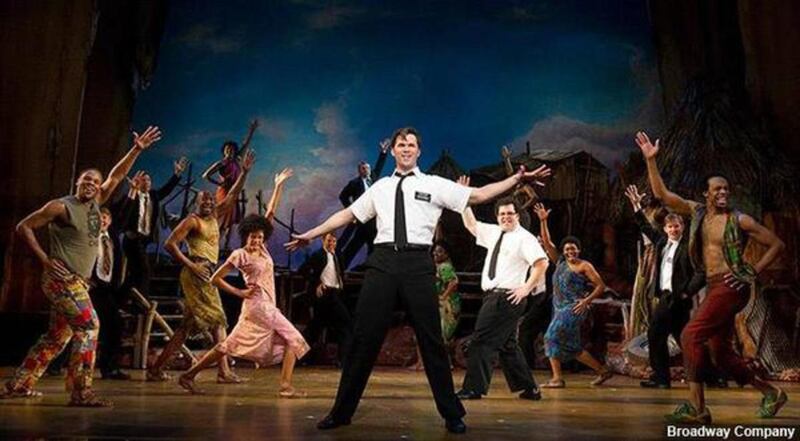

"The Book of Mormon" Broadway musical is coming to Utah this summer, and every showing is already sold out. Hailed as “the funniest musical of all time” by Vogue magazine and “the best musical of this century” by The New York Times, "The Book of Mormon" musical is a crass, derisive, deeply offensive portrayal, not only of Mormon missionaries but also of the beliefs that Mormons cherish. I did not find it funny in the least.
While many of all faiths are disgusted, including myself, that Mormons are fair game for such public ridicule — pointing out that our politically correct society would be up in arms if similar Broadway musicals were performed mocking the heartfelt beliefs of Muslims, or Jews or Episcopalians — nobody I know believes that the purveyors of such vitriol do not have the right to speak as they do. Americans — Mormons included — value the freedom of speech, even though free speech can be painful to endure.
With this in mind, I am deeply troubled by those critics, including the Southern Poverty Law Center, who are saying that the organizers of the Muhammad Cartoon Contest held last weekend in Garland, Texas, were running an “active anti-Muslim” campaign and were being “needlessly provocative,” suggesting they somehow deserved the violence directed against them. Such statements imply that the two, home-grown Islamic State terrorists who drove across two states with assault rifles to try to massacre attendees at the event were somehow justified because of the insults to their religion. I wonder if these critics would sing the same tune if two returned Mormon missionaries tried to shoot up attendees of "The Book of Mormon" musical because of its insults to The Church of Jesus Christ of Latter-day Saints. I suspect that they would not.
While, as Danish philosopher Soren Kierkegaard once said, “people demand freedom of speech as a compensation for the freedom of thought which they seldom use,” we cannot condone violent retaliation against freedom of speech, no matter how reprehensible that speech might be to us personally. Lawyer and legal commentator Alan Dershowitz said it best: “Being offended by freedom of speech should never be regarded as a justification for violence.”
I suspect the Garland terrorist attack — the first in the United States to be linked to Islamic State militants — will not be the last. The Islamic State propaganda machine will undoubtedly snare new would-be jihadists. Few who knew Nadir Soofi when he attended the University of Utah as a pre-med student 15 years ago would have predicted he would die in a hail of bullets while trying to murder “infidels” and avenge “the Prophet.” We cannot stop such ideas from taking root and infesting the judgments of others. We cannot read minds; we cannot police thoughts.
But we can and must stand four-square behind the freedom of speech. Islamic State militants are actively trying to impose the harshest of political and theological regimes upon every inhabitant of the globe. Their most effective weapons are intimidation and terror. Our most effective shield is our fierce devotion to freedom itself. While we need not condone irreverent portrayals of religious beliefs — especially of our own — we must defend, with force if necessary, the right of all Americans to speak their minds.
So how should you respond when others denigrate and ridicule your faith? I can think of no better way than the high road The Church of Jesus Christ of Latter-day Saints took in response to "The Book of Mormon" musical. Instead of reacting with anger, the LDS Church simply says in the show’s playbill: “Now that you’ve seen the musical, read the book.”
Dan Liljenquist is a former state senator and former U.S. Senate candidate.