



While creating their Student Emmy-winning short film “Ram’s Horn,” students at Brigham Young University’s Center for Animation took occasional breaks to have Nerf gun wars. It was an effort of the film’s student producer, Garrett Hoyos, to keep his classmates having fun.
“As students, your only motivation is if you work hard, you might get a job,” said Hoyos, who graduated this spring. “So the way that we could motivate students is I spent hundreds of dollars on Nerf guns.”
Frequent Nerf battles might not be an unusual pastime for college students, but the animation team boasts a Student Emmy, which sets it apart from its peers.
The students had a high standard to live up to: BYU’s animation program has consistently won College Television Awards, commonly called “Student Emmys,” from the Television Academy Foundation, as well as Student Academy Awards from the International Academy of Motion Picture Arts and Sciences since the program was created in 2004. Students are also hired at leading studios year after year.
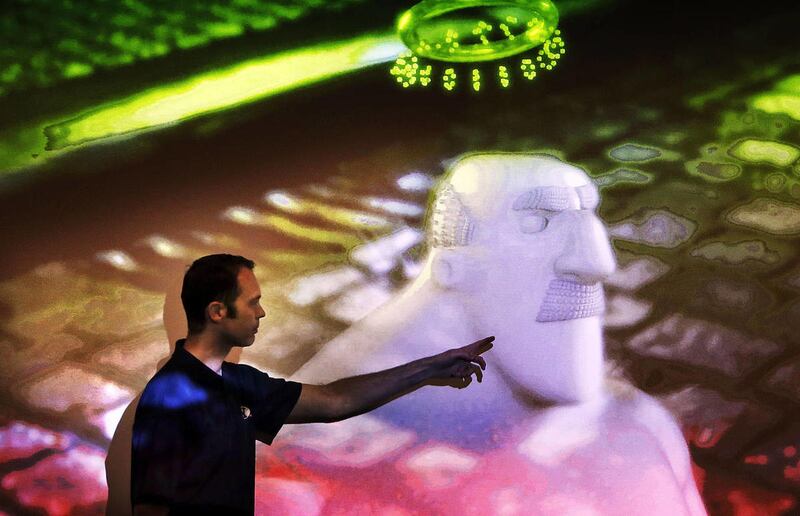
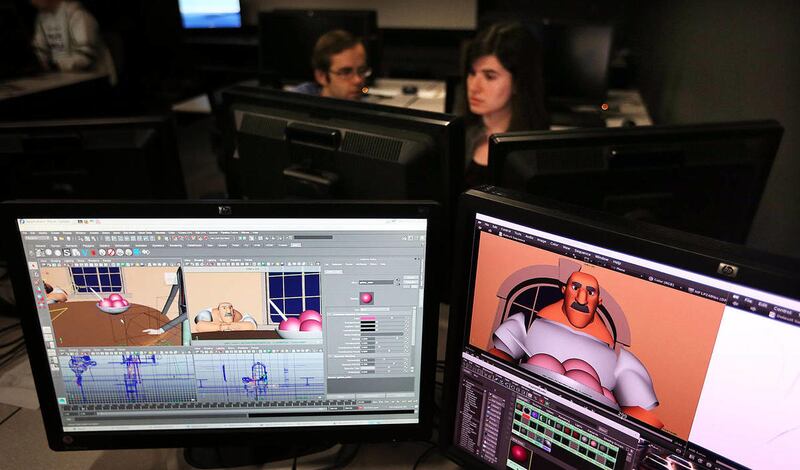
The six-minute “Ram’s Horn,” which is about a conceited mountain climber whose progress up the Ram’s Horn peak is impeded by two mountain residents, took a year to produce, and the Nerf wars demonstrate how a year’s worth of intensive work on a project can create relationships between the up to 50 students involved. While they strove for excellence with “Ram’s Horn,” they also recognized the unique friendships they were building. Ethan Dean, the film’s art director, who also graduated this spring, said he will stay in touch with his classmates for the rest of his life.
“You spend so much time with everybody on the film, you get really close to people,” Dean said. “The most valuable thing most BYU students take out of BYU isn’t winning a Student Emmy; it’s working with your best friends.”
Hoyos and Dean described their respective roles in the making of “Ram’s Horn” with good-natured humor.
“(Hoyos) laid down the law. He was the enforcer,” Dean said.
“I was the bad guy,” Hoyos added. “People said, ‘Oh, I have to do my homework.’ I said, ‘No, you don’t. You need to do this.’”
“Good cop,” Dean said, pointing to himself. Then, motioning to Hoyos, “Bad cop.”
“Yes, exactly,” Hoyos said.
News of the film’s Student Emmy status reached them after days of suspense. The day they expected to hear back from the College Television Awards came and went with no word. Director Jenna Hamzawi, who also graduated this spring, said she was “over the moon” when the Emmy news finally reached them.
Hoyos said they had set their sights on a Student Emmy from the beginning. They picked up the award at a ceremony in April.
“It felt like there was payoff because you work so hard for something, and you tell everyone the whole year, ‘We’re going to do this,’” he said.
Success from the start
The center’s director, Brent Adams, designed the program in 2000 with Kelly Loosli, whose background is in the film industry. The center’s first film was completed in 2004 by students who weren’t technically studying animation.
“The first year was industrial design students, but they won a Student Emmy and a Student Academy Award,” Loosli said. “Then we were just off and running.”
Loosli praised those first students for building the culture that Hoyos, Dean and Hamzawi worked under more than 10 years later.
“We sold them a bag of goods, they bought it and they just worked hard. And they really liked each other,” said Loosli, who teaches visual development. “Had they not been so collaborative, such good friends, such hard workers, we wouldn’t be where we are.”
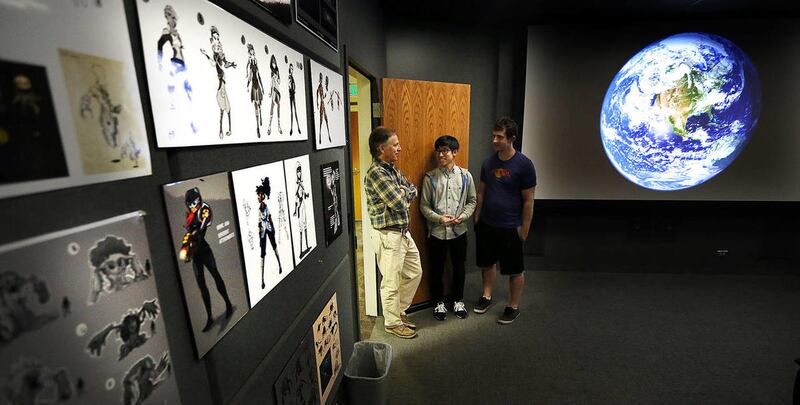
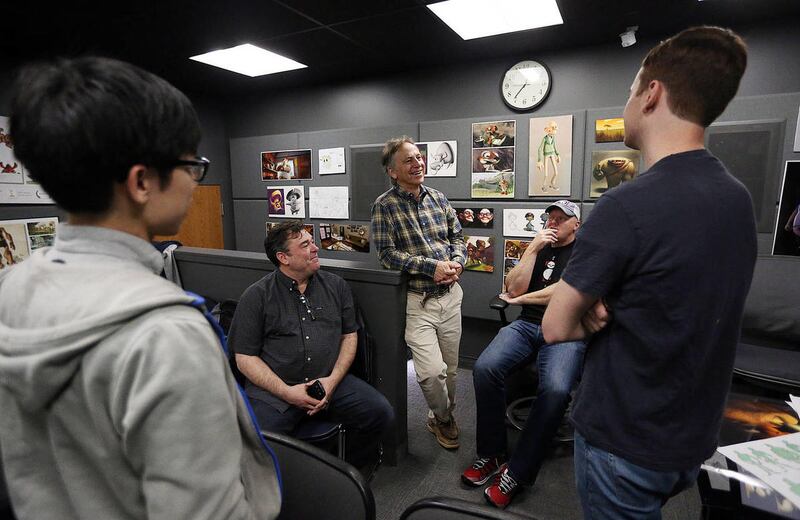
Sitting in Adams’ office, where every surface is home to a character figurine or some kind of award, the professors are pleased with, but no longer surprised by, the program’s success.
Adams said BYU has won more Student Emmys than any other school, with 17 in the past 12 years, including awards for both films and music. The organization presents awards to three different student films each year along with separate awards for music.
They described how their gaming track was recently accepted for the prestigious Electronic Entertainment Expo for the second time in the track’s three-year lifespan. The gaming program is officially mentored by Blizzard Entertainment and Riot Games, and the gaming companies were the ones to initiate the relationships.
“(Blizzard) just called us up and said, ‘We want to mentor your program,’ ” Adams said. “So we said, ‘OK.’ And the same with Riot Games. They did the same thing.”
“Well, they saw that Blizzard was mentoring,” said Seth Holladay, the professor who heads the gaming track.
When the program was much newer, Pixar Animation reached out in a similar way. Adams said he and Loosli were at a conference when Pixar’s head of educational outreach congratulated them on being an officially sponsored school, even though they “didn’t know there was even such a thing.” The only other school Pixar mentored was the California Institute of the Arts, which was founded by Walt Disney.
“So Pixar mentored them, and they mentor us,” Adams said. “And we didn’t apply; they just said, ‘Congratulations.’ ”
The mentors at these studios now include BYU graduates mentoring at their alma mater. Students from the program have been hired by prominent studios across the world, and BYU has become a prime recruiting ground for some of the studios.
A different style
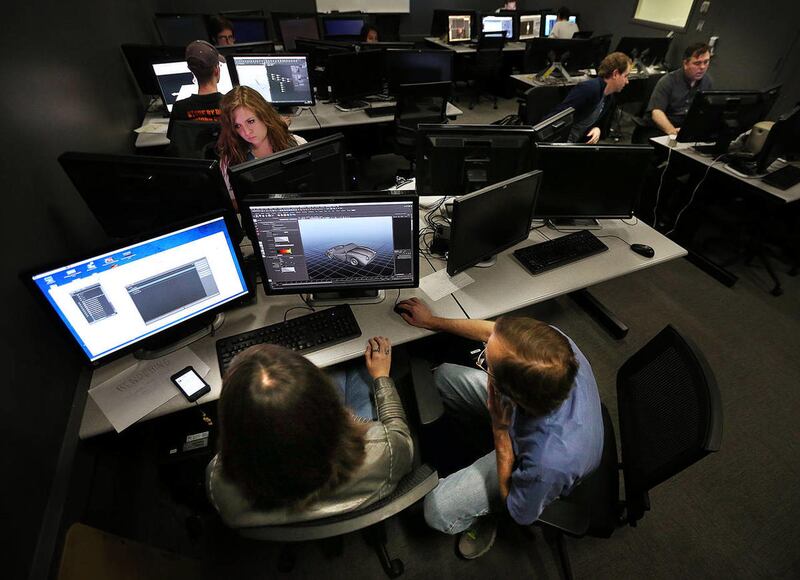
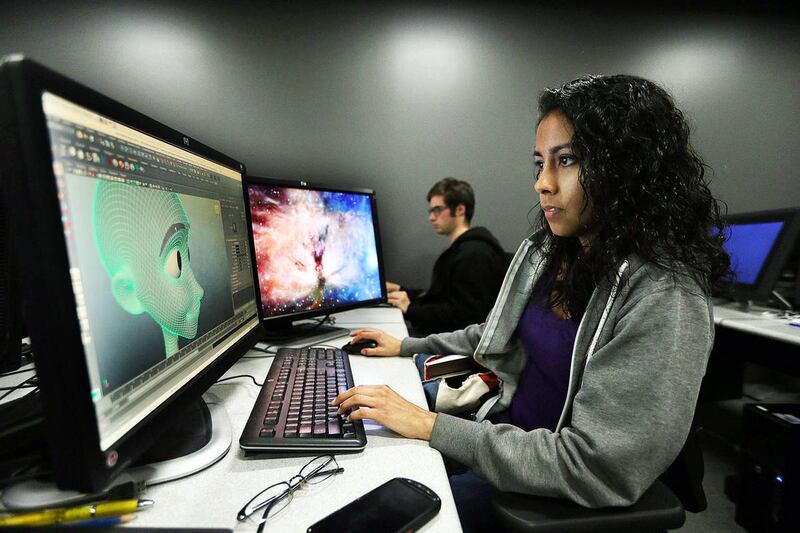
Two adjectives come up over and over in discussion with the Center for Animation’s faculty: collaborative and interdisciplinary. While students at many animation schools work alone or in small groups, BYU’s senior projects are a short film or part of a video game, and any student across the university is welcome to help out regardless of class or major.
“You kind of learn how to work together and collaborate,” Dean said. “That’s what makes BYU films probably a little bit better than others, because you have so many more people working on it.”
The center’s faculty is made up of five members from three programs in two colleges at BYU — the College of Fine Arts and Communications’ theatre and media arts department and design department, and the College of Physical and Mathematical Sciences’ computer science department. Each teacher has a different emphasis, from film to design to computer science. None of them planned to teach, said Adams, and each one had an industry career before going to BYU.
“None of us has the same experience or background as somebody else,” said Adams, whose background is in architecture and teaching computer graphics. “So we bring such a different thing to the table.”
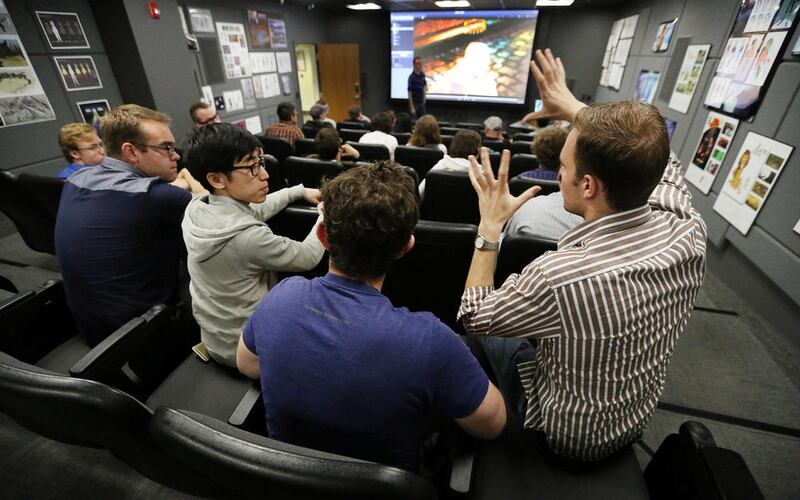
Faculty diversity allows the young animators to draw from a broad range of expertise. Adams called himself and the other faculty members “coaches” on projects and said they have teaching styles different from those of most college professors.
“We don’t choose the story, we don’t choose the game, we don’t choose the director, we don’t choose the producer,” he said. “It’s all student vote.”
Once a project gets started, the students are largely on their own to make decisions. Hoyos was the producer and Hamzawi was the director, and they had the responsibility of making the film the best it could be. Adams said he and the other professors keep a close eye on the students and are there to answer questions, but they very rarely make decisions for them.
Even further, Holladay said, sometimes the students have problems their teachers haven’t solved.
“A lot of people are used to being told, ‘Here’s what to do and here’s the answer,’” he said. “We don’t necessarily always know the answer.”
The faculty emphasize preparing students to succeed in the industry in ways beyond being good artists or good animators. Only 25 students are accepted to the program each year, and they are handpicked after taking prerequisite courses taught by program professors.
Collaboration comes up again as Adams describes what they look for in students. They encourage students to be leaders, and many quickly transition into leadership roles at the studios where they’re hired. In a constantly changing animation industry, the more they learn on their own, the better.
Adams said sometimes students will panic as they prepare to start careers in the industry when they realize they have been largely learning through their own experience during their collegiate career.
“They complain that as faculty we didn’t teach them anything, they had to learn it all on their own,” he said. “We love that. We know that they can continue to learn it on their own for the next 35 years.”
These group projects emphasize leadership and teamwork, Adams said, sometimes even above artistic and technical skills. Because Hamzawi directed the film, for example, she wasn’t involved in the artistic process as much as she might have otherwise been.
“You don’t get much for your portfolio,” she said. “It’s more just a leadership learning experience, how to work with others.”
Studios seem to value the experience students gain on big group projects, though, and they keep hiring BYU students. Hamzawi said “Rams’ Horn” had been one of BYU’s most successful films in terms of helping students find work after graduation.
Which is exactly what the professors are working toward.
“We knew what it took to be successful in the industry, and we’re just trying to help these students do the same thing,” Adams said.
Email: jjohnson@deseretnews.com