

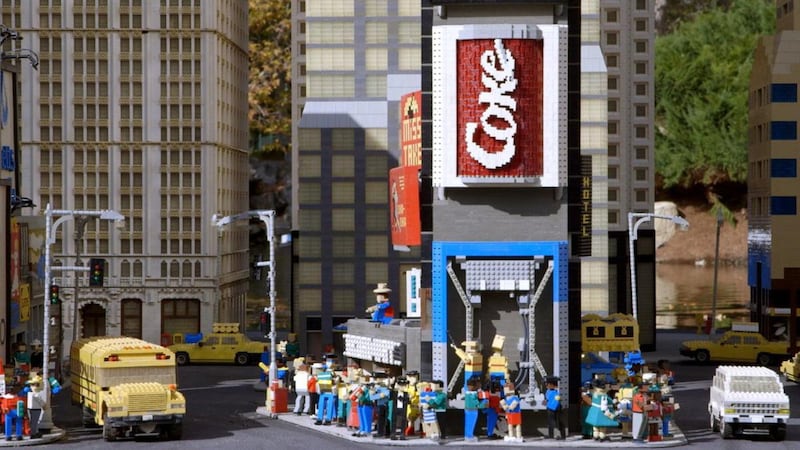

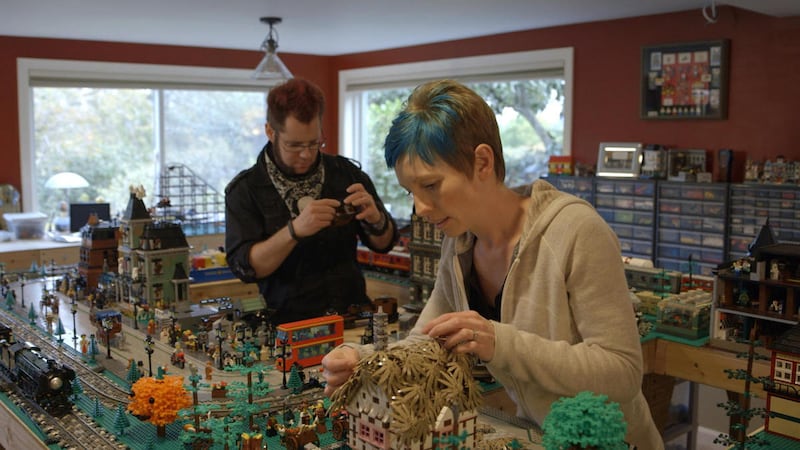

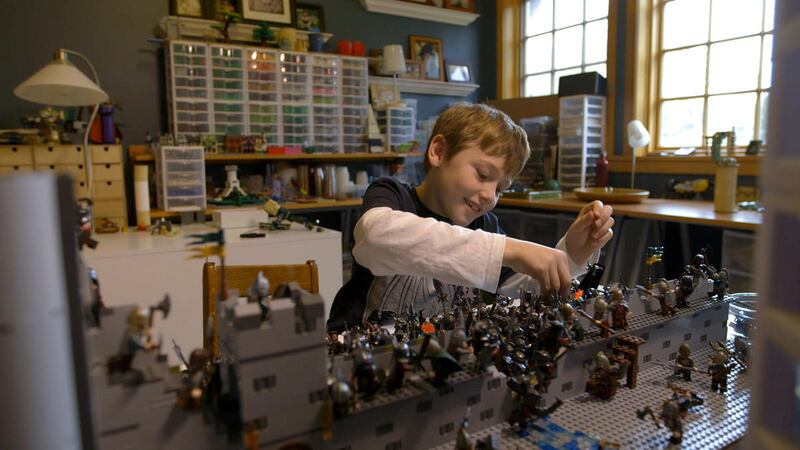

Legos can do lots of things. That’s the surface message of “A Lego Brickumentary,” a new film that feels more like a promotional piece for the celebrated building blocks than a documentary.
A great documentary tells a compelling story about an interesting subject with style. A good documentary will usually feature only a couple of those same elements. “Brickumentary” boasts an interesting subject that is relatable across generations because everybody loves Legos.
As proof, “Brickumentary” features testimonials from the likes of NBA All-Star Dwight Howard, UK pop star Ed Sheeran and Trey Parker, one of the “South Park” guys.
The Lego story is pretty linear. An early passage in “Brickumentary” goes over the toy’s history starting with a Danish carpenter Ole Kristiansen. After transitioning from wood to plastic around World War II, Kristiansen created a set of interlocking plastic blocks built around tubes and studs.
Named for a Danish expression that roughly translates to “play well,” Lego blocks grew popular quickly, and “Brickumentary” estimates that today there are over 100,000 blocks for every human on the planet. But what is even more impressive is that today’s blocks would be completely compatible with a set from 1955.
“Brickumentary” does a sound job of characterizing the unique nature of its subject. While other toy giants cycle through popular toy lines that ebb and flow with the times, Lego blocks have stuck with a tried-and-true product that leans on the creativity of its user.
This creativity is demonstrated over and over throughout film's 90-minute run time, almost to the point of fatigue. Kids play with different sets in countries all over the world. Grown men and women award each other prizes for elaborate constructions at Lego conventions. Ambitious designers use over eight tons of Lego bricks to assemble a life-size X-Wing fighter, a decision that should tell you all you need to know about the toy’s culture and clientele. And in one memorable passage, the blocks are used for therapy sessions with autistic children.
The closest thing to a twist in the story comes around the turn of the century, when the Lego folks got a little too fancy and almost drove their stock into the ground.
Don’t mess with a good thing. That’s the message just under the surface of “Brickumentary.”
But the biggest problem with “Brickumentary” is its style. Actor Jason Bateman voices an animated Lego character who guides viewers through the narrative with an array of bad jokes. It makes “Brickumentary” feel like the kind of film you would groan through during a tour of a Lego factory, and one can almost picture Bateman wincing in a sound booth as he reads his dialogue.
Directors Kief Davidson and Daniel Junge should have taken a lesson from last year's "Lego Movie." People thought that was just a big commercial, too, but it's amazing what a little style and story can do.
Not that anyone would expect a documentary on Lego blocks to reveal a seedy underbelly, of course, but if you’re going to ask people to pay $10 to sit in a theater for 90 minutes, the material should justify the effort. And in the case of “Brickumentary,” 90 minutes feels too bloated.
It’s a good documentary, and it should be a perfect choice when it shows up on your Netflix menu, but it’s nowhere near a great one.
“A Lego Brickumentary” is rated G, and has no offensive content beyond Bateman’s lame jokes.
Joshua Terry is a freelance writer and photojournalist who appears weekly on "The KJZZ Movie Show" and also teaches English composition for Salt Lake Community College. Find him online at facebook.com/joshterryreviews.